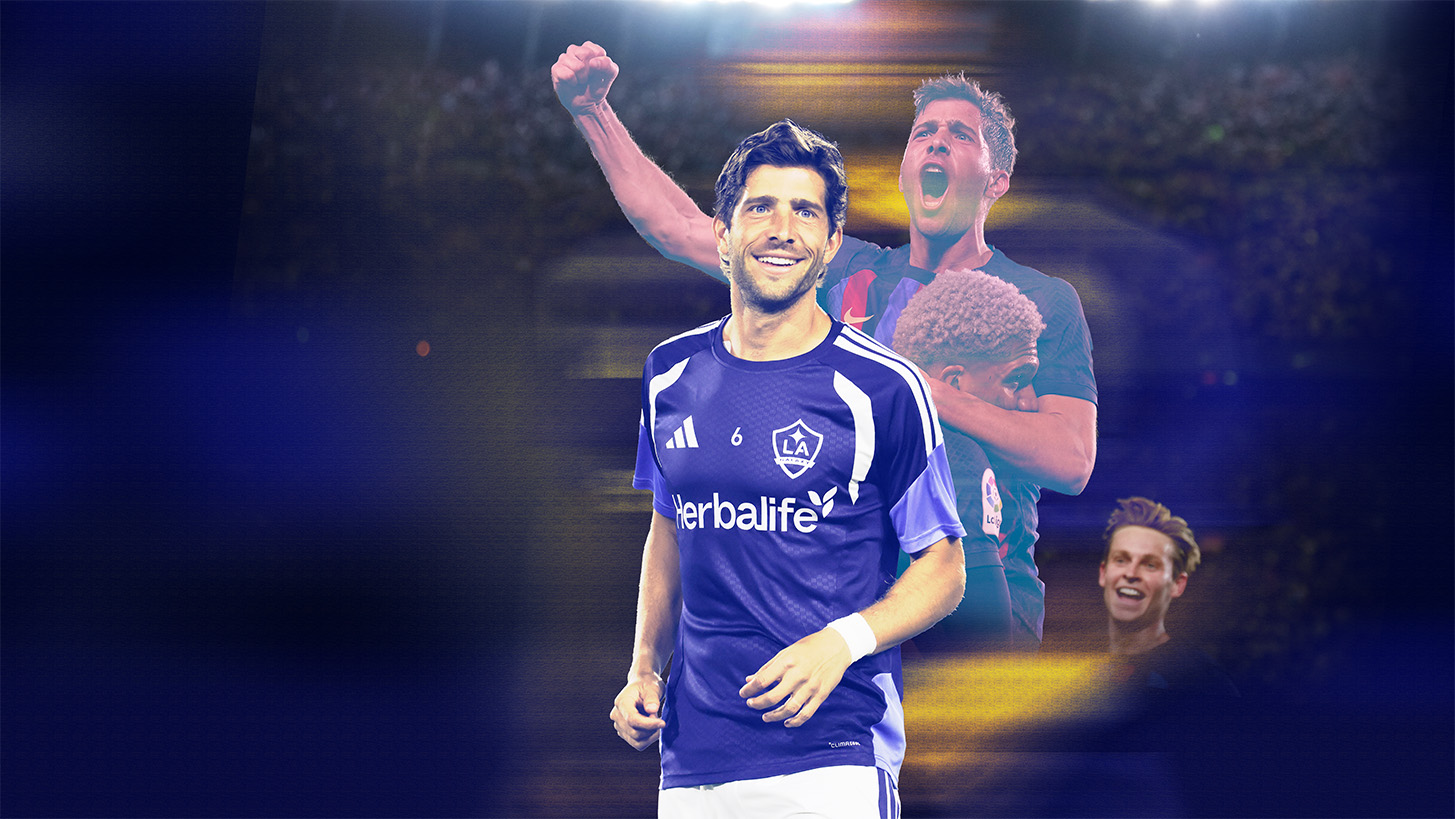
With El Tráfico and El Clásico falling on the same day, we catch up with former Barcelona and current LA Galaxy midfielder Sergi Roberto to discuss the nature of football rivalries and his anticipation for his first LA derby match.
Sergi Roberto was 19 years old when he was thrust into one of the most combustible rivalries in world football: El Clásico. He replaced David Villa in the closing stages of Barcelona’s 2-0 Champions League semifinal victory at the Santiago Bernabéu in 2011, making his second appearance as a professional footballer. Little did he know that he would go on to become a Clásico regular, a Barcelona captain, and one of the club’s most decorated players.
Now, he’s preparing for a different kind of derby. On Sunday, Roberto will make his first appearance in El Tráfico, as LA Galaxy travel up the 110 freeway to face LAFC in a crucial battle for playoff positioning. Coincidentally, the match comes just five hours after his former club Barcelona face Real Madrid in the 265th edition of El Clásico. Nearly 6,000 miles separate the two fixtures, but for Roberto, who has experienced football’s fiercest rivalries firsthand, the emotions remain remarkably similar.
“Everyone has told me the atmosphere of El Tráfico is incredible,” Roberto said in an exclusive Urban Pitch interview. “LAFC’s stadium is also very beautiful, and besides the atmosphere, I’ve also heard their fans are really passionate.
“It might just be three points, but beating your rival is always very special, and I hope my first experience in El Tráfico ends with a victory and a good game for us. Hopefully I can score, but the most important thing is the victory for us.”
Since LAFC joined MLS in 2018, El Tráfico has been the premier rivalry match in the league. A special July 4 edition of the derby played at the Rose Bowl in 2023 broke the MLS single-game attendance record, with 82,110 fans packing the historic arena to see the two teams square off.
Zlatan Ibrahimović famously made his MLS debut at the inaugural El Tráfico match, scoring two unbelievable goals to secure a Galaxy comeback victory and setting the tone for the rivalry moving forward.
Eight years later, Roberto is preparing to join Ibrahimović and Gareth Bale as the only players to experience both Clásico and Tráfico derbies. And if his first taste of El Clásico is anything to go by, he knows better than most how quickly a footballing rivalry can descend into outright chaos.
Roberto is a product of the famed La Masia academy, which he joined in 2006. It was an exhilarating time to be a young footballer at Barça, with homegrown talents like Xavi Hernández, Andrés Iniesta, Carles Puyol and Víctor Valdés establishing the foundations of the greatest era in the club’s history.
Barcelona had just ended a six-year trophy drought by winning the 2004-05 La Liga title before conquering Europe under Frank Rijkaard in 2006. Roberto was determined to follow in the footsteps of his idols, and he made his senior debut under Pep Guardiola in November 2010.
Five months later, he found himself in the midst of one of the most incendiary periods in El Clásico history. Barcelona and Real Madrid faced each other four times over the span of 18 days, battling for supremacy in La Liga, the Copa del Rey, and the Champions League. Having suffered a humiliating 5-0 defeat in his first Clásico as Madrid manager, José Mourinho was determined to exact revenge on his former employers.
Mourinho escalated an already fierce sporting rivalry into an intensely personal feud. His relentless criticism of referees, accusations of favoritism towards Barcelona, and psychological warfare against Guardiola and his players ensured that the rivalry extended far beyond the pitch. He even poked Barcelona assistant coach Tito Vilanova in the eye during a quarrel at the 2011 Supercopa de España, an incident that encapsulated the animosity between the two clubs.
The Portuguese manager’s pugnacious approach threatened to drive a wedge between the Spanish players: just a year after winning the 2010 World Cup, Madrid and Barcelona players were barely speaking to one another during international duty, prompting Iker Casillas, Xavi, and Puyol to hold private talks to calm tensions. For a national team whose unprecedented success had been built on the chemistry between Barcelona and Madrid players, the consequences threatened to derail Spain’s international dynasty.
In the short term, Mourinho’s approach initially paid dividends. Madrid held Barcelona to a 1-1 draw in La Liga despite playing with 10 men, before prevailing 1-0 in the Copa del Rey Final via Cristiano Ronaldo’s extra-time winner. However, Barcelona would have the last laugh in Europe, with Lionel Messi’s brace sealing a 2-0 victory at the Santiago Bernabéu in the first leg of their Champions League semifinal. Roberto entered the fray in the closing stages, making his first appearance in a rivalry that would come to define much of his Barcelona career.
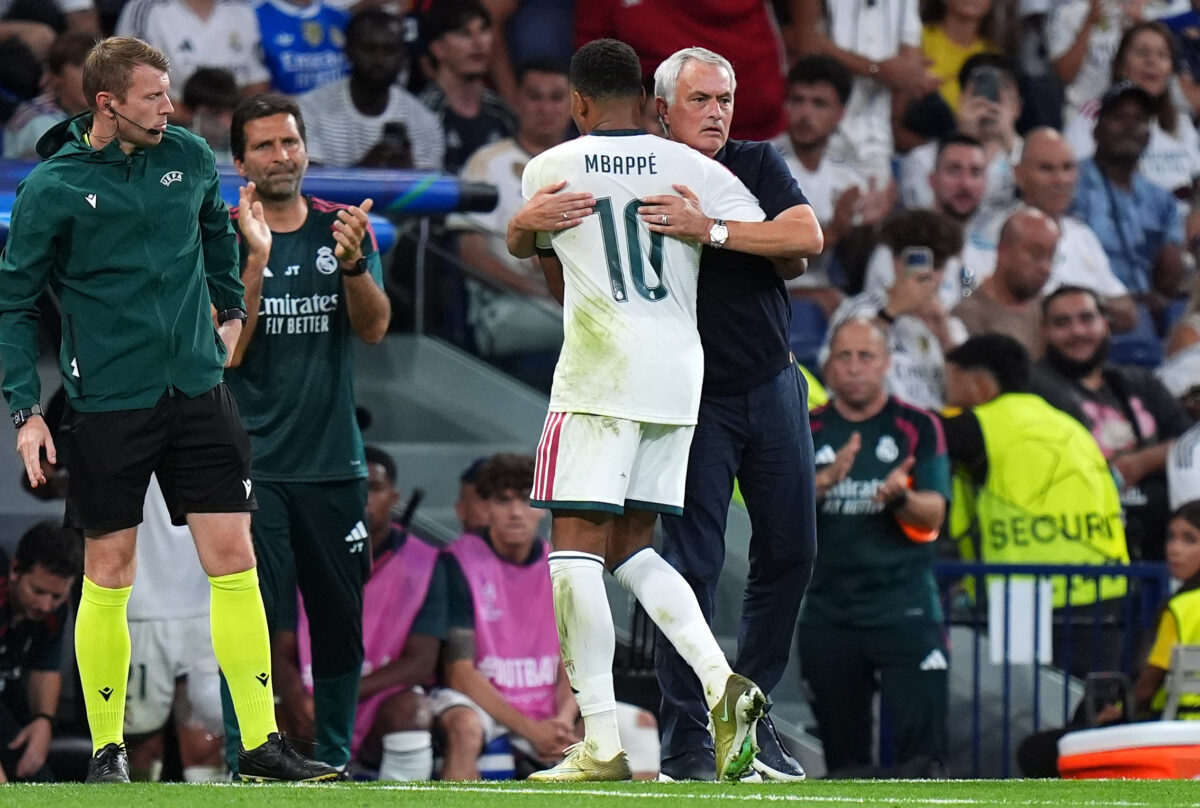
Fast-forward to today, and history appears to be repeating itself. Mourinho is back at the Bernabéu, Spain are once again world and European champions, and Real Madrid have resumed their war of words with Spanish refereeing authorities. The club’s television channel has repeatedly aired compilations of decisions it considers unfavorable, prompting La Liga president Javier Tebas to compare Madrid’s media tactics to those of Nazi propagandist Joseph Goebbels.
Meanwhile, the ongoing Negreira case has driven an even deeper rift between the two institutions. Barcelona’s payments of €7.3 million to companies linked to José María Enríquez Negreira, the former vice president of Spain’s refereeing committee, between 2011 and 2018, have become a focal point of Madrid’s accusations against their arch rivals.
Barcelona have maintained that the payments were for refereeing consultancy reports, while Madrid have argued that the case raises fundamental questions about the integrity of Spanish football. Although Barcelona were allowed to participate in UEFA competitions following a provisional investigation in 2023, the controversy has continued to overshadow relations between the two clubs.
The dispute has coincided with the breakdown of a once-unlikely alliance between Madrid president Florentino Pérez and his Barcelona counterpart Joan Laporta. Having previously joined forces in pursuit of a European Super League, the two presidents are now engaged in an increasingly public quarrel, with Pérez going as far as stating in May: “I’ve won seven Champions Leagues and only seven La Liga titles. It could have been 14, but they were stolen from me.”
“There is no relationship between us anymore,” Laporta declared this week. “I would go even further and say that it has become a confrontation between us. Real Madrid have lost credibility, both institutionally and in sporting terms. They want to divert attention, but there is nothing there. They no longer have any presence in the institutions. They chose the wrong path, and now they are paying the price.”
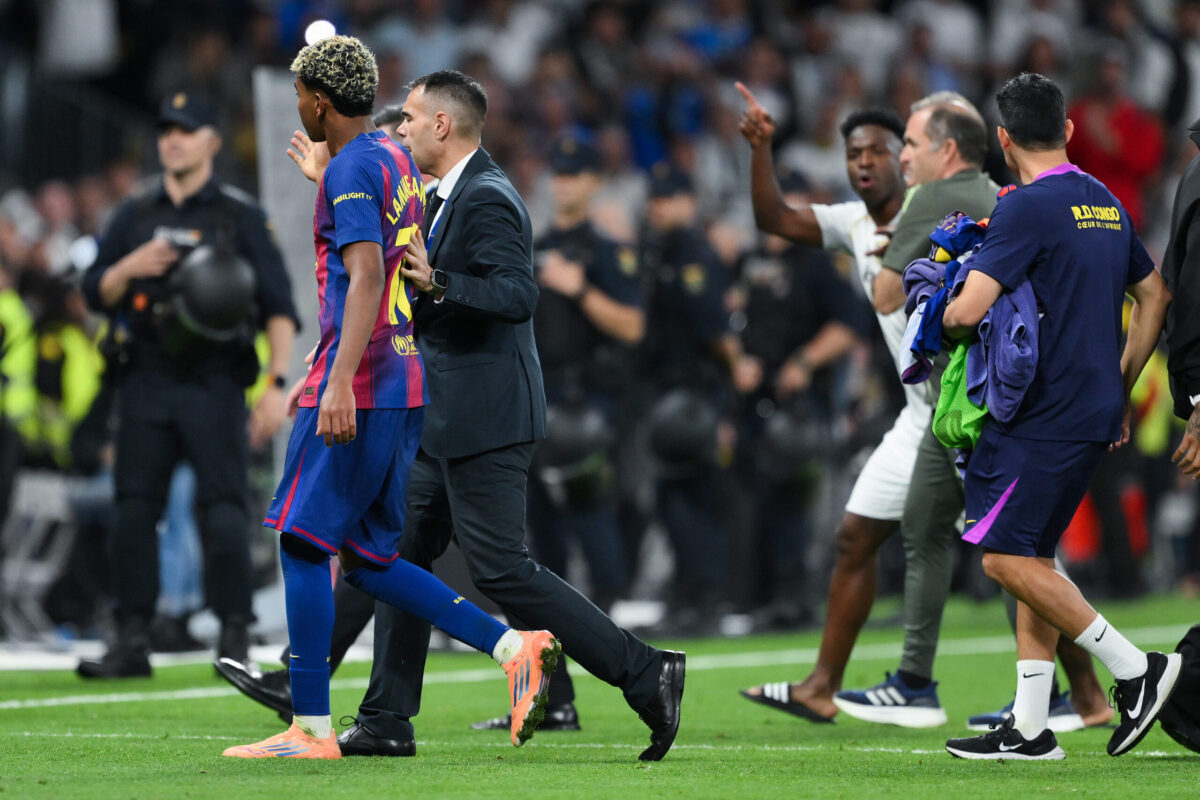
The animosity has also spilled onto the pitch. After Lamine Yamal accused Madrid of complaining and stealing, Vinícius Júnior accosted the Barcelona winger following the Clásico in October 2025, with several players receiving disciplinary sanctions. For Roberto, who experienced the Mourinho era firsthand, the latest feud is a reminder of the fine line between sporting rivalry and personal animosity.
“It’s always a bit good to have this, let’s say, rivalry between these two teams,” Roberto said. “In the case of Real Madrid, well, it’s always been like that because they’re Barça’s eternal rival, and this gives each Clásico a different kind of tension.
“I think that’s also the beautiful part of football, that there’s this rivalry. Of course, there are certain lines that shouldn’t be crossed, but I think it’s good that there’s this rivalry between these clubs and that they respect each other off the field.”
Roberto’s introduction to El Clásico came during one of its most turbulent periods, with the youngster having to wait 861 days before making his third appearance for Barcelona. But over the next decade, he would go from witnessing the rivalry’s enmity to becoming one of its decisive protagonists.
After establishing himself as a first-team regular under Tata Martino, Roberto developed into one of Barcelona’s most versatile players under Luis Enrique, operating across midfield, fullback, and even the wing. He was never the biggest star in a team featuring Messi, Neymar, and Luis Suárez, but his tactical intelligence, positional flexibility, and willingness to sacrifice individual glory for the collective made him an invaluable asset.
In November 2015, he deputized for an injured Messi and assisted in Barcelona’s emphatic 4-0 victory at the Bernabéu. Roberto would go on to provide five assists across four consecutive Clásicos between December 2017 and February 2019, before scoring a crucial winner against Madrid in March 2023.
His most iconic contribution, however, came against a different opponent. On March 8, 2017, Roberto etched his name into Barcelona folklore against Paris Saint-Germain, as Barcelona became the only team in Champions League history to overturn a four-goal first-leg deficit. Having entered the match as a substitute, Roberto latched onto Neymar’s lofted delivery and poked the ball beyond Kevin Trapp in the dying seconds, sending the Camp Nou into delirium and sending Barça to the quarterfinals.
It was a moment that encapsulated Roberto’s Barcelona career: a player who rarely commanded the headlines but repeatedly delivered when the stakes were highest. It’s why, during a preseason tour in Los Angeles in July 2023, Barcelona players voted Roberto as the club’s new captain following Sergio Busquets’ departure.
Roberto would leave Barcelona in 2024 after winning seven La Liga championships, six Copa del Reys, two Champions Leagues, three Supercopa de Españas, a UEFA Super Cup, and a FIFA Club World Cup. Although his international career never quite reached the same heights, with just 11 appearances for Spain and a UEFA Nations League silver medal, his legacy at Barcelona is firmly secure.
As recent proof of his place among the Barcelona faithful, his name echoed throughout the Paris streets prior to Barça’s recent Champions League tie against PSG.
While Roberto will be keeping an eye on his former teammates as they attempt to further distance themselves from their rivals atop the La Liga table, his immediate priority is helping LA Galaxy secure a playoff berth.
Following Roberto’s departure from Barcelona in 2024, rumors circled around him reuniting with Messi, Busquets, Suárez, Martino, and Jordi Alba at Inter Miami. Instead, he chose to reunite with a different former teammate, Cesc Fàbregas, at Como.
After helping the Lariani secure a Champions League spot for the first time in club history, Roberto joined LA Galaxy in the middle of the 2026 MLS season, signing a contract through 2028 with a one-year extension option. He follows in the footsteps of former Blaugrana stars to don a Galaxy kit, including Giovani and Jonathan dos Santos, Riqui Puig, Víctor Vázquez, and Martín Cáceres.
It was an intriguing move for a player who had spent his entire professional career in European football, yet Roberto was attracted by the prospect of joining MLS at a time when the league’s international profile was continuing to rise, fueled by Messi’s arrival and the momentum generated by the 2026 FIFA World Cup.
“I’m very happy to be here,” Roberto said. “I think the league has been growing ever since Leo arrived. I think the league is going to continue growing; it certainly has the potential to do so.”
Roberto has already noticed some striking differences between European football and MLS, particularly when it comes to the pace and unpredictability of matches.
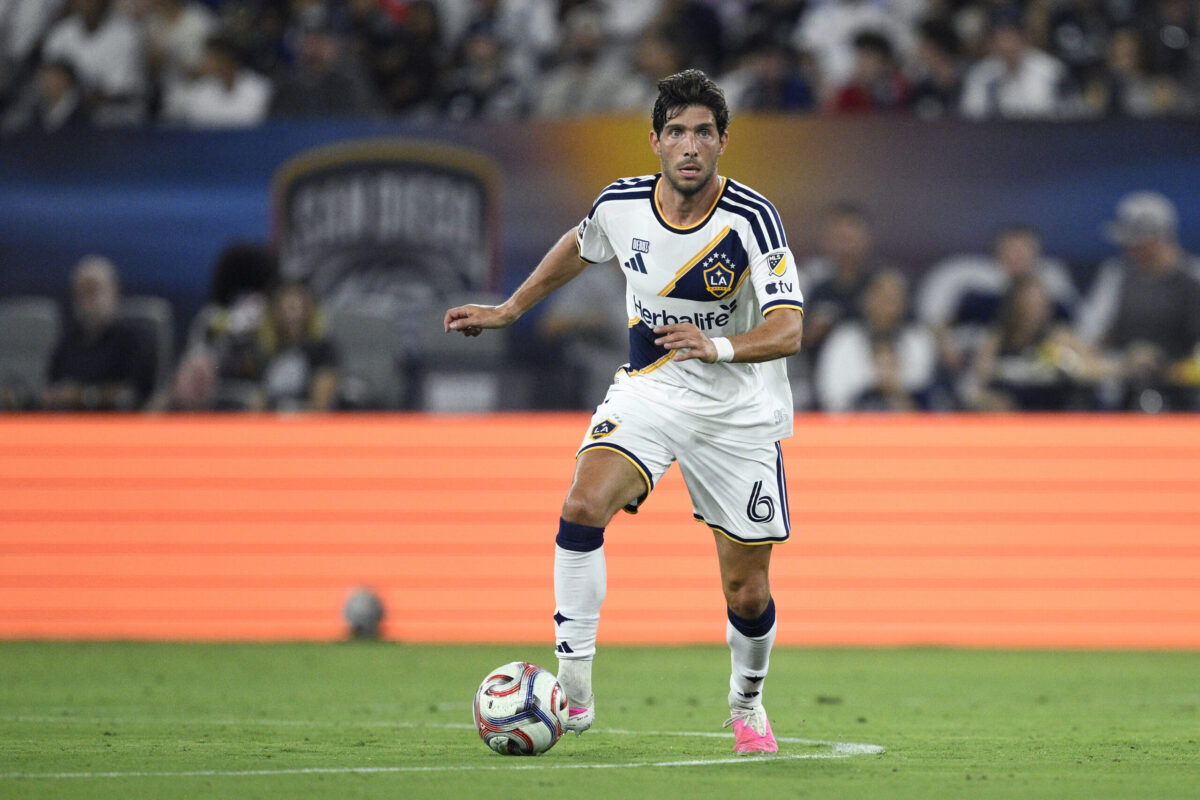
“I think the pace is a bit different in MLS,” Roberto said. “Here, sometimes it’s slower, with less rhythm than in Europe. Here, you can go from losing 2-1 to ending up with a 3-2 lead in just five minutes. A lot happens at the end of matches because there’s a lot of space to be exploited on the pitch.”
That unpredictability represents both an opportunity and a challenge for Roberto. At Barcelona, he became accustomed to playing in teams that dominated possession, controlled territory, and dictated the tempo of matches. In MLS, games can become stretched far more quickly, with transitions and defensive disorganization creating opportunities at both ends.
For a player whose greatest strengths include positional awareness, composure, and tactical discipline, adapting to those conditions will be crucial. His experience could prove especially valuable in a Galaxy side that has struggled to maintain defensive stability throughout the campaign.
Roberto made his Galaxy debut against San Diego FC on August 29 and has quickly become a regular fixture in Greg Vanney’s midfield. Since his debut, the Galaxy have risen from 13th in the Western Conference to eighth, the first of two Wild Card spots in the standings.
While there has been a bit of a surge since Roberto’s arrival, there has been some inconsistency, especially seen in a recent 6-2 loss to St. Louis CITY SC that exposed the defensive vulnerabilities that continue to undermine the Galaxy’s playoff push.
LAFC on the other hand, is six points up on their crosstown rivals in sixth place, making this showdown even more consequential, with only three regular season fixtures remaining for each club. A derby victory would not only provide an enormous psychological boost, but also strengthen each team’s playoff prospects at a crucial stage of the campaign.
It would be particularly satisfying for the Galaxy given their recent struggles away to LAFC. They haven’t won an MLS match at BMO Stadium since August 2020, and they haven’t won in their last three Tráficos.
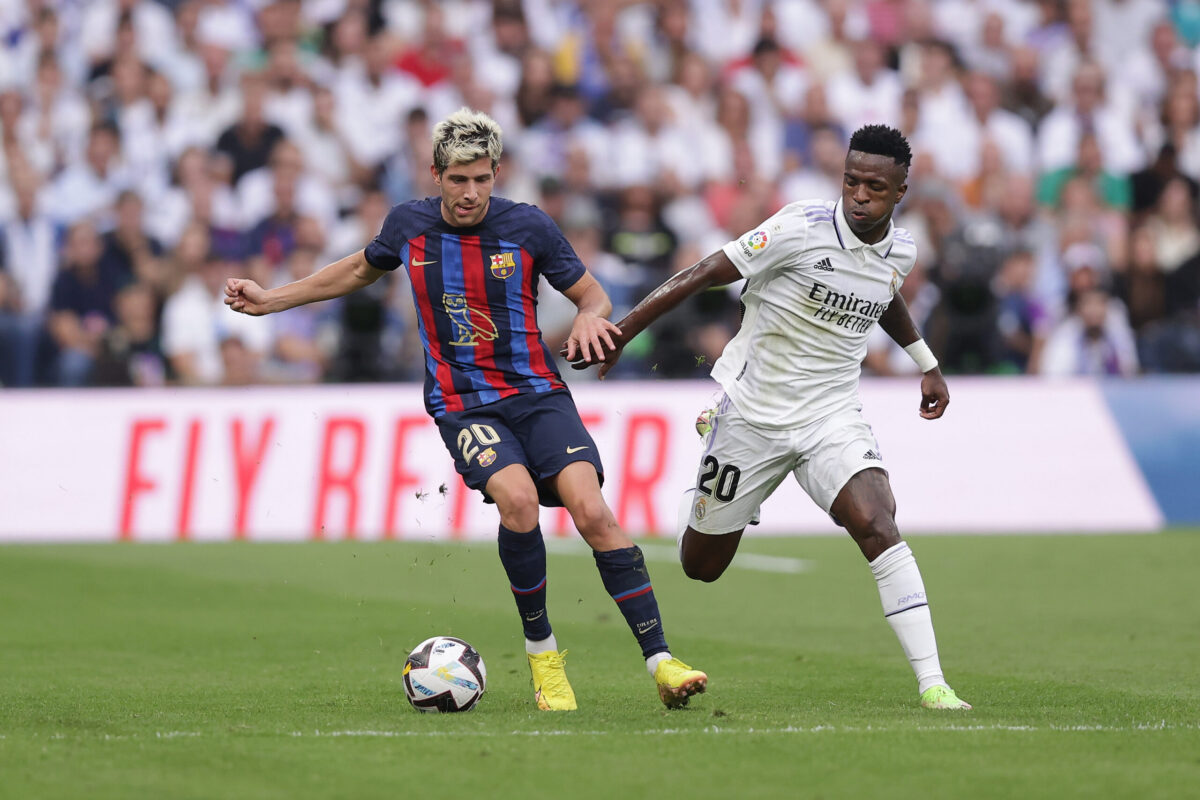
For all the differences between the two cities and competitions, Roberto believes the emotional significance of a derby remains universal.
“It’s good that there’s this rivalry between these teams because in the end, when you win, you’re much, much happier than in a normal match,” Roberto said. “It’s a very special match to play, and I’ve been lucky enough to play many. Most of them have gone very well for us; we’ve lost some too, but it’s always a very, very special match for any player.”
Fifteen years after making his Clásico debut at the Santiago Bernabéu, Roberto is preparing to experience a different kind of derby in Los Angeles. The city, the opponents, and the stakes may have changed, but one thing remains the same: there’s nothing quite like beating your biggest rival.