It’s a question that’s been asked many times before — but should MLS participate in the Copa Libertadores? For Urban Pitch contributor Ben Noonan, the answer is a resounding yes.
Look around the hallways of a typical American high school and you’ll notice something peculiar. Soccer jerseys are in vogue, but the kids these days are hardly “supporting their local.” Instead they don Lamine Yamal and Jude Bellingham shirts, the powder blue of Manchester City or the various reds of Arsenal, Liverpool, and Manchester United. You’ll occasionally spot Bayern Munich or one of the Milan clubs. The day after a big Champions League fixture, classrooms will be buzzing with banter and trash talk.
Fans in sub-Saharan Africa are so passionate about English or Spanish clubs that they’ll host massive street festivals and watch parties to commemorate games, and in the event of big rivalry games violence has even broken out, many thousands of miles away from the grounds themselves.
While the Premier League and La Liga will be delighting in the extent of their cultural reach, the rest of us are confronted with a disconcerting reality: UEFA is taking over the world of soccer.
But how did this happen?
As the largest European soccer clubs grow financially massive and more popular than ever, it’s important to remember that global soccer is in no way a zero-sum game. We’ve witnessed the so-called “soccer calendar” expand to every last nook and cranny of the calendar year, with FIFA and its constituent federations launching new club and international competitions with wanton regard for player health and safety.
But much like society in general, the prevailing sentiment is that the gap between rich and poor soccer clubs, leagues, and even federations, is growing wider than ever. This year’s UEFA Champions League boasts a total prize allocation of approximately $2.5 billion, with the lion’s share going to the most successful clubs that run deep in the competition. You can buy a lot of speedy Brazilian wingers for that kind of cheddar. UEFA earns somewhere in the realm of $4.5 billion in commercial revenue for each year of the tournament.

As the biggest clubs win trophies, they collect massive paychecks, and invest that money into better players, better training facilities, and bigger stadiums. TV packages and merchandise are massive cash cows, and extend the reach of these big clubs across the globe as the new generation of internet-savvy soccer fans can easily watch any game from any league at any time.
The resulting financial windfalls allow these clubs to win more trophies, buy more players, so on and so forth, in a sort of soccer ouroboros that insulates them, competitively speaking, from the riffraff. There’s a reason Paris Saint-Germain wins the French league title year after year, and it’s not that the club is some sort of immaculately-run organization that has maximized efficiency and on-field performance. Quite the opposite, as PSG and similarly-size European clubs are able to dominate in spite of their dysfunction and toxicity. It all comes down to the most obvious answer: money.
FIFA President Gianni Infantino has sought to counter the massive power of UEFA and its super clubs through initiatives like solidarity payments to smaller countries and federations. Lest you imagine that this is a selfless endeavor, one must remember that less-prestigious member nations make up Infantino’s base of support, and that he counts among them a number of incredibly rich Middle Eastern oil states which have been traditionally overlooked by the European elites of the sport.
This year’s reformatted Club World Cup also acted as a shot across UEFA’s bow and signaled FIFA’s desire to get in on the financial golden goose that is the European club game. But how can the rest of the world compete with UEFA’s dominance?
As Major League Soccer eternally seeks to be included on the list of the world’s best soccer leagues, it must contend with the uncomfortable fact that it isn’t even the most popular soccer league in its own country. This wouldn’t be such a bad thing, if MLS were, say, content to be seen as a feeder league, a bridge between up and comers of the Western Hemisphere and the glitz and glamor of European leagues. But Commissioner Don Garber is eager for MLS to be seen as a premier destination for global talent, not simply a stopover for talented players on their way to bigger and better things.
With the advent of Leagues Cup and the newly restructured CONCACAF Champions’ Cup, MLS has made it clear that the path to more eyeballs and more respect is international club competition. MLS clubs have consistently made deeper and better runs in continental competitions, and even acquitted themselves decently in last summer’s Club World Cup.
But none of these competitions have the cultural weight of The Champions League. It’s safe to assume that no child plays at recess pretending that they’re on the field for the Leagues Cup Final. These new competitions simply lack the gravitas and the importance in the imaginations of soccer fans that would propel them straight to our hearts. There’s a reason that Chelsea’s victory in the Club World Cup felt so hollow: we weren’t exactly sure how much we ought to care about this thing.
Other Premier League clubs have even taken to derisively referring to Chelsea as “World Champions,” especially when they’re getting their asses handed to them by the likes of Brighton or Qarabag.
But let’s get back to the question: How can smaller teams and leagues outside of Europe compete with UEFA?
If only there were a competition right here in our own hemisphere, one that, while incredibly difficult, would give MLS clubs a foothold in the global soccer paradigm. If only that competition were hosted by a confederation which has shown its willingness time and time again to take financial advantage of the soccer fandom of the United States. Wait, is that the Copa Libertadores music I hear?
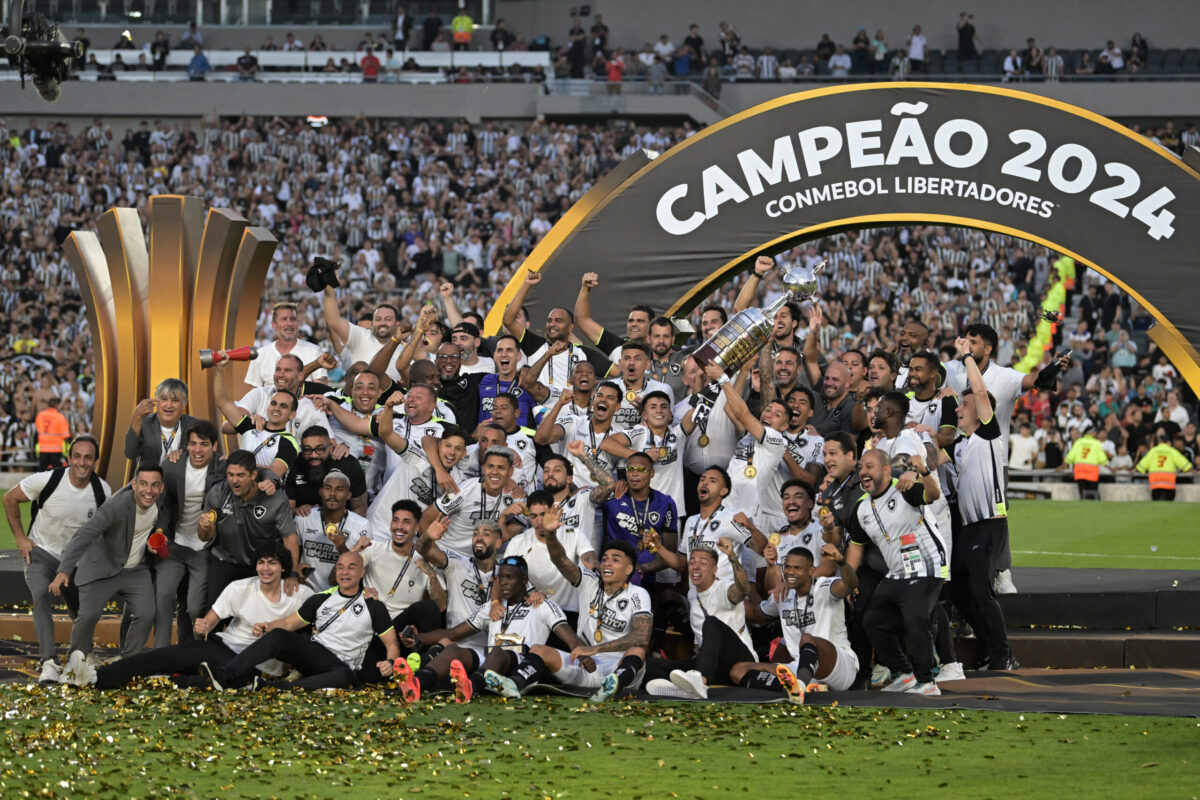
To counter the looming specter of UEFA domination, it’s incumbent on CONCACAF and CONMEBOL to join forces to give us a Western Hemisphere club competition to rival the UEFA Champions League. It’s high time that MLS and Mexican teams begin participating in a tournament that has the capacity to be the highest-octane, most grueling, most passionate soccer experience on earth.
The idea of North American teams participating in South America’s cup is nothing new. In fact, Mexican teams regularly competed in the Copa Libertadores between 1998 and 2016, but due to scheduling conflicts have not participated since. No Mexican team ever won the competition, although Cruz Azul, Chivas de Guadalajara, and Tigres UANL each finished as runners-up.
Rumors of Major League Soccer joining the competition have been swirling since at least the early 2010s, but the idea never came to fruition. New life has been breathed into this sort of speculation by Lionel Messi’s move to Inter Miami, as legions of South American fans are desperate to see Messi finally compete in the most prestigious competition of his homeland. Imagine Messi in the bright pink of Inter Miami taking on his boyhood club Newell’s Old Boys on a cold, rainy Wednesday night in Rosario. It’s almost enough to make you shiver.
Argentinean clubs have traditionally dominated the Copa Libertadores, with Independiente setting the record for most wins with seven, but recent editions have been dominated by Brazil. After this year’s final between Flamengo and Palmeiras the two countries will have each claimed 25 Libertadores titles.
So how would MLS clubs fare in the tournament?
MLS clubs are, at least compared to their South American counterparts, flush with cash. This has made the league a popular business partner for South American clubs looking to cash in on their plethora of young talent. It’s hard to think of a single MLS club which hasn’t splashed the cash on a young Argentinean winger at one point or another.
Furthermore, CONMEBOL has made no secret of the fact that they see the United States as a huge untapped market, and it even went out of its way to play the Copa América in the United States in 2016 and 2024. Brazil and Argentina regularly play in friendlies in the United States, reportedly receiving appearance fees of upwards of $6 million for the privilege.
Partnering up with CONCACAF via the club game would open a vast commercial market to the traditional South American powerhouses. The Club World Cup highlighted the fanaticism and passion of River Plate and Boca Juniors fans in particular, with their banderazos taking over various major cities across the country, and playing competitive games in North America would be the opportunity of a lifetime for these clubs to grow their brands in a massive country with a growing appetite for global soccer.
CONMEBOL also has the opportunity to turn the Copa Libertadores into a worldwide brand in the ilk of the Champions League. A bigger TV market means more advertising money means more investment means more, well, everything. With a full half of the world participating in a single club competition, it would be almost impossible for the larger soccer community to ignore.
So what does MLS have to gain by participating in the Copa Libertadores? For one, it’s a chance to show players from the Western Hemisphere, those who grow up watching and idolizing the competition, that if they come to MLS they’ll be able to compete for the biggest trophy, on the biggest stage. And imagine if an MLS team goes on to win the cup? It would cement the league’s status as one of the premier destinations on this side of the globe, and it just might divert some eyeballs away from the big five European leagues in the process.
Participation in the Libertadores could also force MLS and certain deadbeat owners *coughs loudly* to be slightly more ambitious in terms of salary cap and overall roster construction. This could pave the way for more designated players, some of which might even be, wait for it, defensive players.
But could it work?
I’m convinced! Let’s get LAFC and Vancouver and whoever the hell else on a plane to South America ASAP.
But therein lies the problem. Travel.
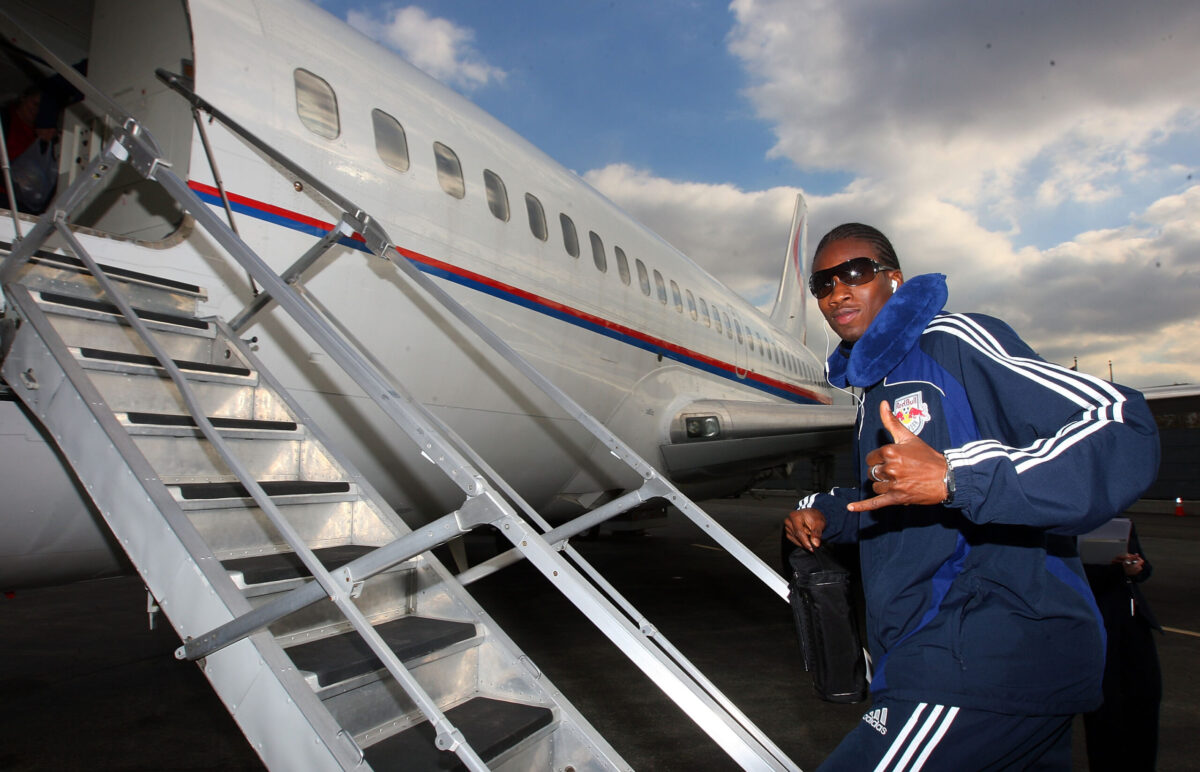
Which club from, say, the Northern United States or Canada would volunteer to fly to Buenos Aires for a midweek fixture? As someone who’s done his fair share of flying to Buenos Aires, let me tell you that the trip is a slog.
But this doesn’t mean that it’s impossible. We’ve seen MLS be flexible and rearrange fixtures due to participation in other tournaments, notably the Club World Cup, so it stands to reason that the league ought to bend over backwards to make travel life as easy as possible for its teams competing on the biggest stage.
Some have suggested that, at least for the group stages, the Libertadores could shift to a regional model, with the Southern Cone nations and Brazil occupying one set of groups while North America, Ecuador, Colombia, and Venezuela play in another set. This is doubtful, given the competitive imbalance that may exist between the regions, but it’s something to keep an eye on.
There’s also the matter of competitiveness. Would MLS clubs go all the way down to South America, play in intense physical battles in front of raucous crowds in Buenos Aires, Sao Paulo, or Bogota, and immediately shit the bed? Maybe at first. But it remains my contention that these trials and tribulations would result in a net positive for young American players. Learning to play in less-than-ideal conditions is a vital part of any player’s development, and it might just have some knock-on effects for the United States men’s national team in the long term.
Various outlets have reported that this merger might be in place for the 2027 version of the Copa Libertadores. In the meantime, I’m going to try to figure out a way to lock Don Garber and Chiqui Tapia in a room together until the paperwork gets signed.