From Beckham staying in Madrid to a Kissinger interference gone wrong, we look back at some of the biggest sliding door moments in American soccer history.
If you’re anything like me (and I hope for your sake that you’re not), then you like to play the “What if? Game!” It’s where you imagine alternate scenarios and timelines zigging and zagging out in front of us like a Microsoft screensaver from the ’90s.
This game really gives us a sense of perspective when it comes to even our smallest decisions or seemingly inconsequential events. The game of soccer, as ineloquent commentators are inclined to remind us, is a game of inches. Or centimeters, if you’re into that kind of thing. Here, I take a look at some of the nearest-run close calls in American soccer history, as well as extrapolate the implications that would’ve followed had some major events gone a different way.
What If Beckham Never Came?
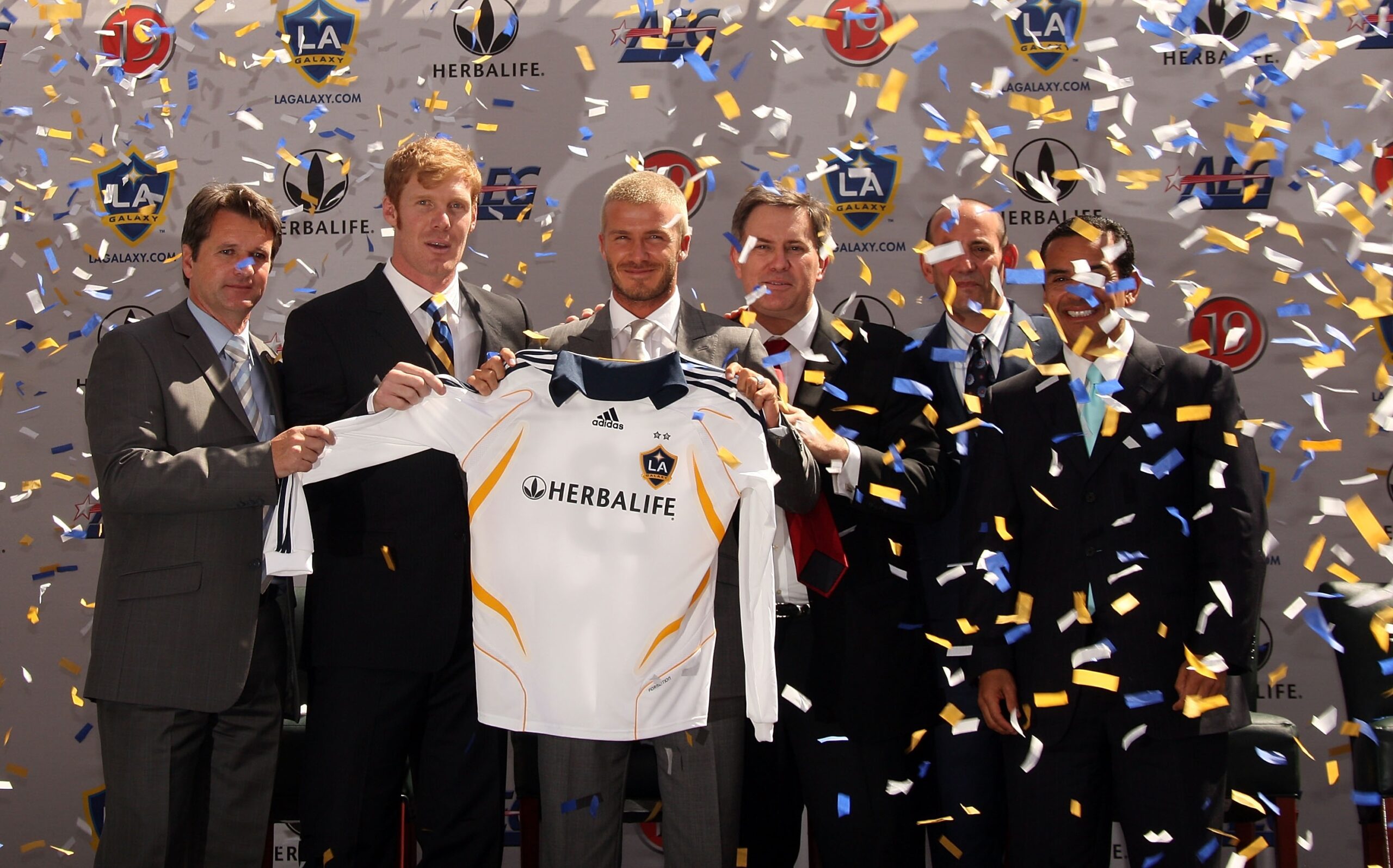
It’s a little strange to say, living in a time in which some of the most instantly-recognizable celebrities in the world are the likes of Lionel Messi and Cristiano Ronaldo, but back in the early 2000s there was really only one soccer player that Americans could reliably recognize: David Beckham.
I mean, which other men’s player could call himself a free-kick specialist, fashion icon, and pioneer in the field of white guys with cornrows? Heck, the heartthrob from Leytonstone even lent his name to the title of a pretty decent movie.
While Beckham was hardly the first superstar to play in North America (think Pele, Cruyff, and best of the NASL days), he was surely the biggest name to grace Major League Soccer.
The first butterfly effect of Beckham never having made the jump across the pond is an obvious one: the Designated Player Rule might not exist, or at least not as we know it. To entice him to sign way back in 2007, the league allowed teams to have one player earn a salary outside of the traditional salary cap. This makes sense when you consider that only four MLS players earned more than $400,000 during the 2006 season. Beckham made around that figure in a month with Real Madrid. Eventually, teams were allowed two DPs, and at present can employ three. (Or, in the case of Beckham’s own Miami franchise, seemingly infinity!)
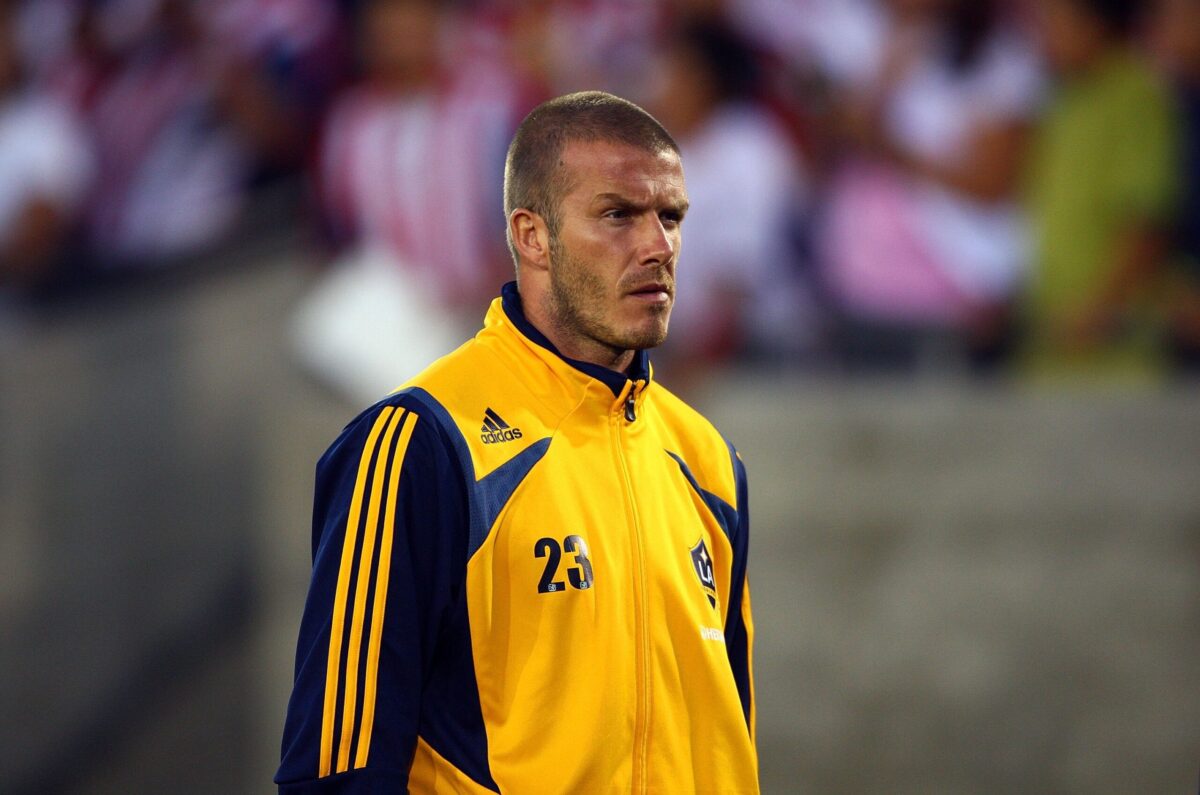
While Beckham teased the idea of moving to the United States as early as 2005, finger-wagging Eurosnobs made quite a habit of warning him against the idea. In fact, Beckham’s ex-Manchester United Manager Sir Alex Ferguson blasted the notion, asserting that the step down from top-level European football would take him out of contention for the England national team.
The fact is that Beckham was only 31, playing week in and week out for the biggest club in the world, Real Madrid, at the height of their Galacticos era. His fame was never bigger, and he could have conceivably decided to move to any club he wanted.
We know now that Beckham’s move to Los Angeles was somewhat more than a soccer-oriented one. A clause in his contract that gave him the right to buy an MLS franchise in the future for a paltry $25 million looks like a stroke of genius when you consider that the privilege is going for upwards of $500 million these days. Couple that with the Messi-shaped juggernaut he’s created in South Florida, and it’s hard to imagine a world in which the Beckhams don’t loom large in the American soccer landscape.
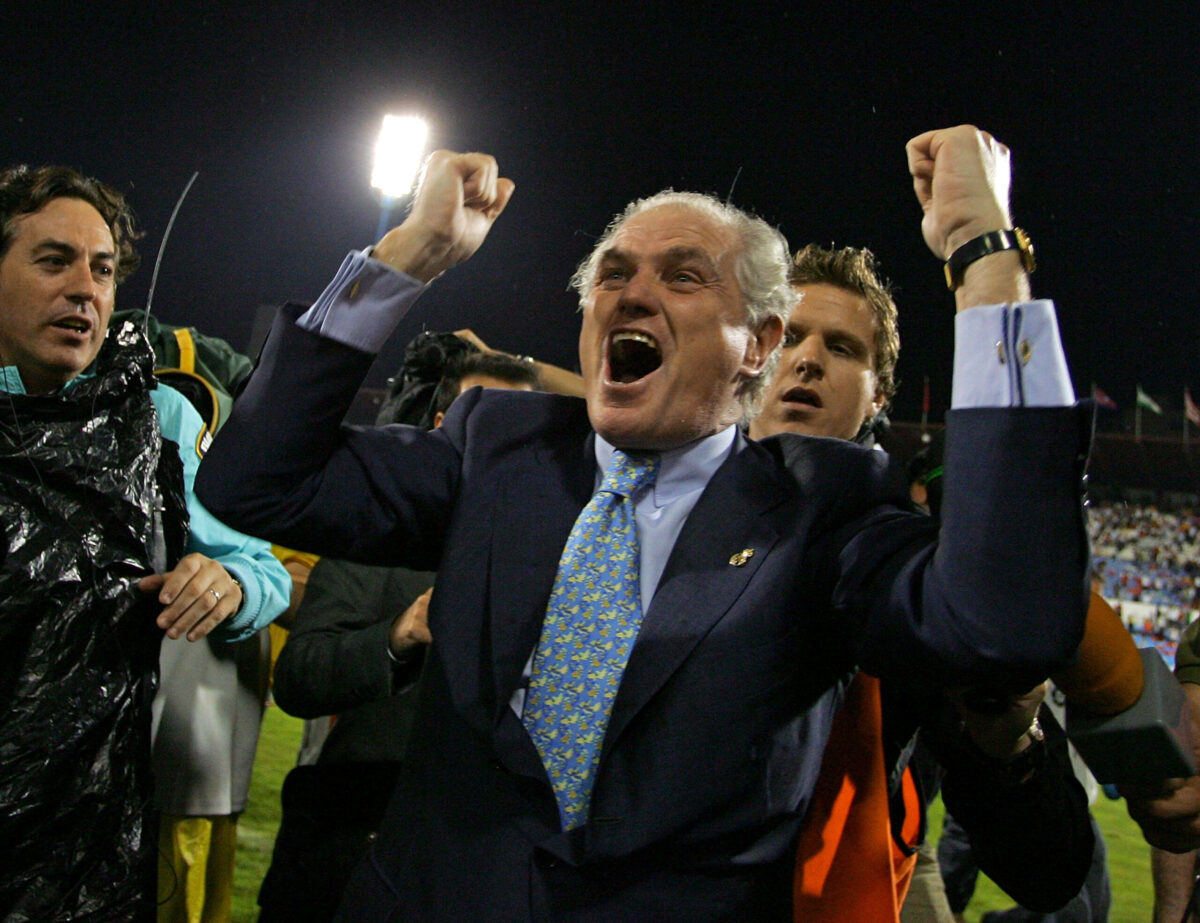
But the move nearly failed to materialize. As the clock ran down on the 2006-07 La Liga season, then-Real Madrid president and methadone Bond Villain Ramon Calderon publicly announced that he would attempt to gazump Beckham’s move to Southern California. He asserted that Beckham’s contract with MLS had a so-called “escape clause” written in, which would allow the Spanish giants to reclaim the rights to Beckham for at least another season. Calderon rattled his proverbial saber about getting attorneys involved and all that, but in the end, his bluster failed to pay off, and Beckham said adios to the Iberian Peninsula.
We all know how Beckham’s story played out from there, but what could have transpired had Calderon and his army of Spanish lawyers been successful in scuppering Beckham’s highly-publicized transfer?
Without a tremendous financial carrot, MLS would’ve struggled to recruit largely the Europe-based players that went on to be some of MLS’s biggest stars. We’re talking Zlatan. We’re talking Giovinco. We’re talking Vela. We’re talking Rob Fuckin’ Holding!
While Beckham was hardly the first European superstar to try his luck in MLS, he was the first to do so in what could be considered the prime of his career. He laid a road map that subsequent generations of talented players could follow. Is your club situation in Europe uncertain? Would you like to live somewhere that’s at least a little bit out of the limelight cast by the European media? Would you like to be paid dump-trucks full of cash to play at a slightly lower level where the stakes never feel quite as high?
But if the Designated Player Rule had never come to fruition, it’s likely that MLS would have been forced to pivot from Europe to a more financially-accessible source of talent: Latin America.
Savvy MLS general managers have, in recent years, treated the rest of the Western Hemisphere as fertile ground for all sorts of buy low, sell high shenanigans. It’s possible that the actual salary cap would have been expanded at a faster clip, given that no mechanism would have existed for operating outside of it, and clubs would have been disposed to fill their rosters with moderately-priced talent with high potential. The league might have resembled, say, the Dutch Eredivisie at an earlier time, rather than, well, whatever the hell it is now.
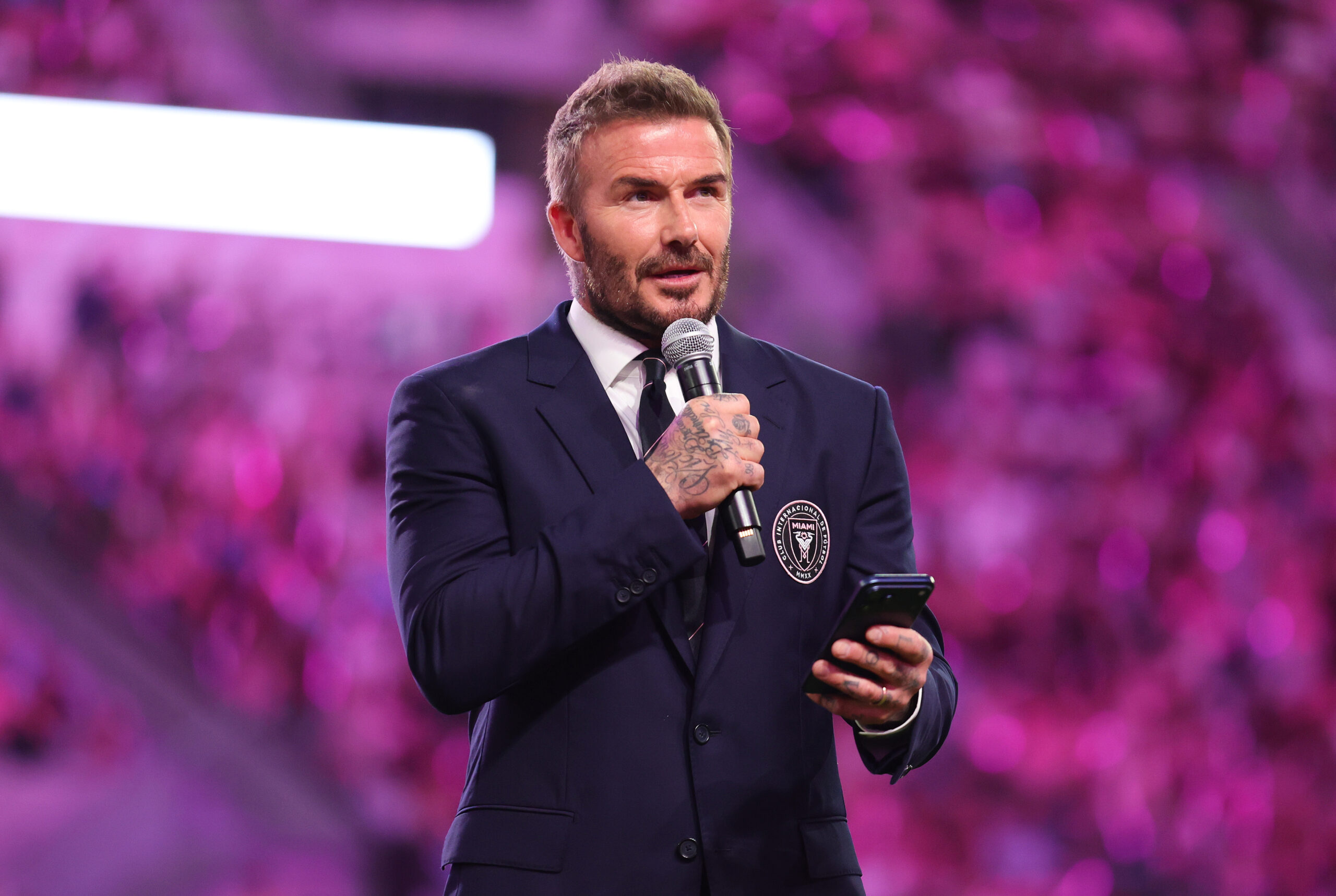
But the saddest consideration in all this? We might never have had Inter Miami. That’s right, the very same Herons, clad for battle in their soft pink playeras, suffering the type of punishing South Florida humidity that makes even the wettest of wet bulbs beg for mercy, might have only been the snowglobe dream of a child’s imagination.
And with no Inter Miami, that means no Messi. Let’s be honest: Antonella would never agree to living in Charlotte. But more seriously, the type of revenue-sharing and investment opportunity that Beckham took advantage of in his initial contract became the foundation of the deal that brought La Pulga to MLS in 2023. Messi, in a Beckham-esque agreement, will receive a substantial minority ownership stake in Inter Miami upon the completion of his playing career.
What If the USWNT Lost in ’99?
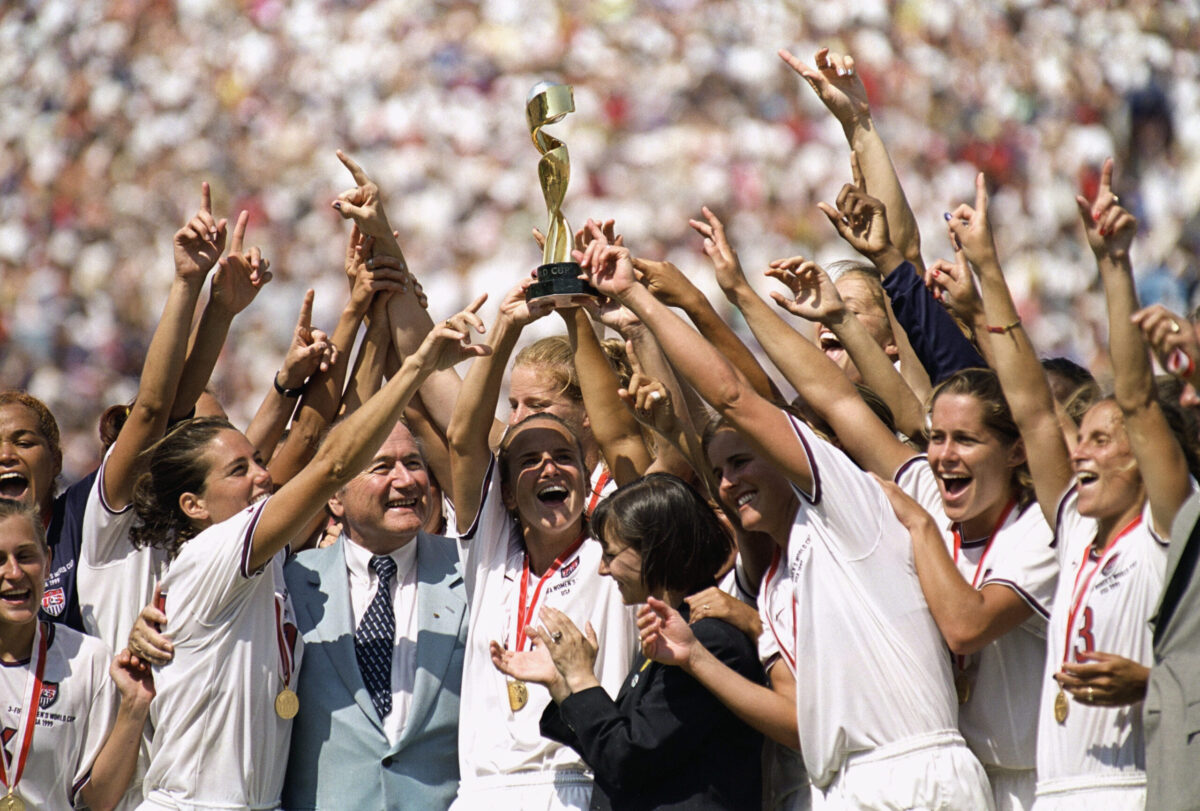
The United States women’s national team is the juggernaut to end all juggernauts in women’s sports. The victors of four World Cups, there was a time where the nation could’ve fielded a B-team and still have won the prestigious tournament, until the rest of the world caught up.
There are stories abound of young girls inspired to pursue soccer greatness by one singular match: the 1999 Women’s World Cup final, contested at the Rose Bowl in sunny Pasadena between the United States and China. USWNT legends ranging from Megan Rapinoe and Alex Morgan to Abby Wambach and Crystal Dunn have cited “The ’99ers” as the crucial influence in their own rise to soccer greatness. They’re even getting their own Netflix movie that’s currently in production.
But what if the game played on that toasty June afternoon had gone ever so slightly differently? What kinds of implications would that have had for the women’s game, not just in the United States, but worldwide?
U.S. goalkeeper Briana Scurry cemented her status as a legend of the women’s game during the penalty shootout of the 1999 final. China buried their first two shots, as did the first two American takers. Up stepped Chinese midfielder Liu Ying. She fired a shot to Scurry’s left, but the American goalkeeper read it perfectly and quite comfortably made the save.
Let’s say that Liu is allowed a rekick and buries it. Would China then have prevailed and taken home the trophy? Shootouts tend to be a coin flip, as common wisdom indicates. The United States falling short in a home tournament might have been too disappointing to put into words. A run to the final might have inspired a similar generation to “The ’99ers,” but it’s hard to envisage a future as replete with success as that which we’re currently living.
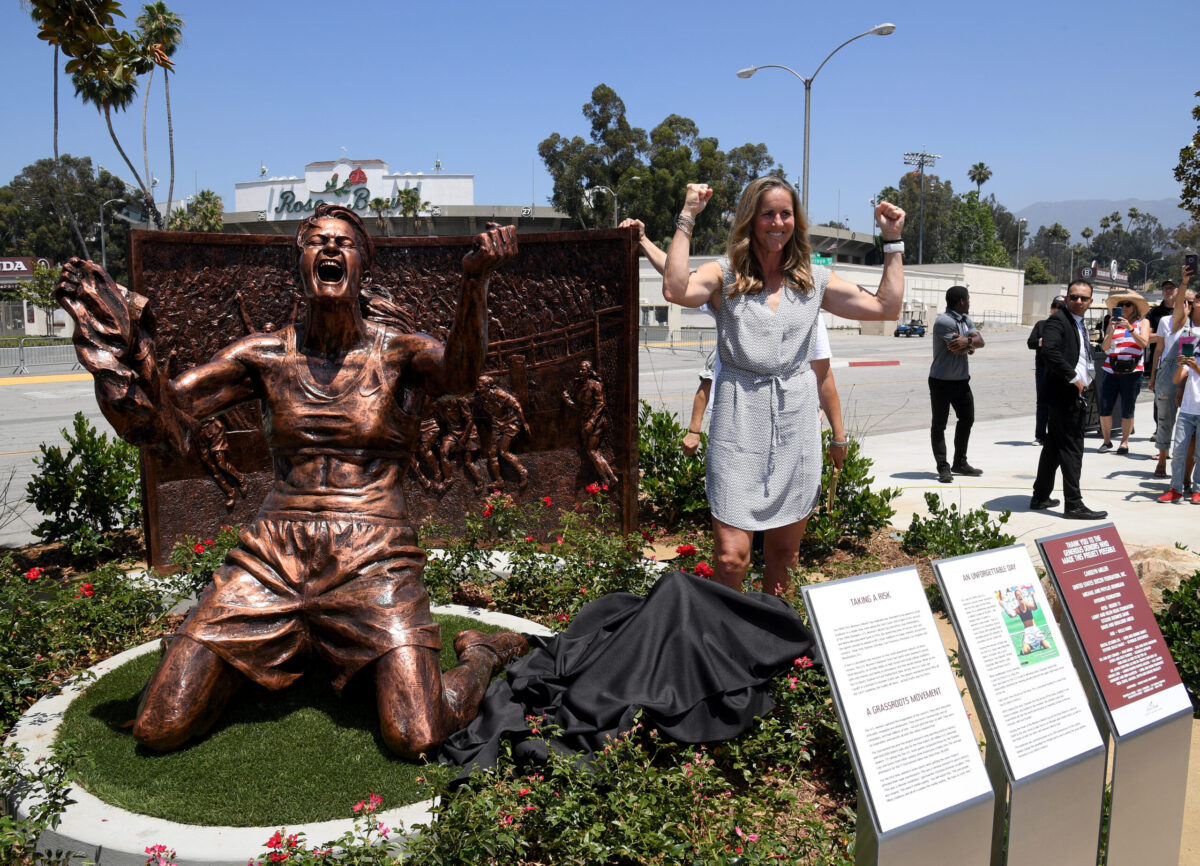
We might well have been robbed of the iconic, enduring image of that tournament: Brandi Chastain clad in her sports bra, clutching her jersey in a raised fist, unleashing a primal scream of triumph. The photo invokes the intrinsic struggle for respect and recognition endured by women’s players since time immemorial, and the moment is commemorated by a statue outside of the Rose Bowl.
Reaching the summit on that fateful day in California signaled that this was only the beginning of women’s soccer’s meteoric rise in this country, and a reminder of the many battles left to fight. Where would we be without that imagery? Would we count four stars above the USA crest? My brain says no, but my heart… well, it also says no.
And what about China? Would they be harvesting the fruits of their own golden generation in women’s soccer? While they’ve qualified for each World Cup since, they’ve failed to repeat the success they had in the United States. Their results since then have steadily declined to the point at which they crashed out in the group stage last time out in Australia and New Zealand. A World Cup title under their belts might have spurred the CCP to invest to an even greater extent in the women’s program, a la North Korea, but without the sanctions and restrictions that hamstring their communist neighbors.
What If the Torsten Frings Handball Was Called?
If there’s one name that makes me snap awake at 3 a.m., drenched in a cold sweat and angrily shaking my fist at the heavens, it’s Torsten Motherfucking Frings. But why, you ask, should a diminutive German midfielder who retired in 2012 inspire such ire?
It was June 21, 2002. At 5 a.m. Eastern time, the U.S. men’s national team, fresh off an emotional win against arch rivals Mexico in the round of 16, were locked in a fierce clash with zee Germans in Ulsan, South Korea. Despite dominating long stretches of the game, the scrappy United States found themselves trailing 1-0 to a first-half Michael Ballack header.
But in the 50th minute, a passage of play unfolds that has the possibility to reshape American soccer as we know it. Claudio Reyna, dad of Gio and husband of a blackmailing wife, whips in a ferocious corner from the right-hand side. American defender Tony Sanneh managed to flick it behind him, where an onrushing Gregg Berhalter, dad of Sebastian and husband of a very forgiving wife, made decent contact with a high left boot. The ball was initially saved low and to his left by German keeper Oliver Kahn, but bounced up and seemed poised to cross the line.
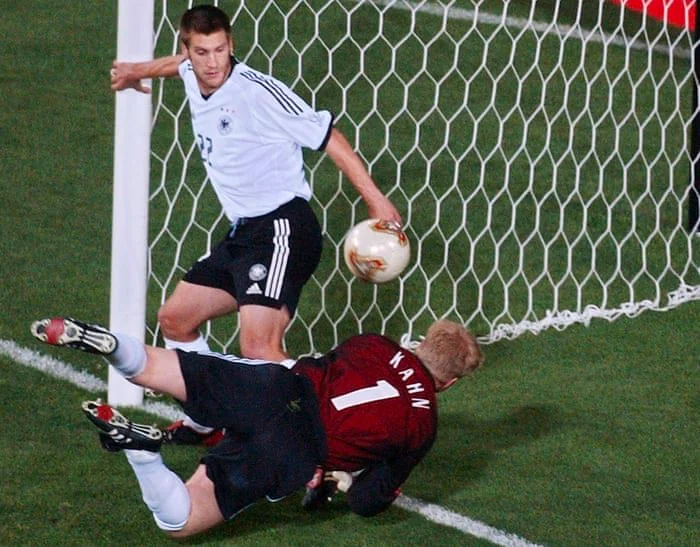
Frings, stood on the far post to defend the corner, noticed the ball pop up off of Kahn’s gloves, and ever so subtly slid his left forearm into the path of the ball, preventing it from crossing the line. Scottish referee Hugh Dallas claimed he had an unobstructed view of the passage of play, and he deemed the contact incidental. The Germans, always gracious in victory, pleaded their innocence, but in my humble opinion, it’s exceedingly difficult to watch a replay of the handball and not zero in on the exact moment when Frings realizes that the ball is headed over the line and his arm moves conspicuously away from his body.
The “Double Jeopardy” rule not having been introduced until 2016, the rules at the time stipulated that the referee ought to have shown a direct red card to Frings and awarded a penalty to the United States. It stands to reason that a reinvigorated USMNT, tied 1-1 and playing with a man advantage for another 40 minutes, could easily have found their way past a lackluster German side.
In the semifinals, they would’ve taken on cohosts South Korea, who needed some referee trickery themselves to get past Italy in the round of 16. Now infamous Ecuadorian referee Byron Moreno wrongly dismissed Italian attacker Francesco Totti, issuing him a yellow card for simulation, whereas the replays show that he was clearly fouled by a South Korean defender.
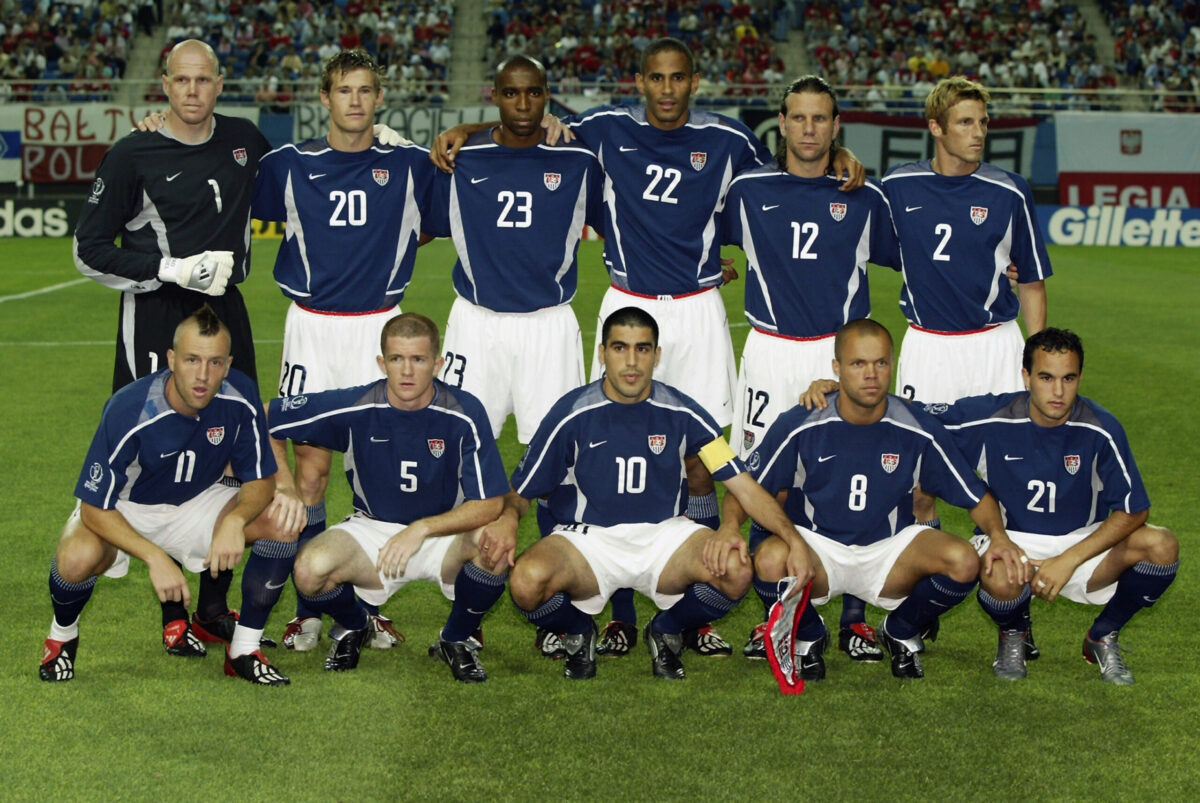
Had they advanced, would the Americans have been able to best the cohosts in the semifinals contested in Seoul four days later? The USMNT boasted a big, physical spine of the team in John O’Brien, Pablo Mastroeni, and Berhalter, as well as Premier League-caliber goalkeeper and owner of one of the strangest accents you’ll ever hear, Brad Friedel, between the sticks. The boys in attack were no slouches, either, with Landon Donovan, Cobi Jones, and “The Pride of Southwest London” Brian McBride among the options available to coach Bruce Arena.
I’m going to go out on a limb here and say that, yes, the United States would’ve bested an emotionally and physically drained South Korea side in their own backyard. The U.S. boasted a squad full of athletes, if not the most technically-gifted players, and part of me thinks they would’ve used their size and speed to get at least a couple of goals, be it from transitional moments or set pieces.
It’s almost unthinkable, but that would have put the USMNT in an honest-to-goodness World Cup Final. The story would have been nothing short of awe-inspiring: a nation still reeling from the September 11th attacks, playing a sport still fighting for respect and recognition, taking on the world at its own game and showing the collecting “Spirit of 1776,” to borrow the somewhat clunky phrase from authors Steven Mandis and Stephanie Parsons Walter.
The only problem? The team to line up against them in Yokohama would have been Brazil. The terrifying winners of four World Cups already at that point, the Canarinha barnstormed its way through to the final in convincing fashion, dismantling Belgium, England, and Turkey, all in normal time. The talismanic Ronaldo “R9” Nazario sported one of the strangest haircuts you’ll ever see, but he was banging in goals left, right, and center. The Brazilian defense was unyielding, with wingbacks Roberto Carlos and Cafu contributing just as much in attack as at the back.
So no, there was not a snowball’s chance in South Beach that the USMNT could have beaten that Brazil side in the final match of the World Cup. Stranger things have happened, but that Brazil squad seemed almost destined to swat aside anyone unfortunate enough to come up against them.
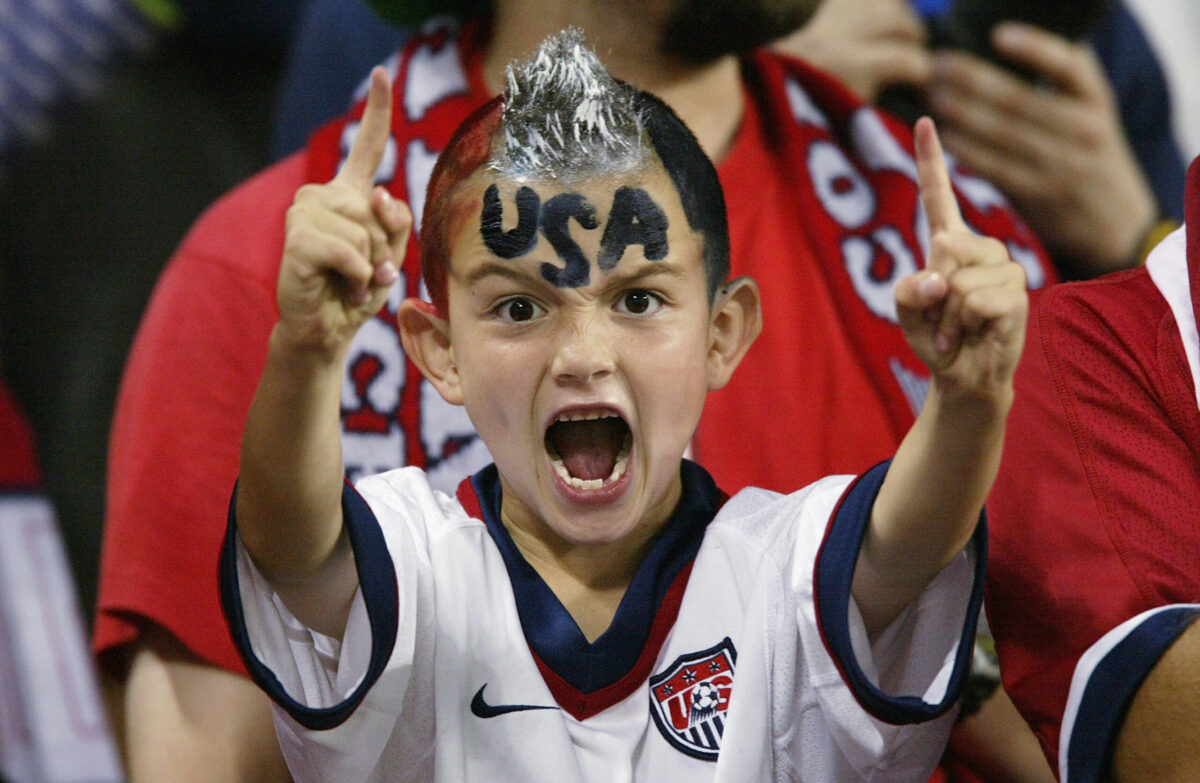
But while USMNT fans still think back to a quarterfinal run in 2002 quite fondly, it’s tantalizing to consider what kind of cultural effect a bonafide cinderella run to the final would have inspired. Would we have seen a similar generation of young players inspired by the U.S. men, akin to the “’99ers” generation on the women’s side? Would MLS have grown by leaps and bounds, attracting and developing even better players at an even earlier stage? Could we have possibly failed to qualify for the 2018 World Cup? If it weren’t for the left forearm of Frings, would we be enjoying wave after wave of golden generations, plying their trades at the world’s top clubs? I have to stop thinking about this; it’s making me depressed.
What If the U.S. Hosted the World Cup in 1986?
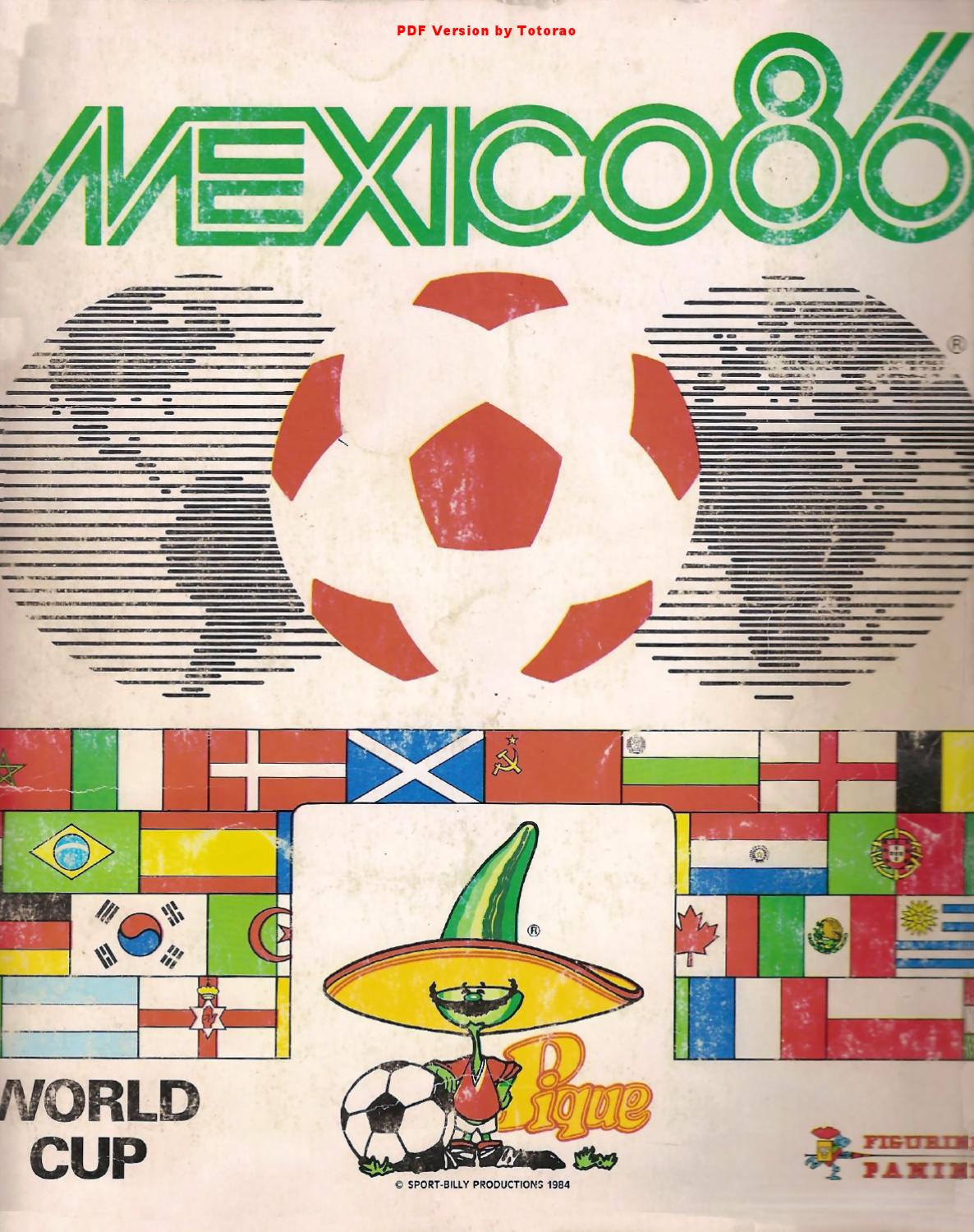
Although the most memorable moments from the 1986 edition of the World Cup are indelibly linked to Diego Maradona at the Estadio Azteca, it’s important to remember that Colombia, not Mexico, were initially scheduled to host the competition that year.
When the Colombians backed out of hosting the tournament, FIFA President Joao Havelange and his cronies were understandably eager to find a replacement. The United States, sniffing a lucrative opportunity, lined up their best and brightest diplomats to convince the totally honest and transparent folks at FIFA that Uncle Sam’s backyard had what it takes to host the biggest soccer tournament on planet Earth.
That meant enlisting the help of former NASL superstars Pele and Franz Beckenbauer, alongside America’s favorite spectacled war criminal, Henry Kissinger.
Don’t let his talents for carpetbombing Cambodian villages fool you; Kissinger’s real passion in life was fussball. As a child in Germany, he played in the youth teams of his local club, SpVgg Fürth, before his family escaped the Nazi regime and fled to the United States. He served as the Chairman of the Board of Governors of the NASL for a time, and was a committed fan of both Chelsea and Juventus. I guess that tracks.
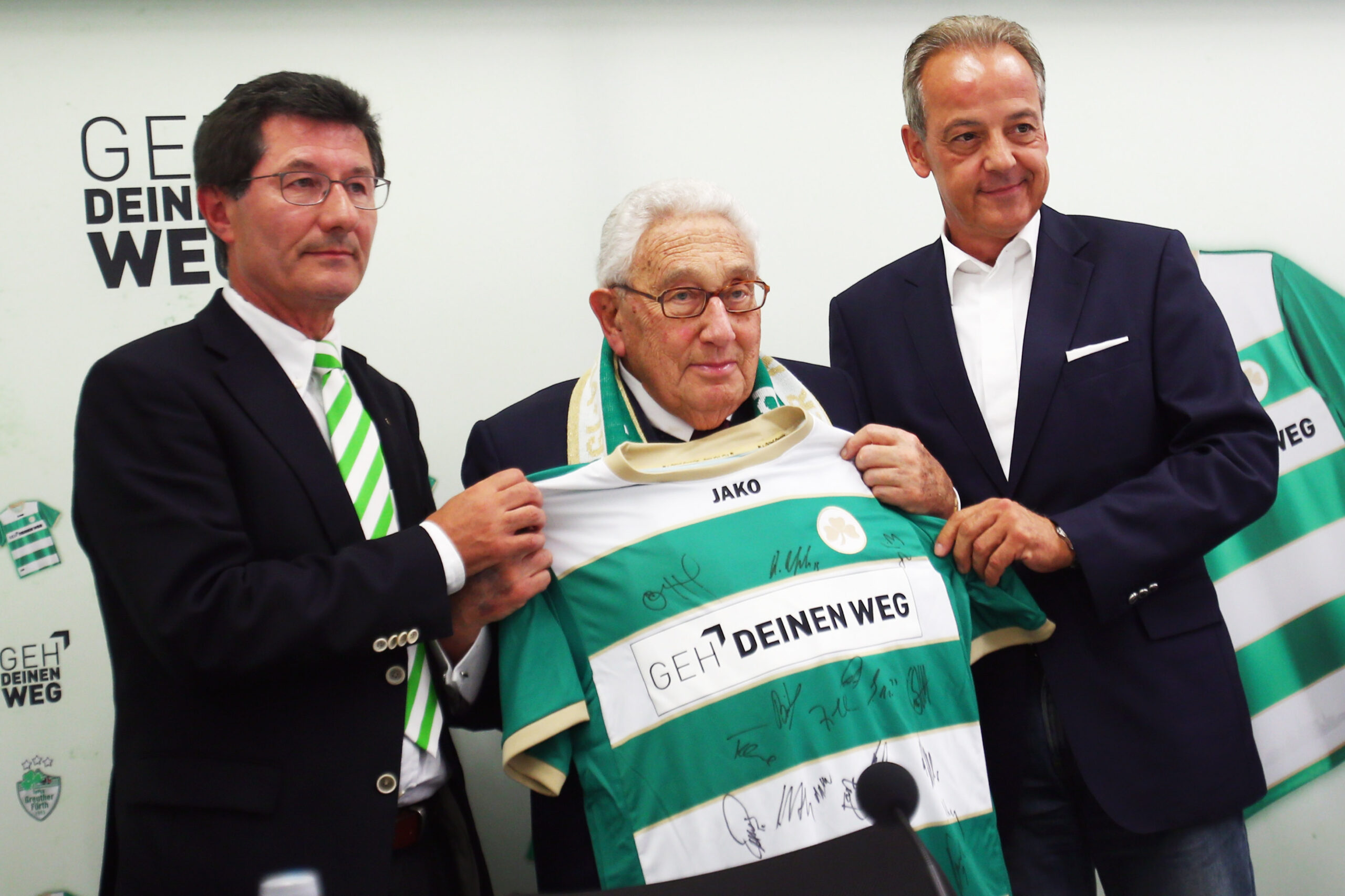
Kissinger was just as much a World Cup fan as he was a fan of South American dictators, too. Some reports hold that he accompanied Argentine military dictator Jorge Videla to pay a visit to the Peruvian locker room before a crucial 1978 World Cup match in Rosario, Argentina. Back in those days, a second group stage was contested to see which team would contest the final. Argentina knew that they needed to win by four or more goals to reach the final, given that simultaneous kickoffs hadn’t been invented yet. Kissinger and Videla reminded the players about “Argentinean and Peruvian brotherhood,” but I’ll let you be the judge.
Anyway, Kissinger led a FIFA delegation on a tour of potential stadium sites, but was reportedly standoffish and haughty when asked clarifying questions. He even refused to allow FIFA to do flyover inspections of the stadiums. FIFA eventually unanimously voted to grant the 1986 World Cup to Mexico (Havelange and co. were reportedly bribed by a nefarious Mexican television magnate), leaving an embarrassed Kissinger to remark “The politics of FIFA, they make me nostalgic for the Middle East.”
But let’s say, for the sake of argument, that FIFA had not been such a wretched hive of scum and villainy. Let’s say that Kissinger bowed out, and let, I don’t know, Stevie Wonder take his place in the negotiations. The USA hosts the World Cup in 1986! Wooo!

The first objective this would have accomplished is saving the NASL. The once-proud league spanning the United States and Canada found itself in a steady decline in 1982. Contraction set in, with the league collapsing from 21 teams the previous season to 14. Flippant owners bought teams in less-than-stellar markets, and then refused to invest in them when they didn’t see immediate profits. The novelty of aging foreign superstars was wearing off, and a players’ strike in 1979 intensified animosity between the players and cheapskate owners.
But an infusion of soccer-shaped interest very well could have righted the ship. Fielding a competitive USMNT team for the 1986 tournament would have then become a matter of national pride. Maybe this leads to more investment in player development, and gives the U.S. a 10-year head start on where we are today.
MLS might not exist, had the NASL been able to continue operations. NASL was not, compared to Major League Soccer, a single-entity structure, but instead composed of individually-owned and operated clubs. For most of its history, NASL did not have a salary cap, and it became a bit of an arms-race to acquire the best possible aging international stars.
While this wasn’t necessarily good for the league’s stability, it made the league financially competitive with other leagues around the world. But does this mean that the NASL’s collapse was bound to happen, and a shot in the arm from the World Cup would have done nothing more than delay the inevitable? Yikes, maybe this scenario could have set us back.
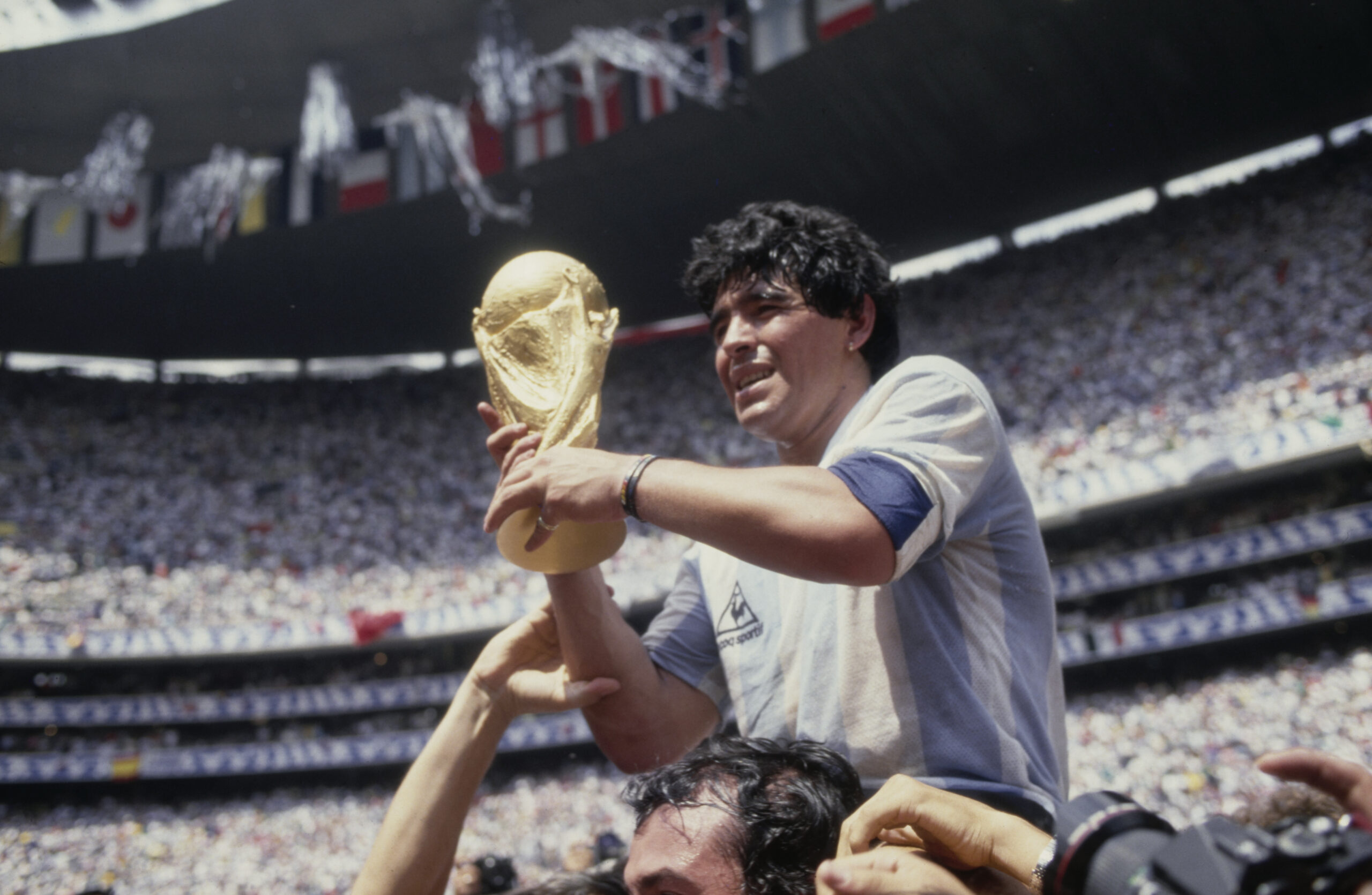
And where does this leave Mexico? The 1986 World Cup is arguably the most iconic in history, and inspired a deep, abiding love of soccer for generations of Mexicans. Would the atmosphere of that tournament have been the same had it been held in the U.S.? Would the Estadio Azteca have become the mythical fortress it remains today without those iconic moments? Can you imagine Maradona’s “Goal of the Century” or “Hand of God” taking place in Giants Stadium, for God’s sake?
All told, the 1986 World Cup in the U.S. certainly would not have hit the same as the Mexican edition. The stars and stripes would have gotten a boost, surely, but not enough of one to dramatically change the soccer landscape as we know it today.