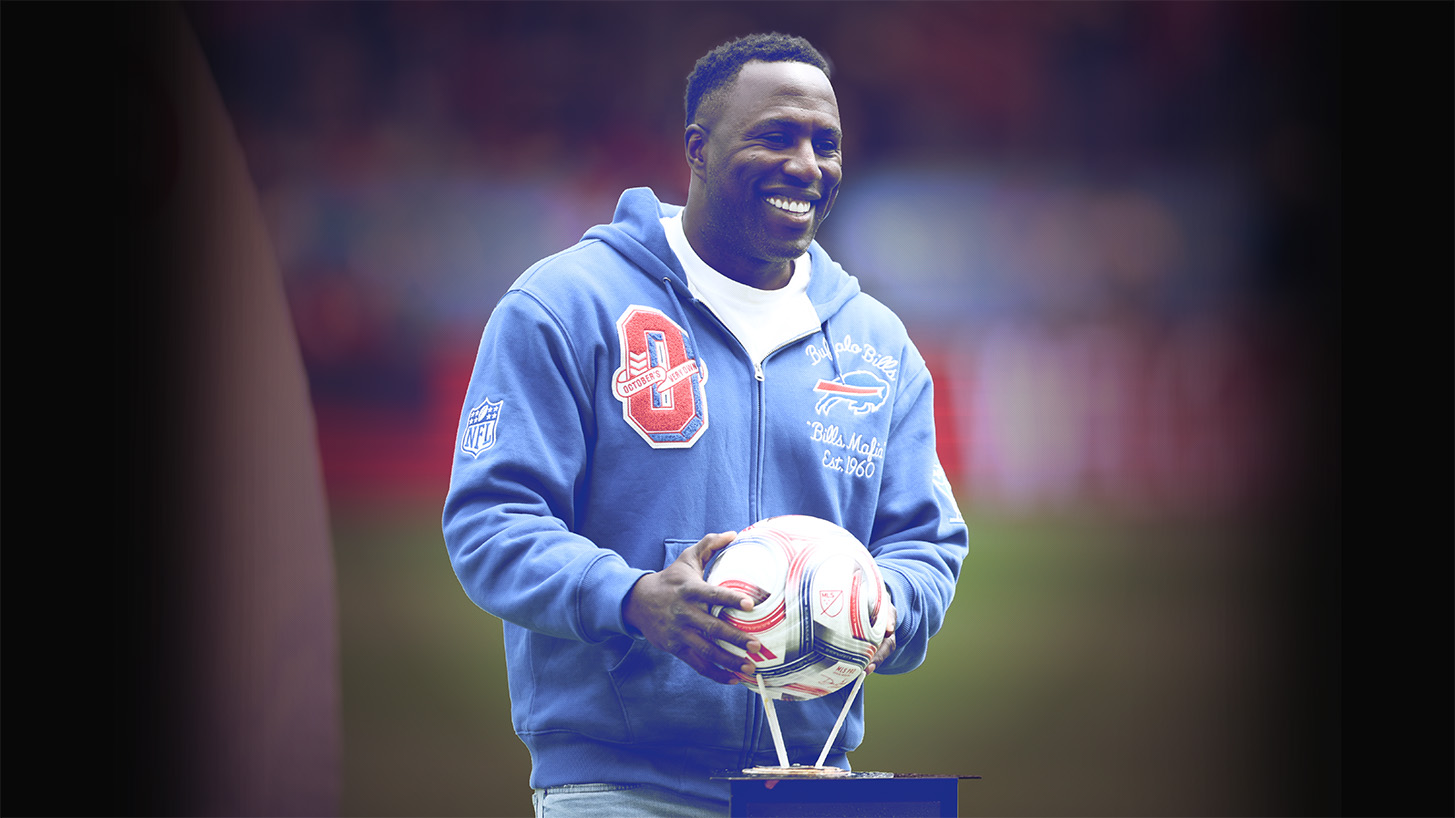
Urban Pitch caught up with Jozy Altidore to discuss his new business life following his playing career, as well as his views on the current state of U.S. Soccer, including the criticism of Christian Pulisic and the hype surrounding Cavan Sullivan.
Jozy Altidore hung up his boots in 2023, but by no means has he taken it easy in retirement.
The former United States international wears many hats these days, and he’s remained a busy figure in the world of soccer. Most recently, fans saw the two-time World Cup veteran put his Spanish skills to work as a broadcaster for Telemundo during the 2026 FIFA World Cup. Away from the microphone, he is an investor in the NFL’s Buffalo Bills and serves as Chief Strategy Officer and Co-Owner of Sogility, a soccer training program that combines cutting edge technology and data with player development and high level coaching.
Altidore is also the co-founder of Footymarket, a one-stop marketplace for pre-owned and unused shoes, gear, and equipment, and is a founding partner of Douzdiset, a sports-focused investment and venture firm.
In a sit-down interview, we discuss his thoughts on what the 2026 World Cup left behind, the importance of building a career beyond the pitch, and the recent media backlash surrounding Christian Pulisic.
In the Booth and Off the Pitch
Urban Pitch: You were a part of the broadcast team on Telemundo’s World Cup coverage, what was it like to do it in Spanish and what did you take away from it?
Jozy Altidore: For me, it was a really fantastic experience. As a player, you see the game, the sport, and everything that goes into it from one perspective. But when you work as a broadcaster and find yourself on the other side of the lens, you gain a real appreciation for everything that goes into making these broadcasts special, both for the people at home and for everyone working behind the scenes.
The people involved genuinely care about delivering a first-class experience and making the broadcasts as enjoyable and engaging as possible for viewers at home. They take a tremendous amount of pride in what they do.
For me, that was one of the most interesting parts, seeing all the hard work that goes into delivering a great broadcast. It was really cool to experience the game from that side.
In regards to Spanish, I think that was really interesting. It’s one thing to speak Spanish with people, conduct sideline interviews, and do things of that nature. But when you’re at a World Cup and suddenly you’re speaking to millions of people at home in a different language, there aren’t many opportunities for do-overs. So all of that is definitely on your mind as you’re going through it.
But at the end of the day, it’s like anything else. You just have to go for it. Once you get that first rep under your belt, you start to settle in, gain confidence, and become more comfortable as you go.
We’re seeing more and more former players move into broadcasting, podcasting, and punditry. Do you think there’s an oversaturation of former players in the U.S. soccer media landscape today, or is there room for everyone to bring their own perspective and style?
I think it’s part of the growth of the sport. As soccer has grown, the media side of the game has grown with it. The beauty of that is that you’re seeing more former players and people who have been involved in the game for a long time carve out their own niches, and I think that’s important for the overall health of the sport because it brings different views and perspectives to the conversation.
It’s simply part of the cycle. You see guys play, they eventually retire, and then many of them continue talking about the game. We’re all going to have an opinion on it at some point. For me, there’s something really positive about seeing the game grow to the point where players from so many different generations can now get on television, start a podcast, and talk about what they’re seeing.
There’s also an ecosystem that allows them to build something around that and benefit from it financially. To me, that’s another sign of how much the sport has grown.
View this post on Instagram
You’ve taken a very entrepreneurial path since retiring, with investments across sports, technology, and e-commerce. What do you look for in a business or opportunity before deciding to put your name, time, or money behind it?
I try to be someone who is really explorative and open-minded, so I like looking at a lot of different things. When you’re playing and building a career, at least for me, I was very focused on the day-to-day and putting everything I had into becoming the best soccer player I could be.
Now, having the freedom to explore different opportunities is really powerful. I’ve chosen to spend that freedom on investing, brand building, and business development.
As far as what I look for, the people I’m going into business with are incredibly important. Who you surround yourself with matters, and I think that’s one of the most important things when deciding what opportunities to pursue.
I also look for industries that aren’t one-dimensional and have room to evolve. Technology is constantly changing, and so are people’s interests and behaviors. From a consumer perspective, I want to be involved in businesses that provide something people genuinely need, something that can make their everyday lives better. At the same time, it needs to be cost-effective and accessible to the people it’s serving.
For me, being part of businesses that can have that kind of impact while continuing to evolve is really exciting.
Looking back, when did you start preparing for life beyond soccer and thinking about the bigger picture?
I’ve always been fascinated by business, so it was something I was naturally interested in. I don’t think I initially understood just how far you could take it, and discovering that has been really exciting for me.
Like anything else, you can completely immerse yourself in it, spending your time analyzing deals, structures, and different opportunities, or you can dip in and out and dedicate time to it when needed. Having that flexibility has been key for me because of my personality. I like jumping into things, getting involved, and really understanding how they work.
The entrepreneurial lifestyle has always been in the back of my mind, and it’s something that genuinely excites me. My dad was also my first real introduction to entrepreneurship. When I started earning money early in my career, he encouraged me to think carefully about how I spent and invested it. He would explain why certain decisions made sense and helped me understand his way of thinking.
Seeing how he approached business and money from an early age really fueled my interest and ultimately encouraged me to pursue that entrepreneurial path myself.
How important do you think it is for athletes to know when it’s time to move on from their playing careers and build an identity beyond the sport, and what helped you make that transition yourself?
I think you have to be really observant as a player, and it’s important to make these decisions early enough to give yourself time to transition. We all have a shelf life as athletes, no matter who you are. It doesn’t matter if you’re the greatest player in the world or a role player, at some point, your playing career is going to come to an end.
For me, I started to see where things were headed from a sporting perspective, particularly in terms of how I was being viewed and treated by coaches. Obviously, some of that is simply Father Time, but there’s also a diplomatic side to sports, relationships, who you know, and the dynamics that exist around the game. Those things don’t disappear just because you’re a player.
When I realized that window was starting to close, even though I wasn’t ready for it to close and still felt physically capable of giving more, I decided to use that time to start thinking seriously about life after soccer. I was still in my early 30s, so I thought I could take that energy and put it into my transition instead.
That meant traveling, exploring different opportunities, and really committing myself to understanding what life after soccer could look like. I knew I still had more to give, but I also realized that putting some of that energy into preparing for the next chapter would ultimately benefit me.
View this post on Instagram
Can you tell us about your humanitarian work in Haiti, what it means to you, and why giving back has been such an important part of your life and career?
It started for me with Haiti. Haiti has always held a very special place in my heart because my parents immigrated from Haiti to the United States, which gave me the opportunity to become the person I am today. Supporting Haiti has therefore always been incredibly important to me.
I actually traveled to Haiti when I was 16 with the New York Red Bulls and LA Haiti, where we organized camps and helped with donations, including fresh water and school supplies. But when I was 19, following the 2010 earthquake, that’s when I really started making a more personal and consistent effort to give back.
It was something I knew from an early age that I wanted to be involved in, especially knowing the challenges Haiti faces as one of the poorest countries in the Western Hemisphere. Being able to play a small role and do my part has always been important to me.
That eventually led me to build relationships with different organizations, including the World Food Programme. Through that partnership, we launched a campaign called Erase Hunger, and to date, we’ve provided more than 300,000 school meals to children. The goal is to help increase school attendance and, ultimately, the likelihood that these kids graduate and go on to build careers, simply because they know they’ll receive a full meal when they go to school.
That’s something we can easily take for granted. Education does so much for a young person. It prepares them for the future, unlocks their imagination, and gives them opportunities not only for themselves but for their families as well.
For me, so much of what I’ve been able to accomplish after my playing career has come through education. So making sure children have access to education, and giving them the opportunity to discover passions and possibilities they may not even know they have, is incredibly powerful. That’s why the Erase Hunger campaign has become such an important part of my philanthropic work.
View this post on Instagram
Haiti is often portrayed through images of poverty and political instability, but there is also tremendous beauty, culture, and potential in the country. How important is it to showcase that other side of Haiti and help change the way the country is perceived around the world?
I think the images you see on the news are important because people need to be informed, but there’s also a difference between being informed and understanding the full reality of a place. Sometimes the way a country is portrayed can shape people’s perception of it, and that’s not unique to Haiti. You see it with countries like Mexico, Colombia, and many others, where the reality can be very different once you actually visit.
I’ve been fortunate through soccer to travel all over the world many times, and one thing I’ve learned is that the way certain places are portrayed in the news isn’t always the full picture. I’ve traveled to countries expecting one experience based on what I had seen or heard, only to be pleasantly surprised by how enjoyable the experience was and how friendly the people were.
So I try to approach the news with an open mind. It’s important to stay informed and understand the challenges that different countries face, but at the same time, you have to recognize that news coverage can sometimes be very cinematic. There’s usually much more to a country and its people than what you see in the headlines.
On the Pitch
View this post on Instagram
On a general level, what are your thoughts on the 2026 World Cup, and where do you realistically see the sport going from here?
Yeah, I think the World Cup was exactly what was needed. If you’re a soccer fan and you want to see the game grow, you want people to be introduced to what so many of us have known for a long time: What it means to be a soccer fan and the culture that comes with the sport.
I think it was a 10 out of 10. You could see the impact it had on people, particularly through the attendance and the diversity of fans coming out to games. You saw people from all different walks of life attending matches, both for the United States and for other nations as well. I think it did exactly what we hoped it would do, and from that perspective, it was a 10 out of 10.
Realistically, I think it’s going to do so much for the growth of the game. You’re already seeing that. Look at U.S. Soccer, for example, and the commitment they’ve made to the player pathway and to building an ecosystem that promotes and develops players capable of competing at a world-class level.
They say that in their mission statement, and I think that’s important to understand because for a long time, I think we were simply participants in the sport. We obviously had our national team, but I don’t think there was always a streamlined approach toward making soccer the most popular sport played within American communities. Now, I think that’s clearly becoming a goal.
You saw that in the reaction to the way the United States exited the tournament. People weren’t pleased, and I think they were invested enough to start asking why. Why are these things happening? How do we fix them? How do we develop players like Erling Haaland? How do we get to that next level?
Obviously, some of that discussion happens because the World Cup is here. Every four years, you see commentators and personalities jump into soccer and become fully invested while the tournament is going on. Then, when the tournament ends, a lot of those people move on.
But based on my experience, both as a player and now being on the other side and seeing these World Cups from a different perspective, I see things a little differently this time around. When you also look at some of the venture capital and private equity money that started moving into soccer before the World Cup, I think that’s a good indication of how people are betting on the growth of the game and its reach across communities throughout the country.
You’re seeing a bigger uptick in participation, but you’re also seeing more people staying involved in the game beyond the ages of 14 and 15, when traditionally there has been a significant drop-off in participation. I think those are two numbers we really need to keep an eye on as we look at where the sport goes from here.
Do you think it’s important for U.S. Soccer to bring more former national team players into coaching and leadership roles, and how valuable is their experience to the next generation?
I think the Federation recognizes that. They’ve done a number of really good things in recent years to open the door to more of that conversation. Like everything else, there’s always room for improvement, and I think they recognize that as well.
Across the men’s and women’s teams, as well as the disability programs and all the different teams they oversee, I think they’ve done a really good job. You can see that through the training center and the environment they’re trying to create at all levels. I think that’s something we still have to get much better at. Creating environments that consistently challenge players and help them develop.
As important as it is to bring former players into coaching and leadership roles, you can’t have former players coaching everywhere across the country. That’s especially true at the younger levels, where players are developing their first relationship with the ball and the game. We have to make sure those players are getting the right coaching for where they are in their individual journey.
The other thing I think is really important is starting to compete at a world-class level in youth championships and building a winning culture. On the men’s side, we haven’t consistently competed for or won world championships at the youth level. On the women’s side, obviously, we’ve proven that we can be world champions, so I think the men’s program needs to start developing that same mentality.
Across the board, we need to get our young players to understand that when they reach the youth national team level, winning matters. It’s not supposed to be the most important thing, but having a competitive edge and learning how to compete is incredibly important. Competition brings out the best in players, so making sure they understand that from an early age is also critical.
When you look at other nations, France, for example, they’re winning at the youth level. They’re winning gold medals and Under-20 World Cups. I think that’s really important for us to start doing as well.
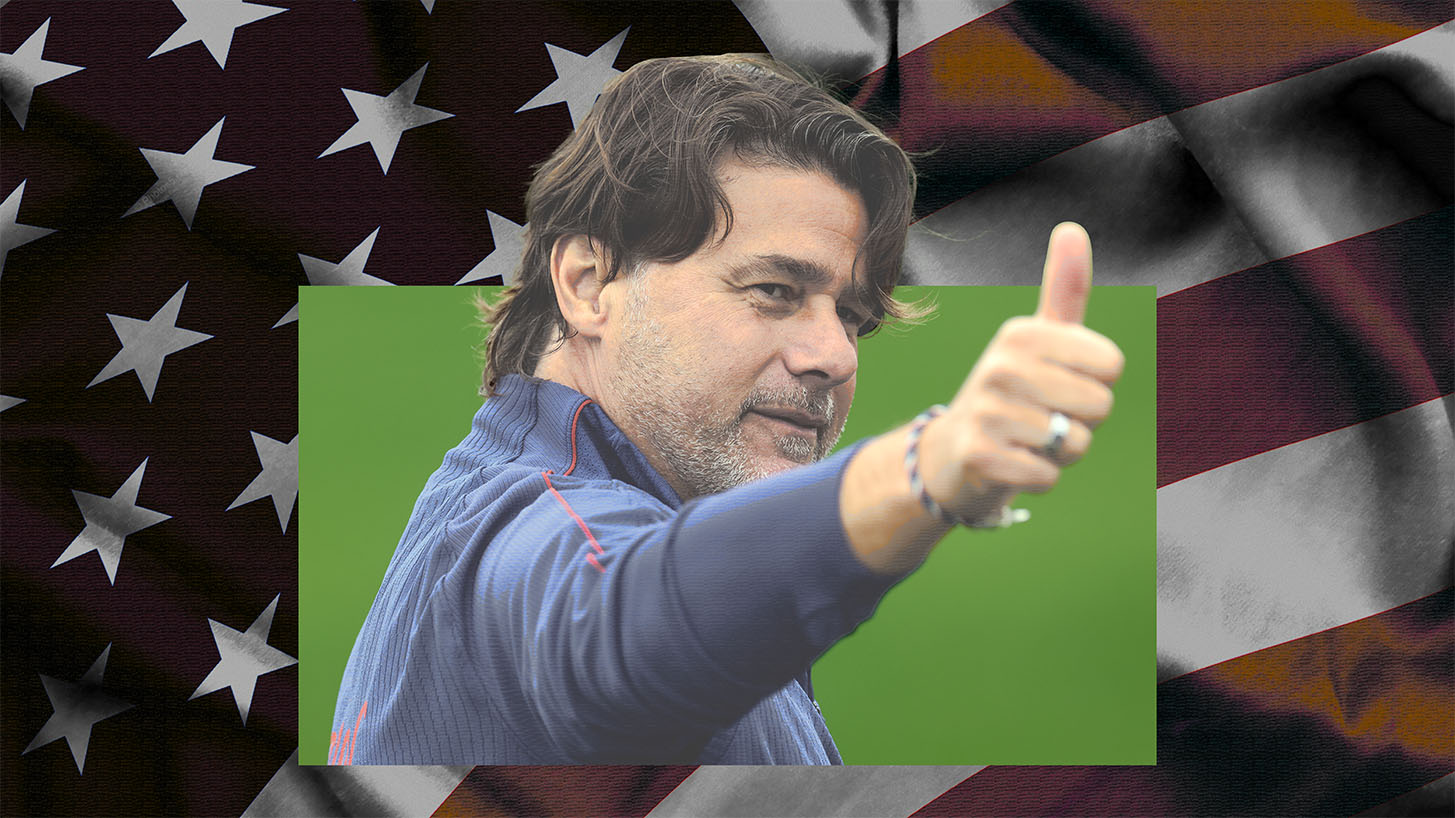
What would a successful cycle look like for U.S. Soccer under Mauricio Pochettino, both at the senior level and throughout the youth system?
When you look at the game in this country, and I know people don’t always like to hear this, soccer simply hasn’t been at the forefront of American sports in terms of fan support, investment, and infrastructure. I think we’re only now starting to see just how exciting and how amazing the game can be, and as a result, we’re really starting to double down on it.
When you compare ourselves to countries like Mexico or Colombia, I don’t think it’s a talent issue. Colombia, for example, has had professional teams playing in its first division for generations. Those things matter when you’re trying to build an entire soccer ecosystem.
I think we’re seeing the United States step up its commitment and its desire to become more professional in the way we play and develop the game. To me, that’s the best news we could get because when the U.S. sets its mind to something, we tend to be very competitive, and I think we’re going to start seeing that in soccer as well.
We’re late bloomers in this sport. We’re arriving late to the party, and I think we have to remember that as part of our growth journey. It’s not all going to happen overnight. It’s going to take time to emulate some of the nations that are closest to us and have been doing this for generations.
But we will get there. I think it’s inevitable. Just look at the sheer number of players coming through the youth system and playing the game. The potential is there. It’s just going to take some time.
Do you think U.S. soccer needs to find a better balance in how it promotes and evaluates its young stars? We’ve seen the media quickly move from heavy criticism of Christian Pulisic to putting players like Cavan Sullivan in the spotlight as the next big thing.
How do we avoid overhyping young players while also giving established players like Pulisic the fair evaluation they deserve?
Yeah, I mean, with Sullivan, to be honest, it’s simply too early to tell. He has such a long journey ahead of him, so I don’t think we can make any definitive judgments at this stage.
With Pulisic, look, criticism is part of the game. Nobody is immune to it, and he’s always going to attract a lot of attention, whether it’s about how he played, the decisions he made, or anything else.
But I think we’re talking about a player who is operating at an incredibly high level. I see him as a very high-level player. I had the opportunity to play with Christian and Weston, and these are players who are tactically very astute, extremely intelligent, and have a very good understanding of the game.
So I don’t really have time to debate whether or not they’re quality players. To me, they’re first-class players. Anyone saying otherwise doesn’t really understand football.
With MLS moving to a European-style calendar, what do you think the league needs to do next to move beyond its niche audience and establish itself as a major player in the U.S. sports market?
Yeah, I think it’s already there, and I think it’s going to continue to grow. Again, the NFL and NBA have 50 or 60 years on MLS. MLS is only in its early 30s, and when you think about it, that’s not very long at all.
I’m 37 years old, and there are people who are 70, 80, or 90 who grew up as fans of NBA or NFL teams. They went to games with their parents, and that’s how fandom gets passed down. It takes time to create that environment and build that culture. I think MLS is doing that now. A lot of the people who grew up watching MLS are now taking their own kids to games, and eventually those kids will do the same with their children. That’s how you build a lasting sports culture, and there’s really no way to expedite that process.
I also think MLS has done a terrific job on the business side. The league has been very smart about its branding and business development, and it has done a great job entering major markets. You need all of those things to come together and, so to speak, marinate over time. I think time can only help.