Recently retired from pro football, Diego Demme sits down with us to reflect on his 16-year career.
It was the early 1990s, and Fabio Cannavaro was preparing for one of his first training sessions with Napoli’s senior team. Eager to make an impression, the 17-year-old defender lunged into a challenge on the club’s greatest-ever player, Diego Maradona, dispossessing the Argentine and sending him tumbling to the ground.
Cannavaro was reprimanded by a club official, but Maradona saw things differently. Rather than scolding the youngster, he encouraged him to continue playing with the same aggression and even gifted him a pair of PUMA King boots.
For Cannavaro, it was an early encounter with the man whose footsteps he would eventually follow as one of football’s greatest players. But their influence extended far beyond Naples. Hundreds of miles away in Germany, the two Ballon d’Or winners would soon find themselves at the center of an unlikely family dispute.
When Enzo Demme and his wife Petra were expecting their son, they couldn’t agree on a name. Petra favored Fabio, while Enzo, a lifelong Napoli supporter who idolized Maradona, insisted on Diego. Enzo eventually got his way. On November 21, 1991, Diego Demme was born.
“I don’t know, maybe I’d have been a center back like Fabio Cannavaro, or maybe I’d have been the same, but I think the story with Diego was perfect,” Demme told Urban Pitch.
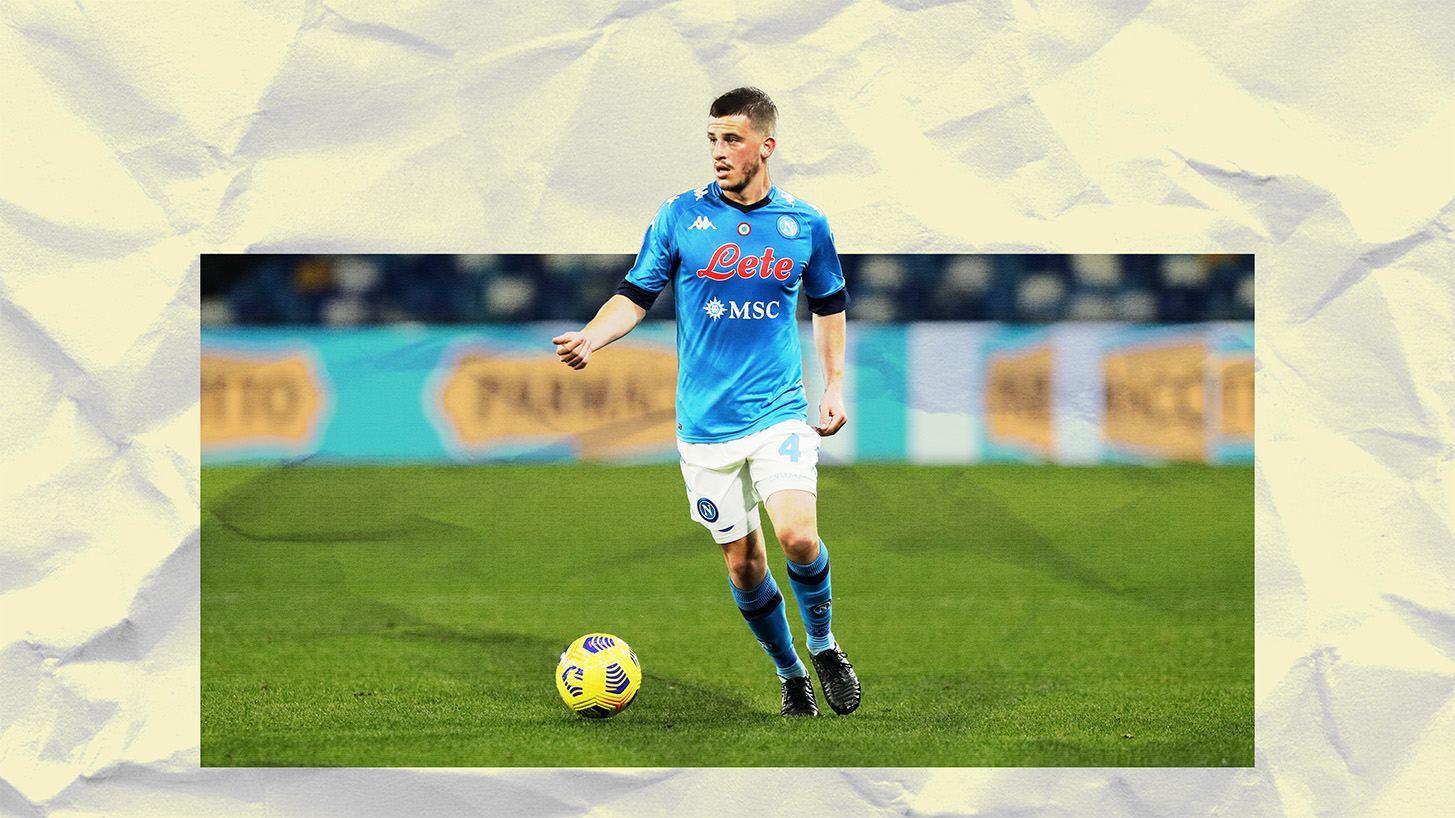
Three decades later, that same boy would fulfill his father’s wildest dreams, swapping Saxony for Campania and helping Napoli claim their first Scudetto since Maradona’s departure. But before he could follow in his namesake’s footsteps, Demme had to work his way through the German football pyramid.
After honing his skills at various local clubs, Demme made his professional debut for Arminia Bielefeld in December 2010 before establishing himself at Paderborn. But just as Paderborn were closing in on a maiden Bundesliga promotion, Demme dropped down a division to join RB Leipzig in January 2014.
It proved to be one step backward and two steps forward. Demme helped Leipzig achieve two promotions before emerging as a key figure in their remarkable debut Bundesliga campaign. The 2016/17 season saw him earn his first Germany cap, lead Leipzig to a second-placed finish, and score his maiden professional goal, albeit at the expense of a front tooth.
“I think it was because we had eight or nine players who went from the third division to the first division,” Demme explained when asked about Leipzig’s meteoric rise. “We had individual players who could decide matches, but we also had this feeling of friendship, this good harmony in the team, because we achieved those promotions together.”
A year after making his Bundesliga debut against Hoffenheim, Demme was lining up against Monaco in the UEFA Champions League. By 2019, he had helped Leipzig reach their first DFB-Pokal Final, though they would fall short against Bayern Munich.
“Hearing the Champions League anthem is a dream for every child, and even when I listen to it today watching the games, I get goosebumps,” Demme said. “It’s the best song, and you get to compete with the best players as the best competition.”
Having transformed Leipzig from a 3. Bundesliga outfit into top flight heavyweights, Demme appeared destined to spend his prime years at Red Bull Arena. Instead, a phone call in January 2020 changed everything: SSC Napoli wanted to sign him.
At the time, Leipzig were sitting atop the Bundesliga and challenging for their maiden German championship, while Napoli were languishing in eighth place after a tumultuous first half of the season.
Demme had spent six years helping Leipzig climb from the third tier to the summit of German football. Now, he faced an ultimatum: stay and pursue the Bundesliga title, or abandon that opportunity to fulfill a lifelong family dream.
His father had spent decades supporting Napoli from Germany, dreaming of seeing his son represent the same club where Maradona had become a deity. To make the opportunity even more enticing, Demme’s childhood idol Gennaro Gattuso had just taken charge.
After several sleepless nights and emotional conversations with his family, Demme took the plunge. Within six months, he was lifting the Coppa Italia. Three years later, he helped Napoli end their 33-year wait for the Scudetto.
View this post on Instagram
While the pandemic prevented Napoli’s supporters from celebrating their Coppa Italia triumph together in 2020, there would be no such restrictions three years later. Naples erupted into celebration as the Partenopei reclaimed the Italian throne for the first time since 1990.
The boy named after Maradona had followed in his namesake’s footsteps, bringing silverware back to Naples. And in the process, he had strengthened his connection to the country of his father’s birth.
“In terms of my personality, I felt more German than Italian, but I felt very good during my experience in Napoli,” Demme said. “I understood the rules and the Italian way of living; I liked both sides: the German and Italian part. After being in Napoli, I now feel like I have some roots in Italy’s culture.”
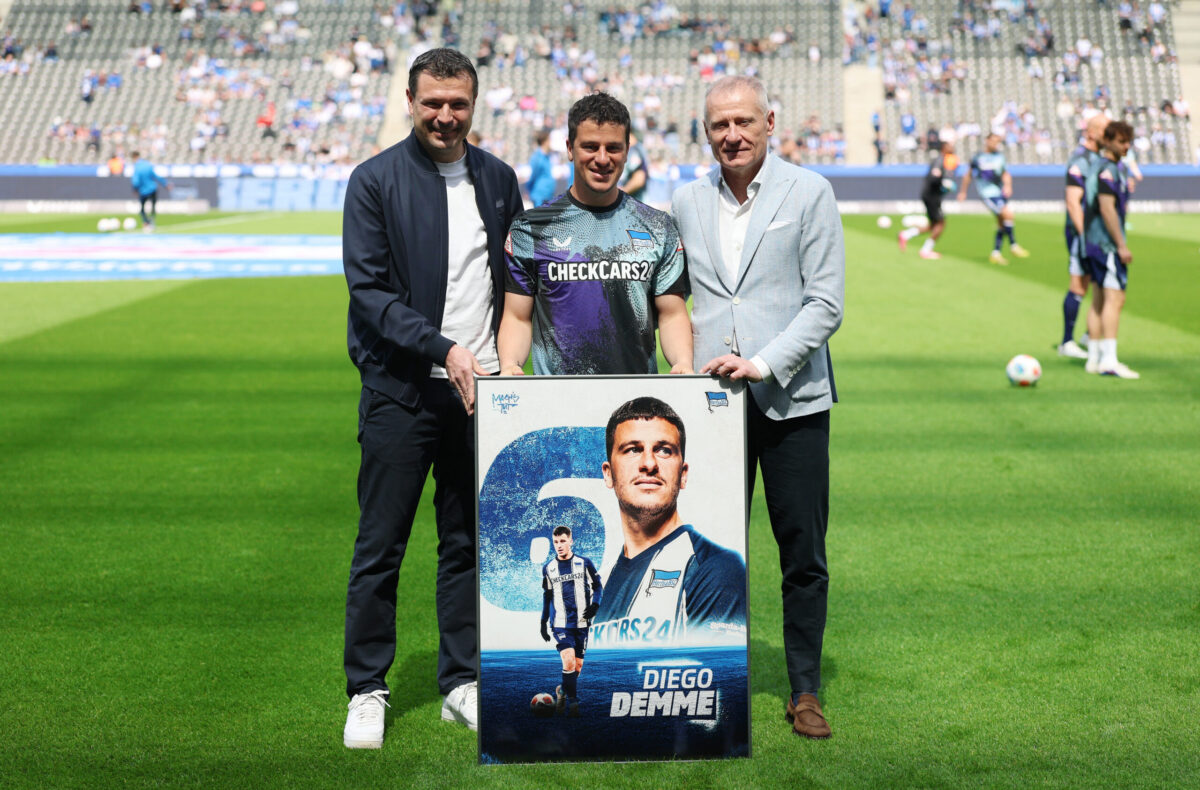
After four-and-a-half years in Italy, Demme returned to Germany in 2024, joining Hertha Berlin and settling in a city where he envisioned raising his family after football. However, his final years were overshadowed by recurring head injuries, forcing him to reconsider his future in professional football.
Having spent nearly two decades sacrificing his body for the sport, Demme was no longer prepared to risk his long-term health. On September 23, 2026, he announced his retirement. For a player who had spent much of his career covering every blade of grass, protecting his back line and doing the dirty work in midfield, walking away was never going to be easy.
Today, the former Leipzig captain is embracing a different kind of life. He’s raising his two daughters, Gia and Ellie, overseeing two Neapolitan pizzerias in Berlin, and pursuing licenses in padel coaching and sports massage. He’s also keeping his competitive instincts alive through MMA, boxing and grappling, while also returning to the pitch in the Icon League, an indoor five-a-side competition co-founded by Toni Kroos and Elias Nerlich.
View this post on Instagram
Despite embarking on a new chapter away from professional football, Demme admits that there are certain aspects of his old life that he struggles to replace.
“I miss the competition a lot, and I also miss the social part of soccer,” Demme said. “I miss going into the dressing room in the morning and speaking to my guys. You’re talking to your 18 to 20-year-old guys, you’re speaking about things that aren’t deep, and everybody is funny in the morning.”
It’s a reminder that, beyond the trophies, promotions and Champions League nights, Demme’s career was defined just as much by the relationships he forged along the way.
We sat down with Demme for a Q&A interview, discussing his career journey, his Neapolitan connection, and advice he has for current footballers.
Urban Pitch: You spent the first 28 years of your life in Germany before moving to Italy. Growing up with an Italian father, how connected did you feel to your Italian roots, and did that change after moving to Naples?
Diego Demme: Yes. I was born in Germany, but we always had Italian food in the kitchen. My father would always speak to me in Italian, but I’d respond in German because I only wanted to speak the language of my country. But I’d always root for Italy when they played Germany because my father was more of a serious football fan than my mother.
You struggled with injuries after breaking into Arminia Bielefeld’s first team. Did you ever doubt whether you could make it at the highest level?
No, I just didn’t have the body for men’s football. Today, it’s normal for young players to go to the first team at 18, but back then, there was a difference. Now, young players are playing many years ahead, unlike back in my day.
I never had the feeling of giving up. Sometimes, you’d be missing out on a birthday party or going out with your friends on the weekends, but when you’re at a football club, your teammates become your family. I never had the feeling that I sacrificed a lot. For sure, you have to be structured and disciplined; you can’t eat burgers, but I was never the type to go out late or go to clubs, so I was okay with this.
There were always periods where I was injured and started to doubt myself and say, “Can I come back to what I was before?” But off the pitch, I was very professional with food, gym, and strength training, and I think that was also a quality of my career. I never went out to party; I was a professional on the pitch and off the pitch.
Leipzig became renowned for their aggressive pressing and quick transitions. As the midfielder responsible for protecting the back line, what was the most difficult aspect of playing in that system?
I think the pressing is very hard to play, especially when you play this way every game for the whole season. Sometimes we scored two fast goals after 20 minutes, and then we played high-pressing, but sometimes, we’d go, “Now we need one situation with a counterattack, and the game is over.”
I felt very comfortable on the pitch because I knew that if someone went behind my back, or I missed my marker, I knew there was an incredible defender behind me like Willi Orban, Ibrahima Konaté, and Dayot Upamecano.
How difficult is it leaving clubs midway through the season? You’ve done it with Paderborn and Leipzig, how tough is that to have to adjust to a new team in the middle of the season?
You have less time to get to know your teammates, you don’t know how they play, you arrive with no preparation, because you don’t have the preseason with the team or coach. But it’s also nice because you go inside, and you don’t think about it. After seven days of training, you have to play the first matches, and then if you are good and deliver good matches, you directly enter the first team.
What was it like winning the Coppa Italia, Napoli’s first trophy in six years? What do you remember about beating Juventus in that final, and how important was it especially given that you were in lockdown in a new country?
Yeah, the feeling was great when we won on penalties, but it was the time of COVID-19. We were very happy, but we couldn’t celebrate with the fans. Football without the fans, you don’t have the same feelings that you do with the fans. We had two fans who’d go outside, but it was a lot different to when we won the Scudetto and everybody was on the streets.
I think it was a difficult time for everybody, and it was crazy to see the pictures on the TV about how many people were dying from the pandemic. But we had the luxury that I was with my wife and my dog at home. We had a good space outside and could go on the terrace and move a little bit, in comparison to people who had small apartments, with no space.
Napoli had come close to winning the Scudetto several times before you arrived. When did you and your teammates begin to believe that 2022-23 could finally be your year?
I think after the winter break, we started well; we had an incredible team, and the team harmony was great. Victor Osimhen and Khvicha Kvaratskhelia were incredible this season. Once we reached the top of the Serie A table, we started to believe that we could win the Scudetto.
You weren’t playing as regularly as you would have liked during the title-winning campaign. How difficult was it to stay motivated, and what did Luciano Spalletti do to keep the fringe players involved?
It’s always difficult when you don’t play. In the season when we won the league, I was also sad sometimes because I was not playing, but Spalletti would talk to you a little bit after training and say, “Good training, you’re good now,” and if you didn’t play, he’d give you the feeling that you were part of the team.
I think that’s also part of the reason for the success because everybody on the bench didn’t play, but they still gave 100% in the training. If you don’t have that, that’s bad for the starters because they need the competition in training.
Finally, you started your career in Germany’s lower leagues and ended it as a Champions League regular and Scudetto and Coppa Italia winner. What’s one lesson that young footballers can learn from your journey?
You have to believe in yourself and choose one strength: you need something that makes you unique and special. For me, it was “I can run 13-14 kilometers every game,” and I had a good mentality. You’d sometimes need players like me and Stefan Ilsanker who didn’t necessarily need the spotlight, but were fine with being a team player and doing the dirty work.
As far as advice? Always be professional, and always be ready for your chance to come, because sometimes, one day can change your whole career.