Urban Pitch contributor Kelvin Loyola walked the streets of Naples and found a city completely devoted to its martyred saint: Diego Maradona. Even after two more Serie A titles and a new generation of heroes, Maradona remains an omnipresent figure throughout the historic city.
To walk through Naples is to experience a city that often feels untouched by time, where history and daily life overlap at every corner. Its streets are narrow, busy, and constantly moving, with markets spilling into sidewalks, scooters weaving through impossible spaces, balconies overflowing with laundry, and local businesses creating an atmosphere that feels simultaneously chaotic and alive. The city’s architecture reflects generations of change, combining historic buildings, worn facades, churches, and residential blocks into a dense urban environment that feels like its constantly evolving.
Yet among all the history, architecture, and disorder, one detail immediately stands out.
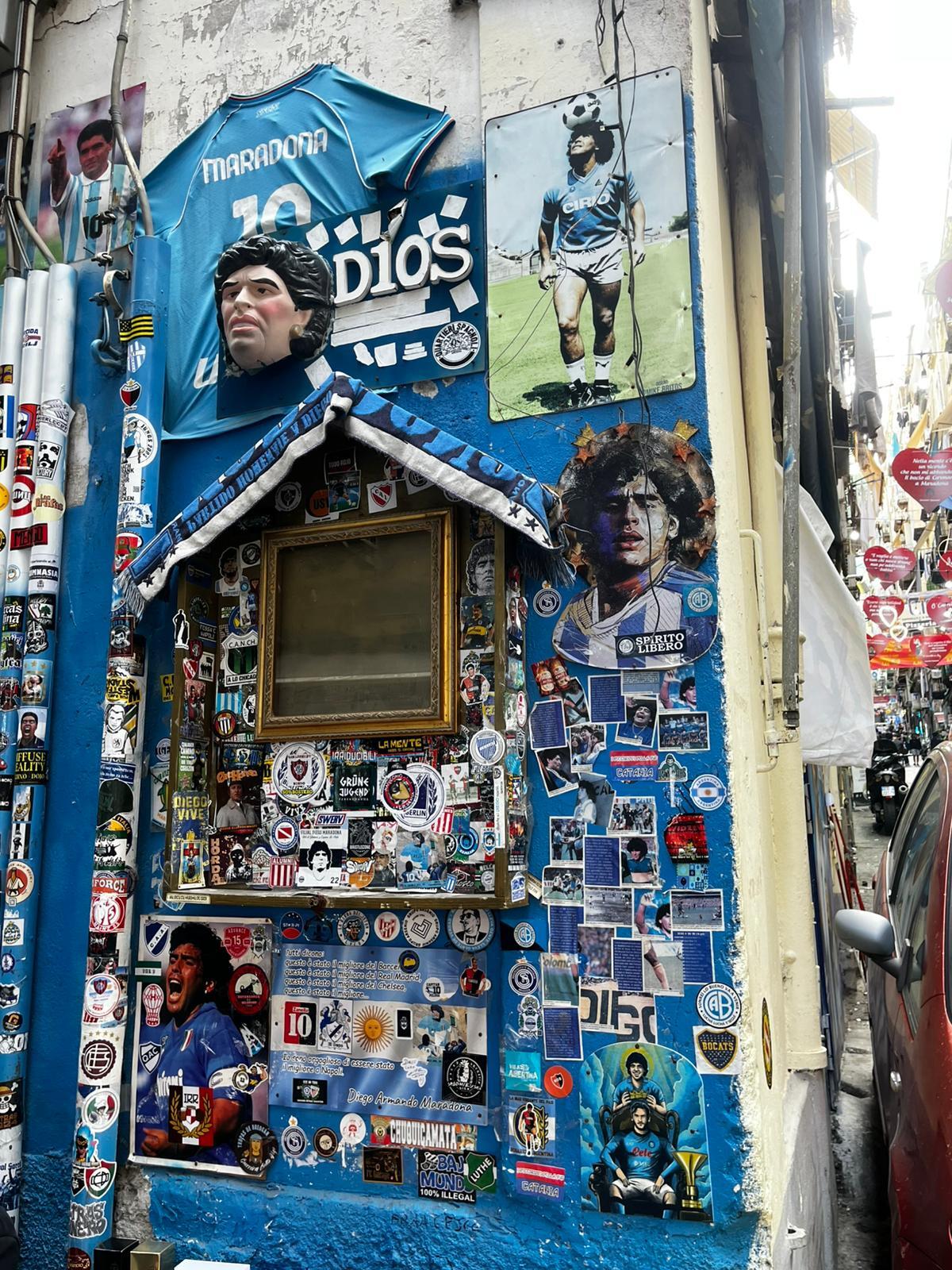
On just about every building or apartment you’ll see one of two things: A Napoli flag, or the visage of one Diego Armando Maradona.
SSC Napoli itself represents far more than football within the city. The club serves as a symbol of local pride, identity, and resilience, representing the passion and spirit of a city that has long viewed itself differently from the rest of Italy. Maradona represents something else entirely. He became the face of rebellion against the wealthy North, the man who disrupted a system many believed could never change, and to many in Naples, someone who ultimately suffered the consequences for changing it.
Understanding Maradona’s role in Naples requires understanding how Naples sees its own history.
The relationship between Southern and Northern Italy is shaped by centuries of economic, political, and cultural divisions rather than simple sporting rivalry. Historically, northern regions became wealthier and more industrialized while Southern Italy, including Naples, experienced higher poverty, lower investment, and negative stereotypes that often portrayed the region as inferior. Football eventually became another expression of that divide.
For many Neapolitans, supporting Napoli became an expression of identity more than fandom of the sport.
When Maradona arrived in 1984, that dynamic changed forever.
Before Napoli won its first Scudetto in 1987, no club from southern Italy had ever won Serie A. Championships largely belonged to Turin, Milan, and the industrial North. The hierarchy felt permanent with only three titles spread among Lazio and Roma coming from the central capital.
Then Diego arrived.
The Diego Revolution
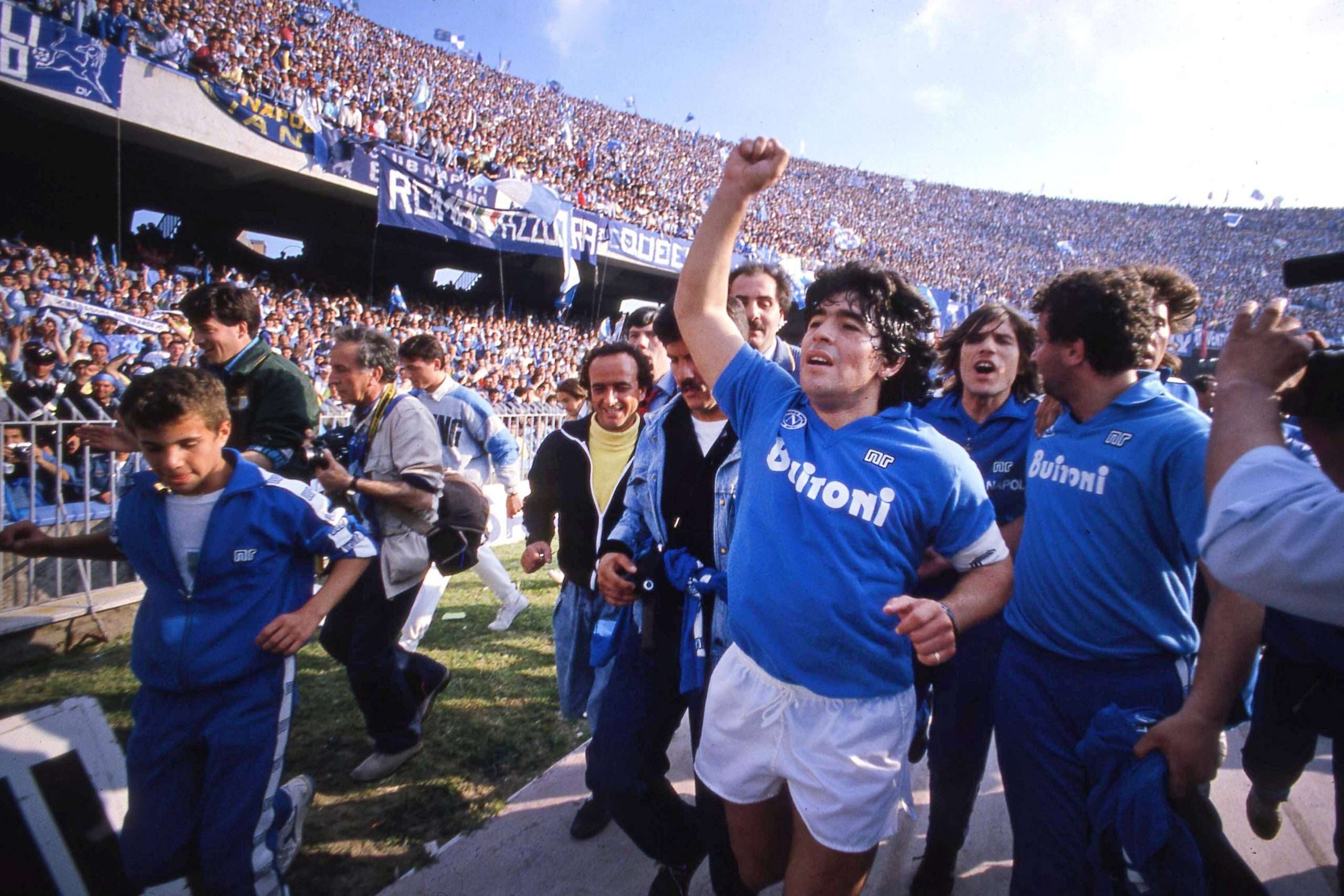
Maradona arrived at Napoli in 1984 and spent seven seasons transforming both the club and the city’s relationship with football. During his time in Naples, Maradona scored 115 goals in 259 appearances, becoming one of the most influential figures in club history. Under his leadership, Napoli won two league titles, a Coppa Italia, a domestic Super Cup, and the club’s first major European trophy with the UEFA Cup in 1989.
The trophies themselves, however, do not fully explain what happened.
Maradona openly embraced the North versus South divide, using press conferences, interviews, and performances on the field to turn matches against wealthier northern clubs into something much larger than football. Victories over traditional powers increasingly became symbolic battles that reflected tensions around economics, geography, class, and identity that already existed throughout Italy.
For many supporters, Maradona’s importance went beyond trophies or statistics. At a time when southern clubs were often overshadowed by wealthier institutions, he gave Naples something larger: recognition, confidence, and proof that the city could compete with anyone.
That emotional connection never disappeared.
Decades later, his image remains visible throughout Naples because for many supporters Maradona didn’t just play for the city, he became part of its story.
The Land of Saint Diego Maradona
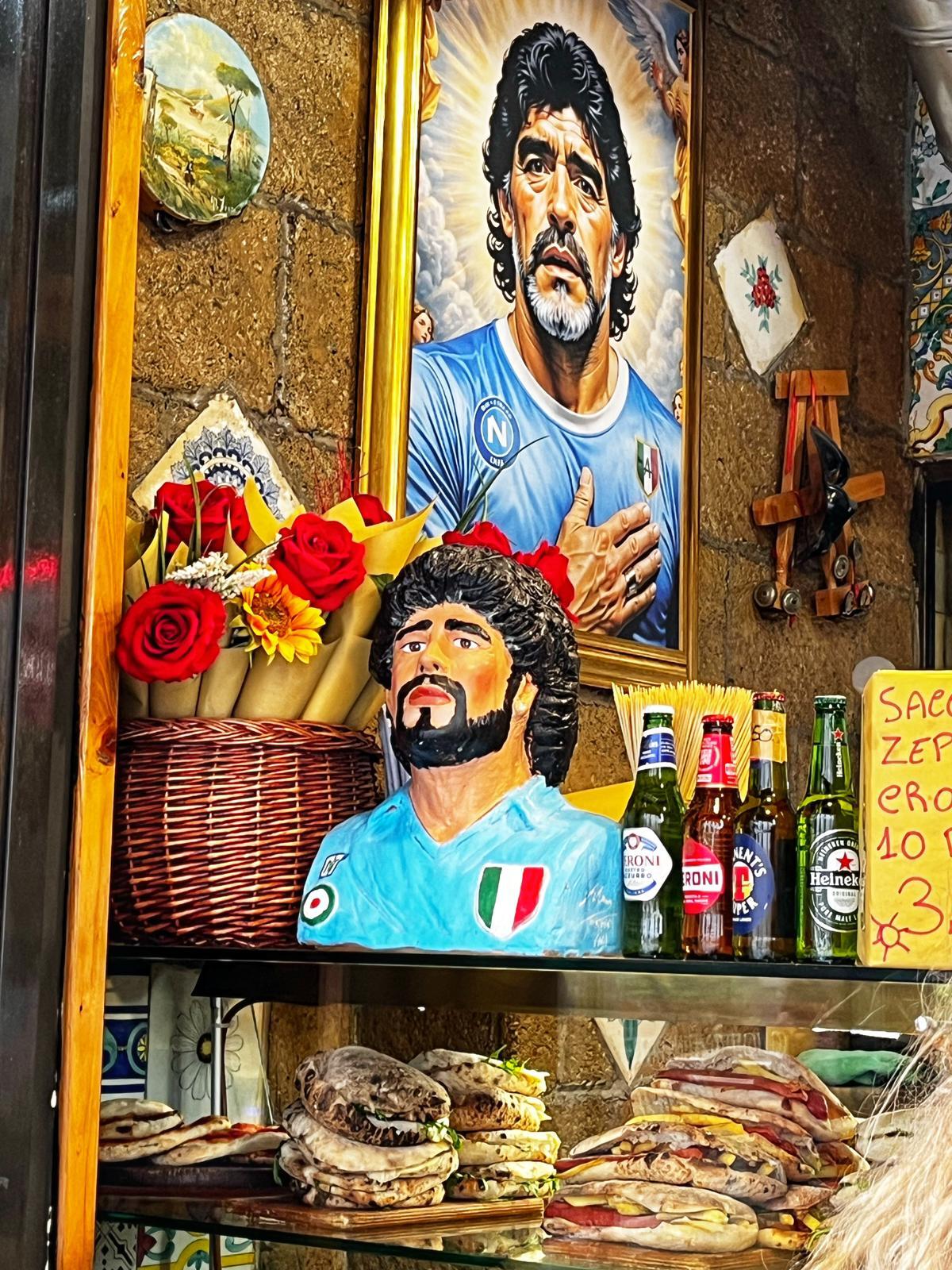
One cannot walk into a restaurant, café, store, office building, gallery, or even watch a Vespa speed past without encountering Maradona in some form.
Busts of Maradona sit inside cafés. High-end clothing stores display paintings of him. Stickers cover lamp posts, AirBNBs have paintings of him. Shrines occupy narrow streets throughout the Spanish Quarter. What would normally appear excessive instead feels natural, almost expected.
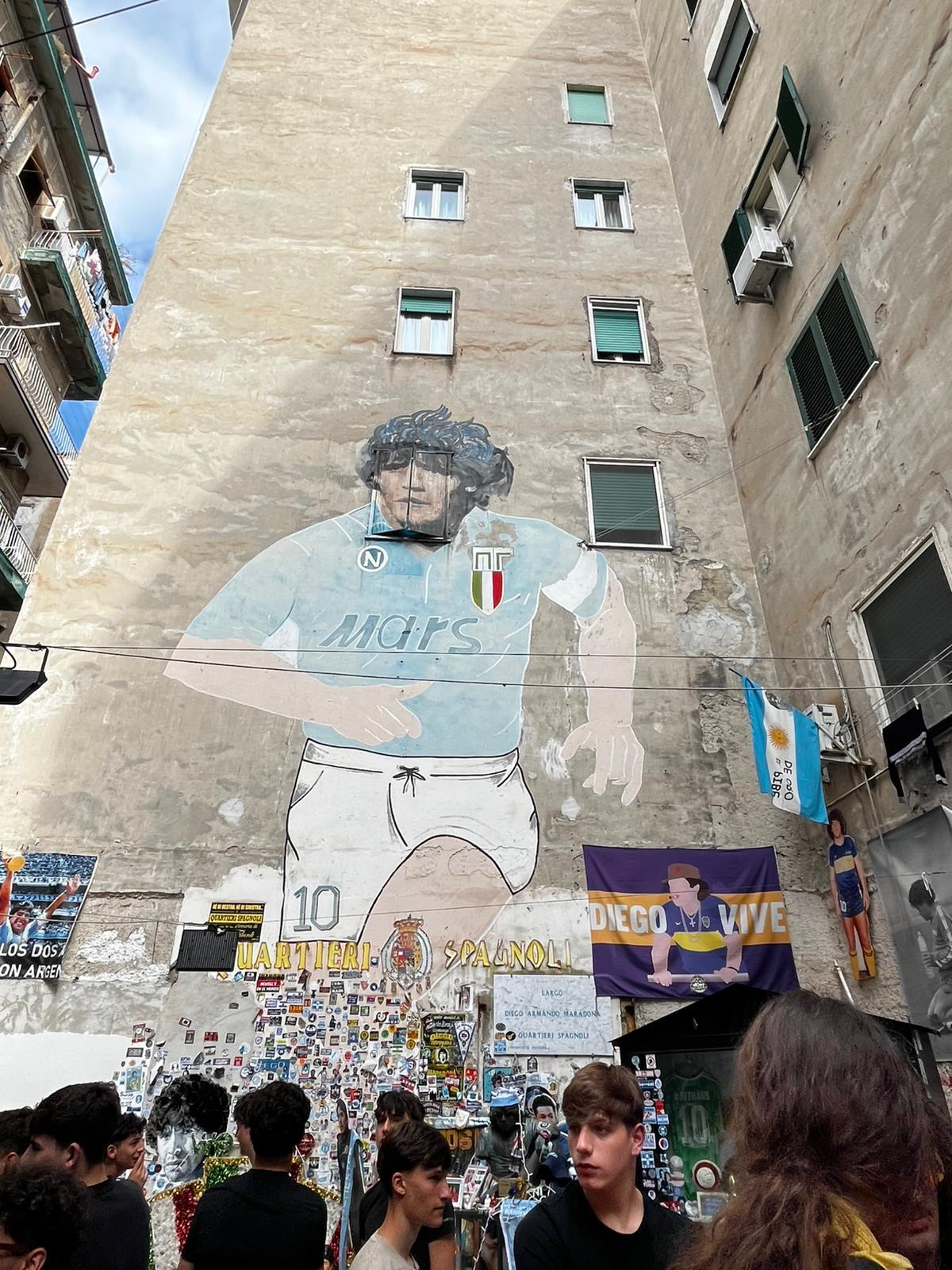
Largo Maradona has evolved into the symbolic center of all of this.
Murals, scarves, candles, flags, and tributes transform what should simply be another public space into something much larger. Towering above the square is the famous giant mural dedicated to Maradona, one of the city’s most recognizable landmarks and perhaps the emotional center of his legacy in Naples.
It was there where foreigners and Neapolitans alike attempted to explain what Maradona still means.
“Maradona represents our culture in one man,” said Giuseppe, a teenage supporter speaking in broken English. “From the slums to glory. That is the Napoli way.”
Restaurant owner Elia offered perhaps an even simpler explanation.
“The amount of children named Diego that are now in their 40s? All because of Maradona,” he said. “We worship the man, the legend, the identity.”
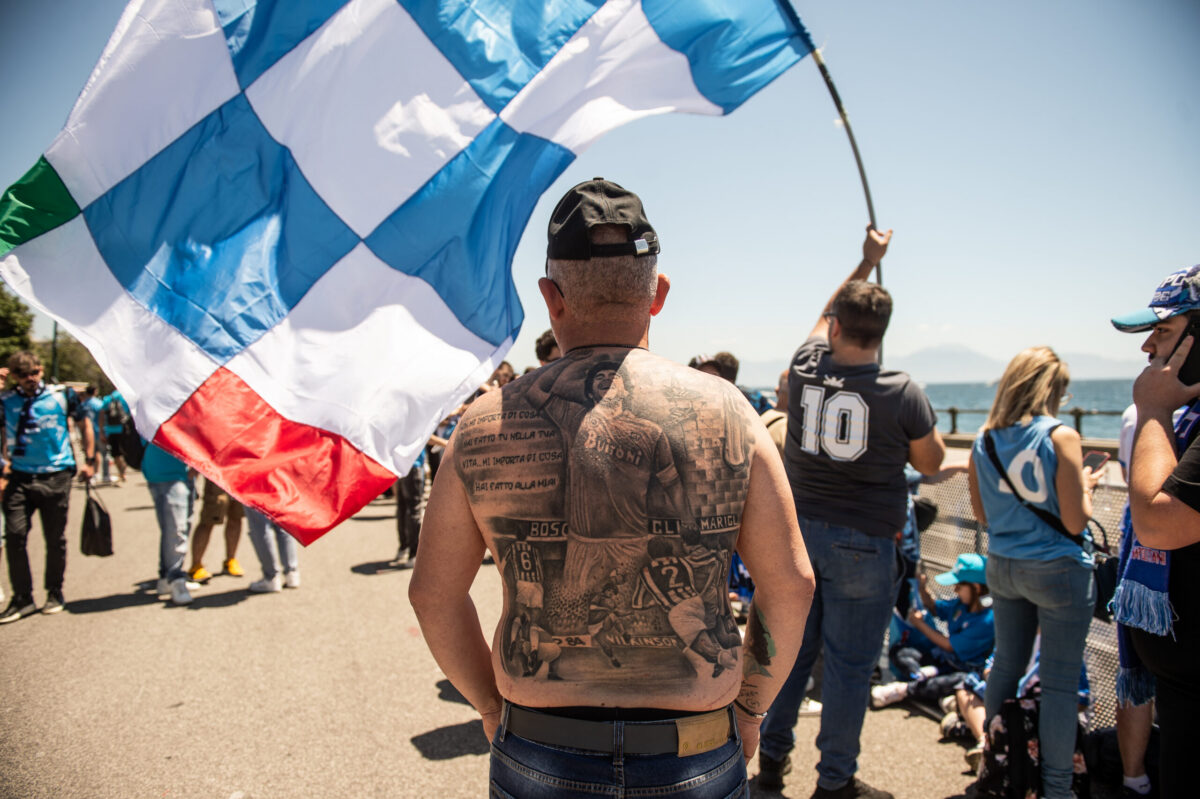
Maradona is not only present in homes, businesses, or murals. Many in Naples permanently carry him through tattoos across their arms, legs, and necks. The devotion borders on religious — a level of admiration that perhaps not even Lionel Messi enjoys in Barcelona or Michael Jordan has in Chicago.
To be in Naples is to understand something quickly: This was Maradona’s second home, and his presence remains everywhere.
Even after Napoli added two more Serie A titles in recent years, those successes only appear to have strengthened his mythology.
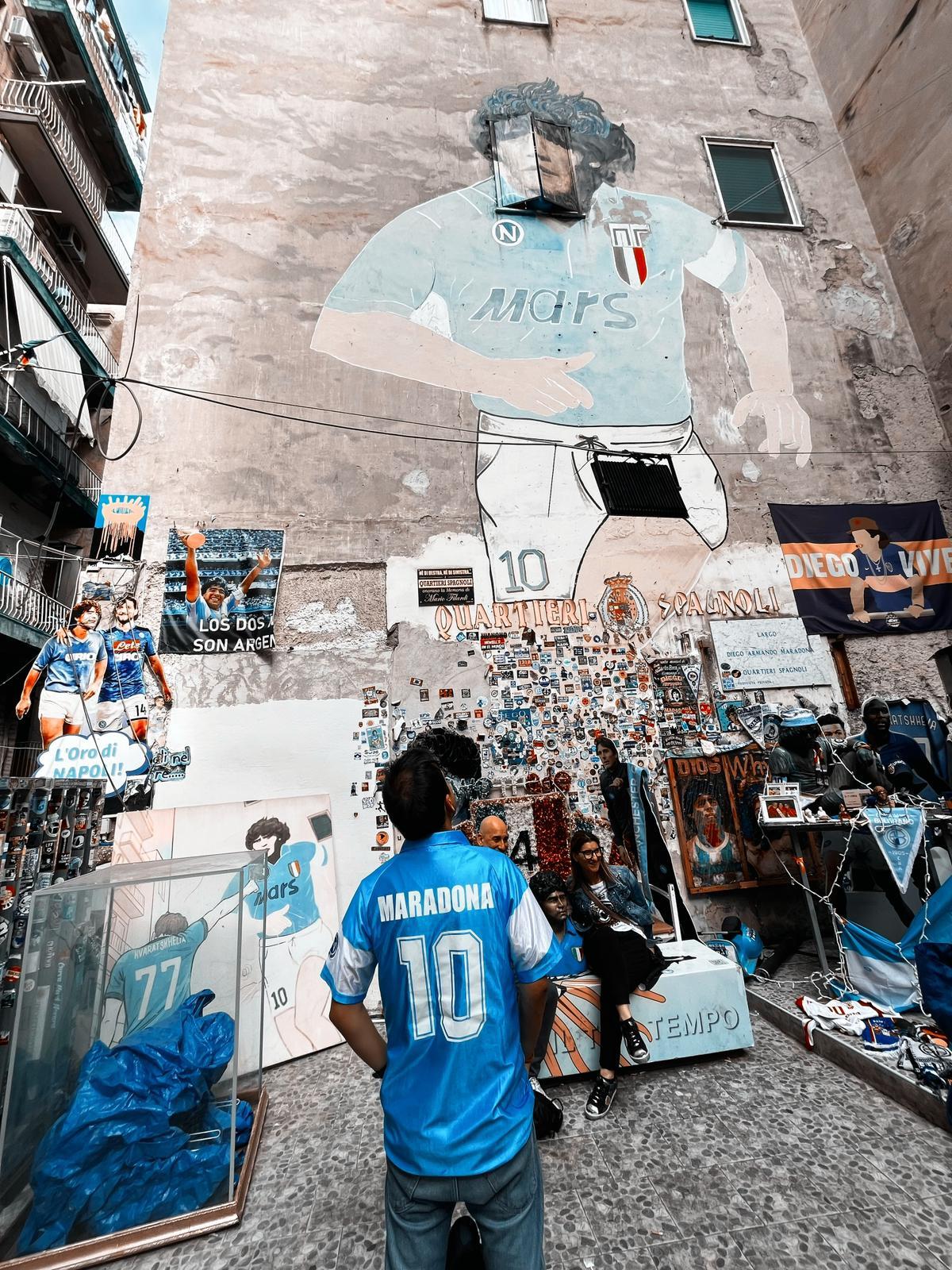
“Look at the new Napoli kits,” Giuseppe explained. “Many fans who are 15 or 25 still prefer Maradona’s name instead of anyone currently playing. That shows how important he is.”
Maradona’s influence, however, extends beyond Naples itself.
During an Uber ride to watch Lazio face Inter at the Olimpico in Rome, driver Carlo, 46, described Maradona not only as a footballer but as something social and political.
“I am leftist, and Maradona represents my values,” Carlo explained.
“He became a symbol against corruption, against powerful people taking advantage of poorer people. Was he perfect? No. But symbols do not need to be perfect.”
Carlo’s explanation reflects why Maradona remains complicated.
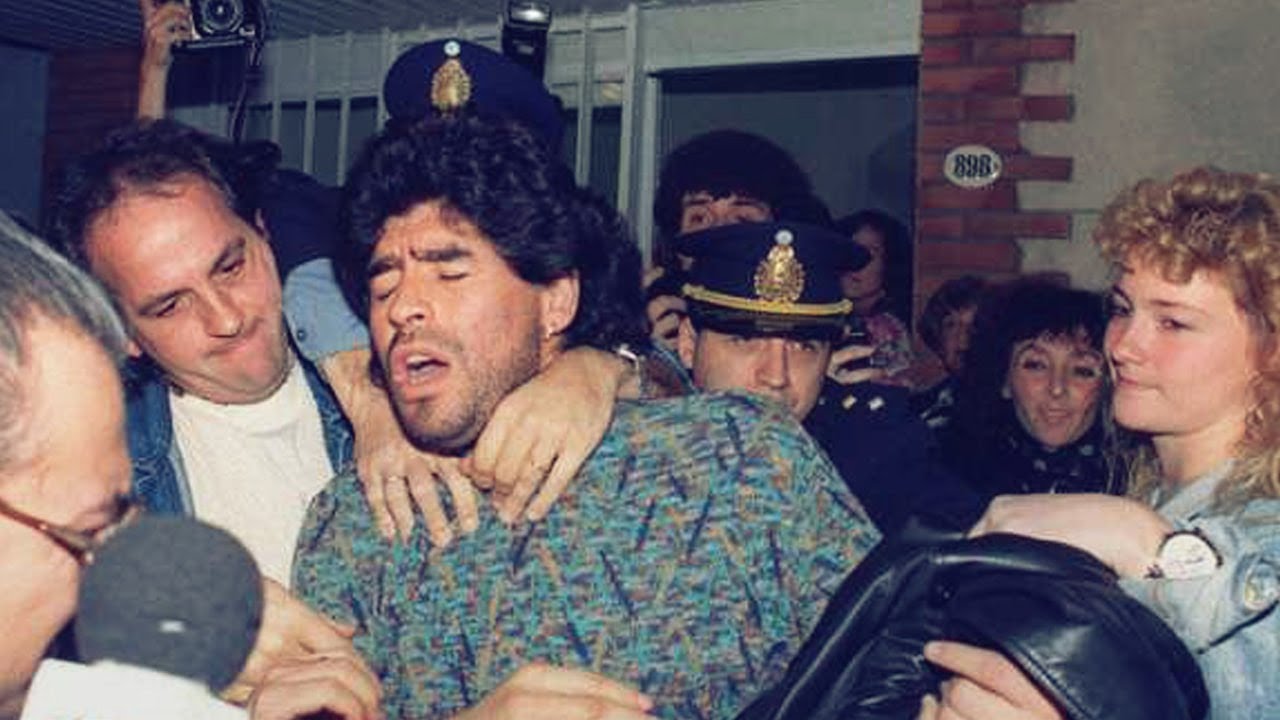
Following Argentina’s run to the 1990 World Cup final, Maradona’s final years in Italy became increasingly turbulent. Drug addiction, disputes with tax authorities, controversial relationships with organized crime figures, and endless media attention transformed him into one of Italy’s most polarizing public figures, and eventually, everything collapsed.
After failing a drug test in 1991, Maradona received a lengthy suspension and left Naples under increasingly difficult circumstances. Personal problems mounted with the confirmation he had a son born out of wedlock. Legal issues followed, and tensions around his life in the city became impossible to escape.
Napoli suffered enormously after his departure.
The club entered decades of decline marked by financial struggles, poor performances, relegation, and eventual bankruptcy. For many supporters, it felt like the end of an era.
Ironically, Napoli would eventually return to Serie A glory decades later, winning again after Maradona’s death and eventually lifting another title shortly after.
Yet somehow, those victories only made Maradona’s mythology larger.
As Carlo joked during that drive through Rome:
“Napoli started winning again when Maradona died. Argentina started winning too. Maybe that was his power. He told God, ‘give me a second.’”
More Than A Footballer, Yet Still A Man
Despite his God-like status, Maradona lived a difficult life. Addiction, poor decisions, destructive relationships, and personal struggles eventually consumed much of the man behind the myth. Yet this is not the version Naples chooses to remember.
Instead, the city remembers the rebellious figure who gave Naples dignity.
Walking through Naples means walking through Roman ruins, churches, castles, and centuries of Italian history. Yet somehow, among all those monuments, Maradona remains one of the city’s greatest symbols and arguably the biggest.
Because in a strange yet beautiful way, Maradona gave people a sense of belonging, which is perhaps football’s greatest power.
As Argentine journalist Ernesto Cherquis Bialo once said to describe Maradona the man and the myth:
“Maradona? Which one? Do you think there is only one Maradona? I think there are many. There are at least eight or nine Maradonas…He is the sum of all of that in one man: a genius. A wonder. Fiorito and Dubai. Mud and seven stars. Gold faucets and an outhouse… the greatest player in Argentine football and the greatest footballer of all time.”
For the people of Naples, “Ho visto Maradona” is just as important today as it was in 1984.