
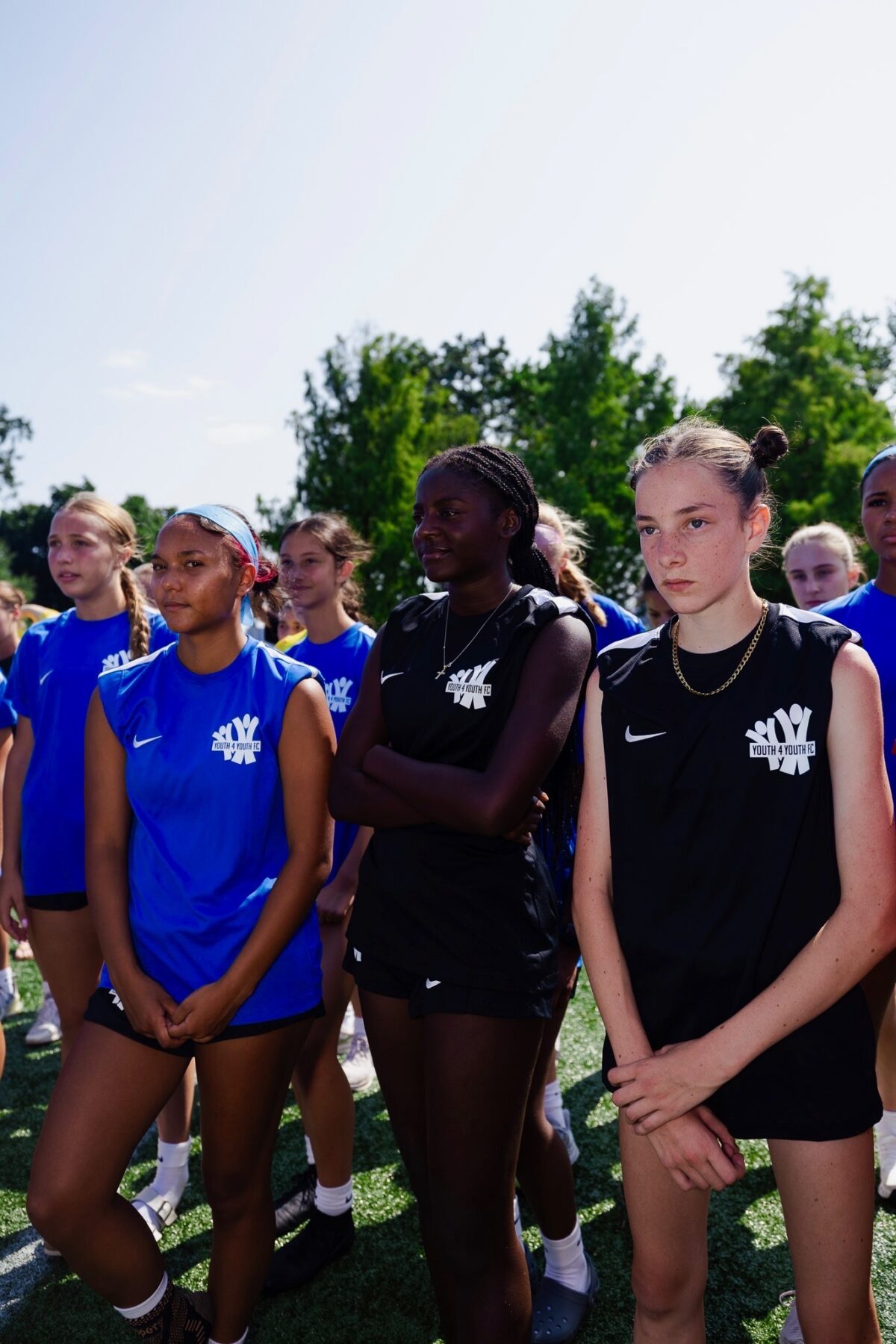
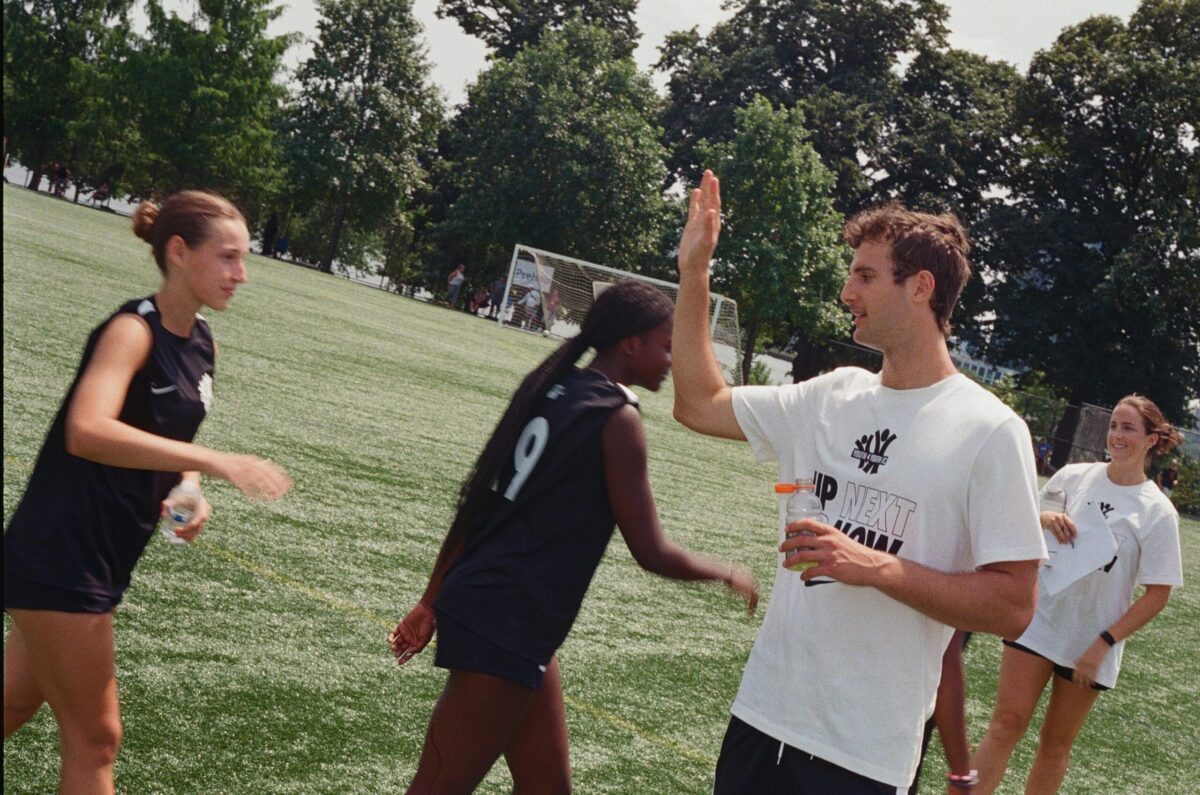
Like many club soccer teams in the United States, Youth 4 Youth FC provides guidance, training, and college and pro pathways to its players. Unlike its peers however, Youth 4 Youth FC doesn’t require a financial barrier of entry.
Going into the 2026 FIFA World Cup, many were optimistic that the United States men’s national team would reach the quarterfinals. The U.S. had only reached that stage on two occasions: in the inaugural 13-team 1930 World Cup, and in 2002. To the fan and pundit with high expectations, in order for the USMNT to truly mark a line in the sand, the team needed to win more than just one knockout match.
The tournament co-hosts started in impressive fashion, winning their group and defeating Bosnia and Herzegovina in the round of 32. But just like every campaign since ’02, the USMNT failed to progress past the round of 16, falling 4-1 to a resurgent Belgium side. It was an ironic reminder of where the U.S. stands in the international game: 16th in the FIFA Rankings.
The U.S. has demolished the competition in countless other sports like basketball, baseball, hockey, swimming, and track and field, and the nation has been the predominant force in women’s soccer for the past three decades. But it continues to lag behind in the men’s game, and unlike other nations including Ukraine, Paraguay, Ghana, Costa Rica, Russia, Sweden, and Colombia, the USMNT hasn’t so much as sniffed the World Cup quarterfinals in the past six tournaments.
There are many reasons to explain the USMNT’s consistent underperformance, but perhaps none are as pertinent as the pay-to-play system. Unlike each of the eight teams that reached the 2026 World Cup quarterfinals, youth soccer in the United States is a commodity that only the richest families can typically afford. It’s precisely why 21-year-old Brando Babini decided to launch Youth 4 Youth FC in 2021, when he was barely old enough to drive a car.
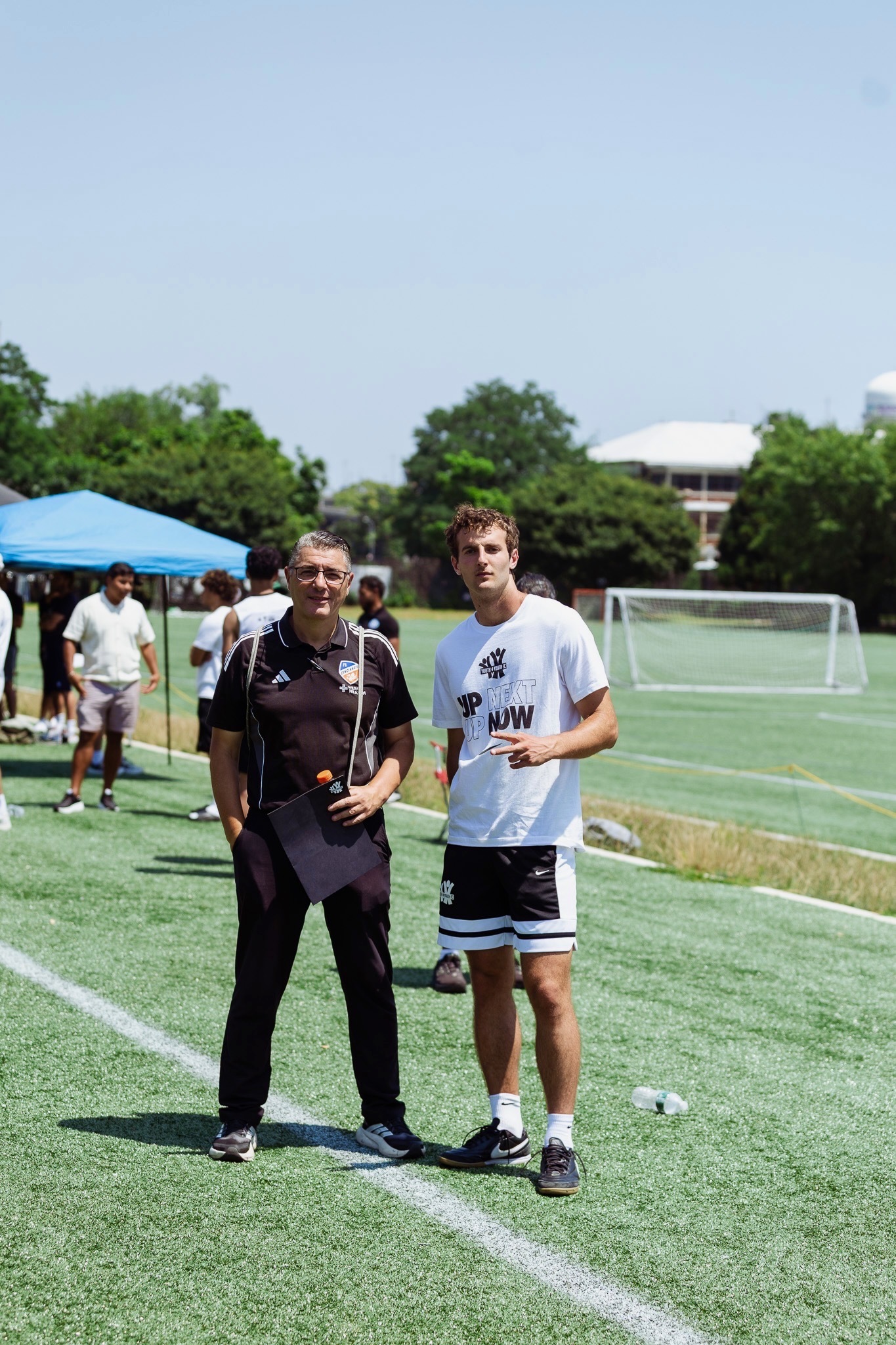
“For me, it doesn’t matter if you can or cannot pay,” Babini said in an exclusive interview with Urban Pitch. “If you’re a good player, I want you in the program, then we figure it out.
“We’re plugging that gap locally, where there are a lot of these players who would never have the chance to have guidance, would never have the chance to have a big brother helping them if it wasn’t for us. And their clubs do a good job with them, but at the end of the day, you’ve got 20 kids and maybe one to two coaches as a ratio there.”
“We have people who come to us from wealthy or middle-class backgrounds who pay for our services. If they are able to pay, they can pay, and this way, you enable a system of grant sponsorship where we never have to turn a kid down. You never have to say, ‘You can’t pay, you can’t be here.’ We’re completely meritocratic in that way. It’s not about winning on the weekend, it’s not about growing a club, it’s about the program of the individuals and how they’re improving. I think that’s something you don’t get at your club, and that you won’t get if you don’t seek it out. Oftentimes, it’s something you won’t get if you don’t pay.”

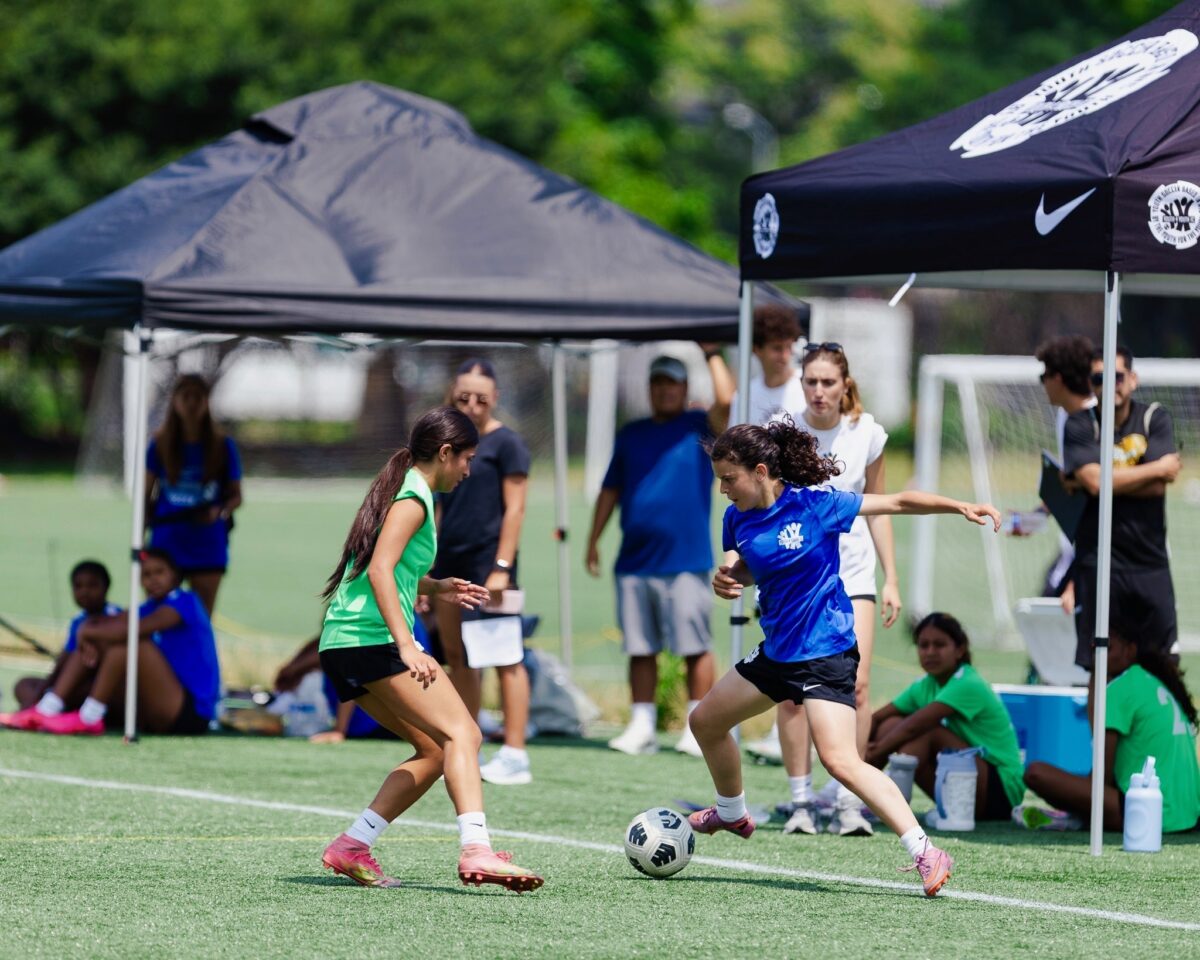
Youth 4 Youth FC is one of many nonprofit organizations looking to provide underprivileged American kids with a professional pathway. Pairing young prospects with high level coaches that are either current or former collegiate or professional players, it has served 600-plus players across eight states.
In comparison to France, which has reached the semifinals in each of the last four World Cups, the United States has relied heavily on private investment to fund young athletes, with families typically paying anywhere from $2,000 to $10,000 or more annually per child for coaching, tournament fees, travel, and gear.
France, meanwhile, operates a state-backed and club-integrated pipeline designed to maximize accessibility and talent identification, with youth sports heavily subsidized by public funding from municipal governments and the Ministry of Sports.
“There’s a problem inherently with people paying to play soccer,” Babini said. “There’s a problem with money being a barrier for entry, and there’s this big gap at each level of the game.
“There are free MLS academies at the highest level, so if you’re really good and don’t have money, it doesn’t matter. But at the lower levels, most rec programs cost money. Maybe you play in school, but that’s still underdeveloped.
“At that middle level, club and travel soccer before MLS Next…there is almost no way a player who has no money can break into that mid-level club. What we’re doing is cutting out the talent pool, where you have fewer players to work with.”
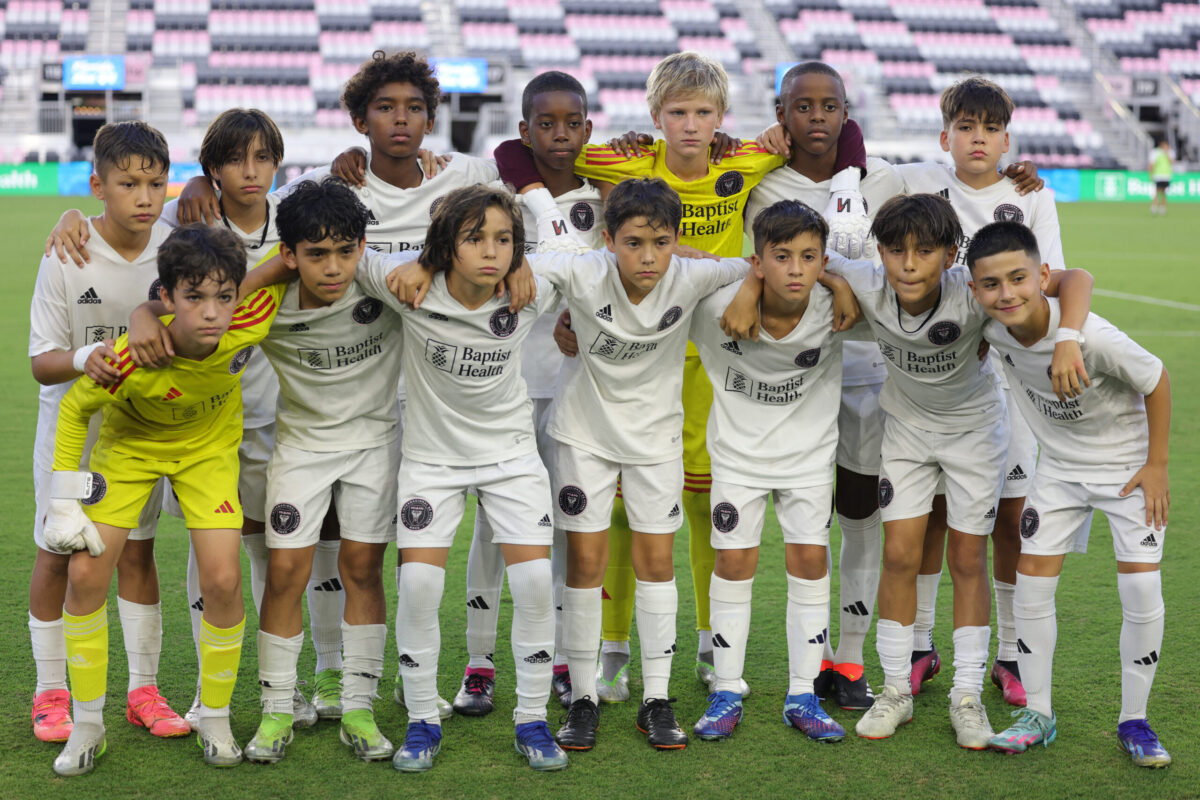
While MLS and NWSL academies have moved toward fully funded structures for top prospects, the broader foundation of American scouted talent still passes through private pay-to-play platforms. Independent private clubs generate revenue through player registration fees, and as such, their main customer is the parents, who demand trophies and awards. For many top academies in the rest of the world, the main customer is the club itself, who demand talent development, knowing that a single big-money transfer could fund their entire academy for a year.
One example is Yan Diomande, who played with the DME Academy in Florida in addition to other various clubs and academies across the Ivory Coast, Germany, and Spain. But unlike those teams abroad, DME Academy won’t be receiving a chunk of his record-breaking transfer fee to Real Madrid. Receiving FIFA solidarity payments and training compensation has historically been significantly harder for American clubs, particularly non-MLS youth clubs.
To claim solidarity payments under FIFA’s Regulations on the Status and Transfer of Players, a club must formally prove a player’s official registration between the ages of 12 and 23. Historically, tracking player passports across disparate U.S. organizations was disjointed, with many youth clubs lacking the administrative infrastructure or international legal assistance required to track player transfers overseas and file claims with FIFA’s Dispute Resolution Chamber.
“Had Diomande come through at NYCFC, he would have generated a solidarity payment for them,” Babini said. “But if you’re DME Academy, a boarding school in Florida, you’re not getting anything. I think if we build that system out, you’re going to have clubs that are a lot more committed to developing talent again, because they see, ‘Hey, this kid is going to be here for free, we’re going to train him non-stop, we’re going to give him all kinds of attention, because one day, they might make us a million dollars.’
“It’s not inherently wrong to make money off youth soccer, but it is wrong to block people from playing because they cannot pay. If you come through an academy and play in the youth system for 10 years, and you’ve done it all for free with all kinds of time and skill investment in terms of coaching, and you become one of the best players in American history and secure an $80 million transfer out of MLS, you generate a ton of commercial value for domestic clubs here and the national team for sponsorship value.
“We need to reframe our perspective on youth development as a country where this is investment, not cash flow.”
For more than three decades, the U.S. Soccer Federation operated under the belief that imposing mandatory payments on player transfers restricted free trade and player mobility and could expose them to litigation under the Sherman Antitrust Act. The Major League Soccer Players Association has historically opposed training compensation and solidarity payments, viewing them as a “tax” on player movement and arguing that if families already pay for training out of pocket, youth clubs shouldn’t be entitled to double-dip by claiming solidarity payments later on.
This finally changed in 2019, when MLS officially announced that its clubs would begin seeking and accepting FIFA training compensation and solidarity payments for academy products transferring overseas, and modern tools like the FIFA Clearing House have streamlined the process of tracking claims globally. However, for non-MLS youth clubs, navigating claims and overcoming domestic legal complexities remains far more challenging than for their European counterparts.
Solidarity payments are just the tip of the iceberg: a lack of promotion and relegation is also hindering U.S. youth soccer. Spain’s bottom-tier teams face automatic relegation to the Liga Nacional Juvenil and further down into regional Preferente divisions. Even if they don’t have a massive roster or financial backing, every neighborhood club has the chance of making it to the zenith. In contrast, the U.S. operates a fractured ecosystem governed by competing sanctioning bodies like U.S. Youth Soccer, U.S. Club Soccer, and closed leagues like MLS NEXT and ECNL.
This, once again, boils down to a pay-to-play model in which membership is granted via league approval, club standards, and application processes rather than results on the pitch. While lower-level regional or state leagues may feature internal promotion and relegation between local divisions, a club cannot win its way from a local recreational or select league into MLS NEXT or ECNL through sporting results alone.
“This is another thing that really frustrates me,” Babini said. “Every country that is successful in football has promotion and relegation at U15 and U16 levels, but we don’t have that. We have incentives for winning; it’s fun to win the MLS NEXT Cup, but there’s no incentive not to lose in this country.
“I definitely think that at a certain age, we need to start emphasizing winning more and building a more competitive culture. That’s what USMNT manager Mauricio Pochettino talks about.
“As a result, you have this soft participation culture…we should be focused on development and not winning up to around 13-14, and then from there, everything pro/rel. Competitive — if you lose, there’s a consequence. That’s how you bring out performance. I just came from a session today where, if you lose, you’re doing fitness, and if you win, maybe you get a prize.”
While there aren’t many negative consequences for losing for U.S. youth teams, there are certainly plenty of advantages for winning, which has an effect on the player profile of top American talent. Tournament victories attract more customers (parents), so winning becomes a bigger priority than skill development. Thus, players with size, athleticism, and fitness are highly sought after, as these traits produce instant gratification in the form of wins, which keeps the customer base happy. Talent development is secondary to results.
In contrast, countries like Argentina see kids start baby fútbol — small-sided indoor play on hard surfaces — as early as 5 years old. This hones players’ quick decision-making, technical tight-space control, and individual flair, leading to players like Lionel Messi and Diego Maradona, who are diminutive in stature yet are comfortable in tight spaces and have an endless artillery of creativity.
So not only does the pay-to-play model exclude low-income players, it emphasizes short-term wins over long-term development, leading to more talent slipping through the cracks because they don’t fit the win-now profile.
Then there’s the issue of places to play.
Morocco, a nation that has reached the quarterfinals or better in the last two World Cups, operates on a hybrid model of state-funded public neighborhood pitches and a deeply embedded informal pitch culture.
The U.S. system, meanwhile relies heavily on formal municipal gatekeeping, commercialized scheduling, and mandatory insurance liability, thus limiting the number of places where kids can play soccer. Even the smallest of teams are forced to register as formal entities or non-profits just to buy Certificate of Insurance policies.
“I think where we struggle the most is the monopolization of field space by some big clubs in New York…that’s a big problem for us,” Babini said. “That’s where you really feel the establishment.
“It’s very hard now to break in as a club, because MLS Next Pro is now adding so many clubs, and basically it’s a financial question of whether you can join or not. Because if you have enough financial backing, if you can build the right technical standards by hiring the right people, you can go right into MLS. But if you don’t have big investors or charge the players a lot…you’re kind of stuck in the middle, and you’ve got to find a way to beat that adversity.”
The sheer size of the U.S. is another hurdle for youth soccer. Unlike European nations like England, Belgium, or Switzerland, where a top-tier youth club might travel one to three hours by bus for away matches, elite U.S. youth platforms frequently require interstate travel, flights, multi-night hotel stays, and cross-country showcase events. Travel expenses can account for 30% to 50% of a family’s annual youth soccer budget, but even if they stay at home, families must still pay thousands of dollars annually to cover professional coaching, facility rentals, turf maintenance, insurance, referee fees, and administrative overhead.
The U.S. market often equates long-distance travel with elite status. When national leagues localize too heavily, wealthier clubs tend to break away to form new, travel-heavy “super leagues” to market superior exposure to college scouts. This is in stark contrast to Norway, a country 25 times smaller, where youth teams play within regional or sub-regional district divisions. Up until age 12, competition focuses strictly on local play without standings or published league tables.
“The original U.S. soccer model was not pay-to-play dependent, because it was more localized,” Babini said. “I think we need to re-localize the model. When I grew up, I would go play a league match in Delaware, or in New Hampshire, or sometimes Virginia. That’s an eight-hour drive, or a flight, and that’s expensive for not only us but the club, which has to pay for all the travel for the coaches. At one point in time, the model was more localized, but it wasn’t as good.
“We’ve created this really intense, thriving business around youth soccer. How do we kind of keep that business going and realize that that business should be equitable? Invest as a federation, invest with brands, invest in talent as a long-term financial upside, and bring all that windfall back into the youth so that you will not have to charge everyone to play.”
The United States might be the most successful athletic country in the world, but as far as men’s soccer goes, it continues to swim closer to the minnows rather than the sharks.
If the nation is to ever break its round of 16 ceiling and finally establish itself amongst the eight best teams in the world, it needs to excise the pay-to-play parasite that has weakened its potential for the past half-century.