
Telemundo and Apple TV commentator Alejandro Figueredo reflects on the World Cup, long-term national team building, MLS’s future, and the lessons the United States and Uruguay should learn.
The last time we spoke to accomplished broadcaster Alejandro Figueredo, we were coming off the 2024 Copa América, and the Leagues Cup was beginning to heat up. Two years later and it’s more of the same, though this time instead it’s the World Cup as the summer tournament we’re still buzzing from.
But the world of football has changed quite a bit since 2024, and we catch up with Figueredo to discuss not just his coverage of the 2026 World Cup with Telemundo, but also what lies ahead for the future of the sport.
Throughout the conversation, Figueredo offers thoughtful insight into the evolving worlds of football, broadcasting, and player development.
Urban Pitch: How was working for Telemundo during the World Cup?
Alejandro Figueredo: From both a personal and professional standpoint, it was an incredible experience. The scale of Telemundo’s production was unlike anything I had ever seen. The level of coverage, the number of people involved, and the organization across every department were truly impressive. I had always admired the work of the major broadcasters while covering tournaments from Uruguay, but this was the first time I got to see how a large-scale production operates from the inside. It completely exceeded my expectations.
Professionally, it was a real honor that Telemundo trusted me with a project of this magnitude. Although I had done some freelance work for the network before, I was still relatively new, so being selected for the World Cup felt like a significant vote of confidence and an important milestone in my career.
Emotionally, it was even more special because I had the opportunity to call Uruguay’s matches in Miami. Being able to cover my country’s national team in the city where I live is something I’ll never forget. I woke up at home and, just a few hours later, I was broadcasting a World Cup match involving Uruguay. That made the experience incredibly meaningful. Having my family in the stands, seeing friends who had traveled from Uruguay, and reconnecting with colleagues made it even more emotional.
Overall how would you rate the 2026 FIFA World Cup?
As for the World Cup itself, I think it was a great tournament. There were plenty of questions beforehand about having three host countries and expanding the competition to 48 teams, but in my opinion those concerns were largely answered with a positive outcome.
The only major criticism I have from a footballing perspective was the mandatory hydration breaks. They were too long and interrupted the rhythm of the matches far too often. I don’t think that’s something FIFA should repeat in future tournaments.
Of course, there were also a few isolated incidents that cast a shadow over the competition, such as the Somali referee being unable to participate and some of the issues involving the Iranian delegation. Those were unfortunate situations, although they were tied to broader political and logistical circumstances surrounding the United States and FIFA rather than the tournament itself.
Overall, however, I believe the balance was overwhelmingly positive. The expanded format worked better than many expected, the tournament was well organized, and the football delivered. Aside from the hydration breaks, I think FIFA has every reason to view this World Cup as a success.

Telemundo made the decision not to cut away to commercial breaks during the hydration stoppages. Do you think that choice was one of the key factors behind the strong viewership, giving fans a more authentic and uninterrupted World Cup experience?
I can’t really speak to the internal decision-making because I wasn’t involved in those discussions. What I can say is that FOX chose to use the hydration breaks for commercials, while Telemundo took a different approach by continuing to show everything happening inside the stadium.
I think that was a very smart decision. Even though the match itself was paused, the World Cup spectacle never stopped. There were player and coach reactions, crowd shots, replays, and plenty of moments that added to the story of the game. We always felt there was value in staying with the action instead of cutting away.
In my opinion, that was one of the main reasons so many viewers switched from the English-language broadcast to Telemundo. The decision to remain live during the hydration breaks gave fans a more complete and uninterrupted viewing experience.
The other factor was the on-air talent. FOX also had outstanding personalities, but Telemundo assembled an exceptional lineup of football legends and analysts, which really elevated the coverage.
Then there’s the style of the broadcast itself. Many fans appreciate the passion of Latin American commentary: the emotion, the famous goal calls, and the energy that comes with it. English language broadcasts tend to prioritize a different style, one that is often more measured and analytical. Neither approach is necessarily better, they’re simply different.
I see those differences every week covering MLS, where every match is produced in both English and Spanish. But during a World Cup, when millions of casual fans tune in over a short period of time, those stylistic differences become much more noticeable. I think Telemundo’s approach resonated with a lot of viewers and helped make its coverage such a success.

Turning to the action on the pitch, what did you make of Spain winning the World Cup, and could this mark the end of Lionel Scaloni’s era with Argentina?
In my opinion, Spain were fully deserving World Cup champions. They were the better team, including in the final against Argentina, and I don’t think there’s much room to debate the fairness of their title.
That said, I understand why some people felt something was missing. Spain produced some breathtaking passages of play: those trademark combinations of quick passing, one-twos, and intricate movement, but many of their most spectacular sequences didn’t end in goals. Had they finished one or two of those moves, I think the perception of their tournament would have been completely different.
Another factor is that Spain didn’t have one dominant superstar who captured all the headlines. Their biggest star was the team itself. Rodri won the Golden Ball, and while he’s an exceptional holding midfielder, the player who gives the team balance, controls the tempo, and makes everything work, he doesn’t generate the same excitement as players like Lionel Messi, Kylian Mbappé, or even Lamine Yamal.
We’re used to viewing football through the lens of individual brilliance, believing that great players are what ultimately decide tournaments. Spain challenged that idea. Their success was built on collective strength, teamwork, and a clear footballing identity rather than one transcendent individual.

Do you think the success of coaches like Luis de la Fuente and Lionel Scaloni shows that national teams are better off investing in long-term projects rather than making expensive, high-profile appointments like Marcelo Bielsa with Uruguay or Mauricio Pochettino with the USMNT?
I think it’s becoming increasingly clear that coaching a national team requires a very different profile. Lionel Scaloni proved it, Luis de la Fuente proved it, and there are other examples as well.
Take Carlo Ancelotti with Brazil. He’s one of the greatest club coaches of all time, yet his experience also shows that there are no guarantees of success at the international level simply because of your club résumé.
We’ve also heard many top managers admit that national team football isn’t for them. They miss the daily work, the training sessions, the week-to-week planning, and building a team over the course of a season. International football is a completely different job.
Managing a club and managing a national team are almost two different sports. With a national team, you’re working toward a goal that may be four years away, with limited time together and a completely different approach to preparation, squad management, and leadership.
That’s why I think it’s healthy that we’re seeing a different type of coach succeed at this level. It’s something relatively new because football has evolved, and so have the demands of international management.
When you consider that the last two World Cup-winning coaches had never managed a first-division club before taking charge of their national teams, it’s hard to call that a coincidence. It suggests there’s a specific profile that’s particularly well suited to international football, one that is very different from the coach whose career is built around the weekly pressure of winning league titles and club trophies.
MLS and a Post-World Cup World
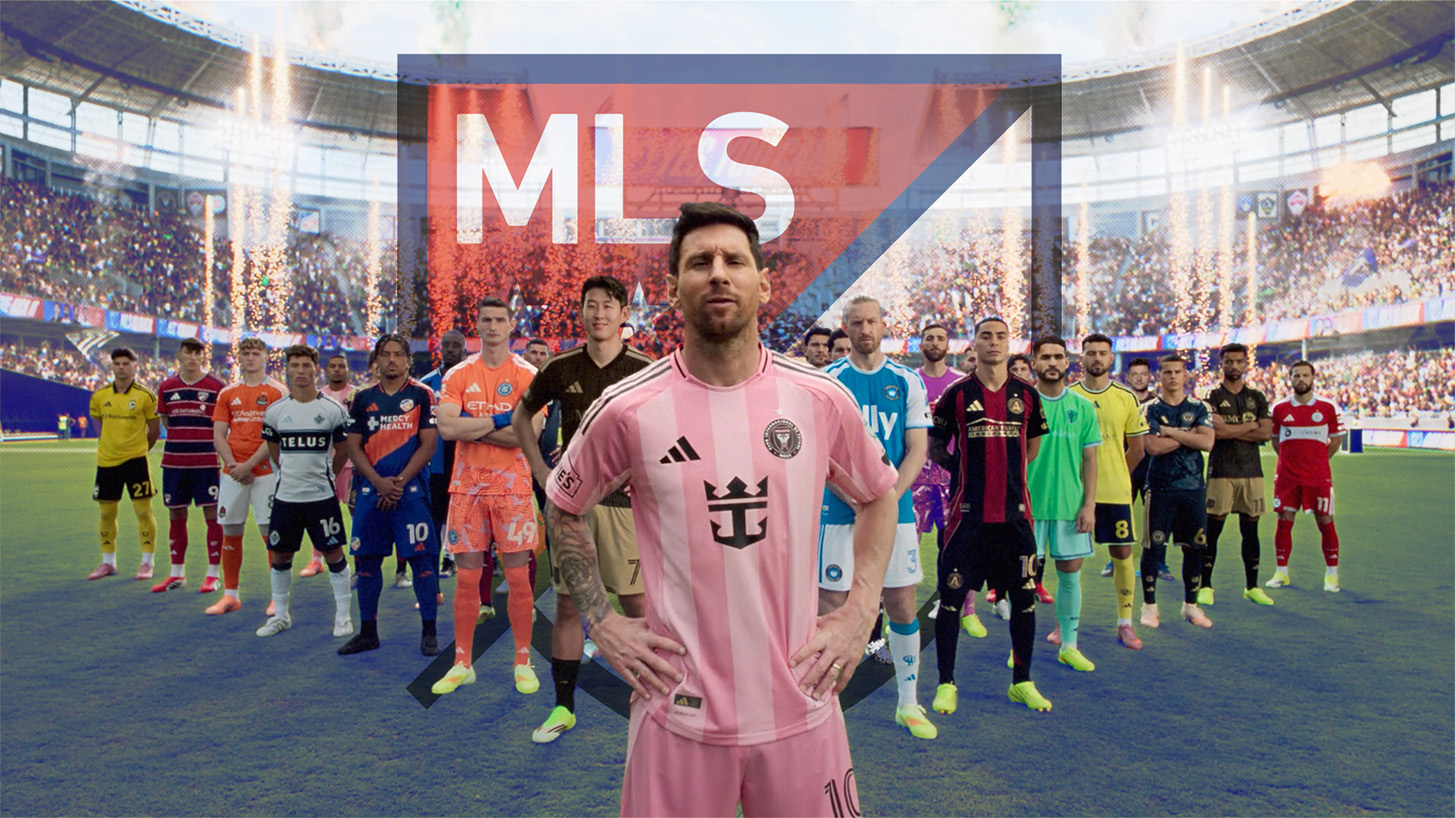
After seeing soccer take center stage over the past month, what does MLS need to do to build on that momentum? There will naturally be a drop in attention now that the World Cup is over, especially given how much American audiences gravitate toward major events. So, what do you think is the path forward for the league?
I think MLS is often judged by expectations that are higher than what the league is currently in a position to deliver. What people sometimes overlook is that, since its launch, MLS has never stopped growing. That, in itself, is a remarkable achievement.
You can measure that growth in several ways. The league has expanded to more teams than ever before, it continues to attract better players, and the overall quality of the competition has steadily improved. From an internal perspective, MLS has done an excellent job of building the league year after year.
The bigger challenge is external perception. It’s one thing to grow within your own ecosystem. It’s another to compete for attention with the Premier League, Serie A, La Liga, or other established competitions, both in the United States and around the world.
Even so, there are encouraging signs. Within the U.S., MLS continues to gain popularity, especially among younger audiences. Recent studies have shown that among younger generations, MLS has overtaken Major League Baseball in popularity, becoming the country’s third-most followed professional league. That’s a very strong indicator that the league is building a solid future.
Internationally, however, the challenge is much greater. The biggest European leagues have decades of history, global fan bases, and a higher level of football, so naturally they remain more attractive to many fans.
I also think MLS has spent years battling a certain level of prejudice from people looking at the league from the outside. That perception has started to change, helped by the arrival of global stars. Lionel Messi, in particular, has been a genuine turning point. Just as the 1994 World Cup helped launch MLS, Messi’s arrival has become another defining moment in the league’s history.
MLS is trying to build on that momentum and expand its global appeal, but that’s not something the league can control on its own. It also depends on how it competes with other football leagues, as well as the countless entertainment options available today.
Overall, though, I think the trajectory is very clear. From its inception to today, MLS has been a league in constant growth, and there are plenty of reasons to believe that trend will continue.

You come from Uruguay, a country renowned for its youth development system. In the United States, much of the discussion around player development focuses on the pay-to-play model, but another issue often gets overlooked: the underrepresentation of certain communities in the USMNT.
The Latino community is one example. At the last World Cup, only a handful of players had Latino roots, and there was also very little representation from urban soccer hotspots like New York City. In your view, what needs to change to better identify, develop, and integrate more Latino players into the U.S. national team?
I think that’s really where the key issue lies. There are always individual selection decisions. Take Diego Luna, for example. He was left out of both the Olympic team and the World Cup squad under Mauricio Pochettino. That doesn’t necessarily mean it was because of his background. There are footballing reasons behind every selection, and I’m not suggesting Diego Luna is on the same level as Christian Pulisic. I don’t want to see problems where they don’t exist.
That said, I do think there are broader structural issues. Personally, I’m not surprised that there aren’t more players of Latino heritage on the U.S. national team. What concerns me more is the system used to identify and develop talent.
The biggest obstacle, in my opinion, is the pay-to-play model. Many Latino families come to the United States chasing the American Dream, often making significant financial sacrifices. Asking them to invest thousands of dollars over many years just to give their children a chance to pursue football isn’t realistic for a lot of them.
Even more importantly, the system can be discouraging. A talented player may find themselves competing against others who are in the same environment not because they’re at the same level, but because they can afford to pay. That reduces the level of competition and can drive talented kids away from the sport altogether. In that sense, the system ends up working against itself.
That’s where I see the biggest contrast with countries like Uruguay. Our youth football system is built around competition. Kids who continue advancing do so because they’ve earned it on the field, and by the time they reach the professional level they’ve already gone through years of demanding competition.

Of course, there’s another philosophy as well, one that prioritizes participation, inclusion, and making sure every child has the opportunity to play and enjoy the game. That’s a valuable approach from a human and educational perspective. The challenge is that those two models don’t always coexist easily. One is designed to develop professional players; the other is designed to maximize participation.
The key is deciding what the objective of the system is. If the goal is to produce elite footballers, then the development pathway has to reflect that. In the United States, schools and universities naturally prioritize education first. Sport is often seen as a vehicle to earn a scholarship rather than as a pathway to becoming a professional athlete. That’s a very different philosophy from countries where youth football exists primarily to develop professionals.
At the same time, the landscape is already beginning to change. More and more MLS clubs now have fully funded academies, creating pathways that don’t rely on pay-to-play. That’s an important step forward, and I think it’s one that will help broaden the talent pool and make the system more accessible in the years ahead.
Uruguay Falls Flat
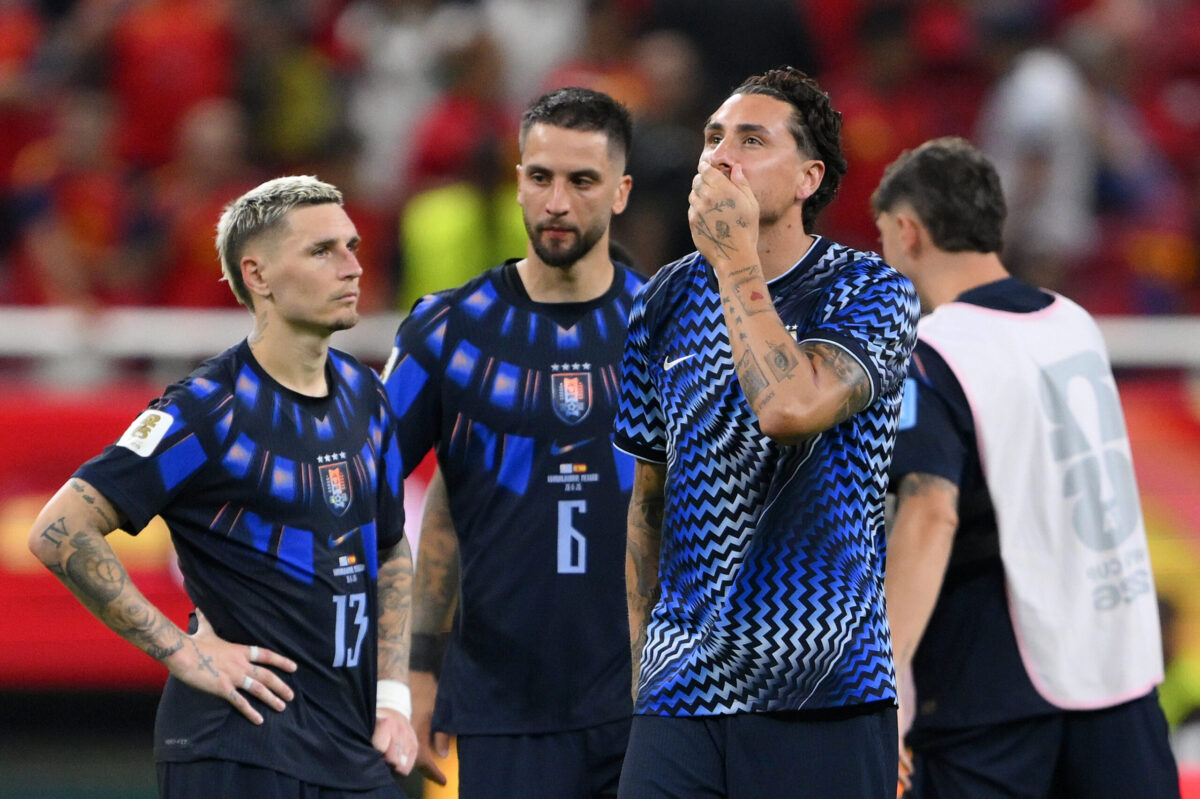
Speaking of your home nation, what is your view of the World Cup that was for Uruguay?
Uruguay’s World Cup was a disappointment. Not because of how they played, but because of how they competed.
I actually thought they were the better team against Saudi Arabia, deserved to beat Cape Verde, and made Spain uncomfortable for long stretches. The football wasn’t the problem. What cost Uruguay were their own mistakes, individual errors in key moments that proved decisive.
More than anything, though, the team lacked emotional intelligence and composure. For years, Uruguay’s identity has been built on grit and resilience, but this tournament showed that determination alone isn’t enough. You also need the experience to manage games, know when to slow the tempo, and make the right decisions under pressure.
Argentina was the perfect example of that. They showed resilience, but they also had the quality and maturity to overcome difficult situations. Uruguay had the desire, but lacked that same level of composure and leadership.
That’s why it’s such a frustrating result. In an expanded 48-team World Cup, where eight third-placed teams advanced, Uruguay should never have gone out in the group stage. Finishing 37th out of 48 is simply not acceptable for a country with Uruguay’s footballing tradition.
Looking ahead, I don’t think the solution is complicated. Uruguay’s recent successes have always come when there has been a clear long-term project led by the right coach. The priority now is choosing the right leader, giving them time, and building another generation capable of competing at the highest level.
In his last press conference Marcelo Bielsa stated that many of his achievements like finishing third in the Copa América, were under valued or not at all, do you think Bielsa got the short end of the stick?
I think the turning point was the Copa América. From a footballing perspective, Uruguay didn’t have a bad tournament, but that’s where the cracks within the squad began to show.
The public only became aware of the situation after Luis Suárez spoke out, but there were already signs of tension during the tournament. Several players were unhappy with how things were being handled, even if not all of them spoke publicly. By the end of the Copa América, the relationship between the coaching staff and parts of the squad had clearly deteriorated.
On the field, finishing third wasn’t a disaster, but it also wasn’t enough to leave people satisfied. Against Colombia, in the semifinal, Uruguay simply didn’t do enough to convince anyone they were going to reach the final, even after playing much of the match with a numerical advantage.
The bigger issue was that the problems exposed during the Copa América were never resolved. Instead, they carried over into the World Cup cycle. Looking back, that tournament was the beginning of the decline, and I don’t think the federation recognized the warning signs early enough or acted before the situation became unmanageable.
Finally with all the news surrounding FIFA and the expansion of the World Cup yet again in 2030 to a possible 64 teams, what do you think is the general course of football at the moment?
I think it could work, but only as a one-time exception. If that’s the solution that allows Uruguay, Argentina, and Paraguay to host more than just a single match during the tournament’s centenary, then it’s a reasonable compromise.
The 2030 World Cup is a unique occasion, and a unique event can justify a unique format. What I wouldn’t support is making 64 teams the permanent format going forward.