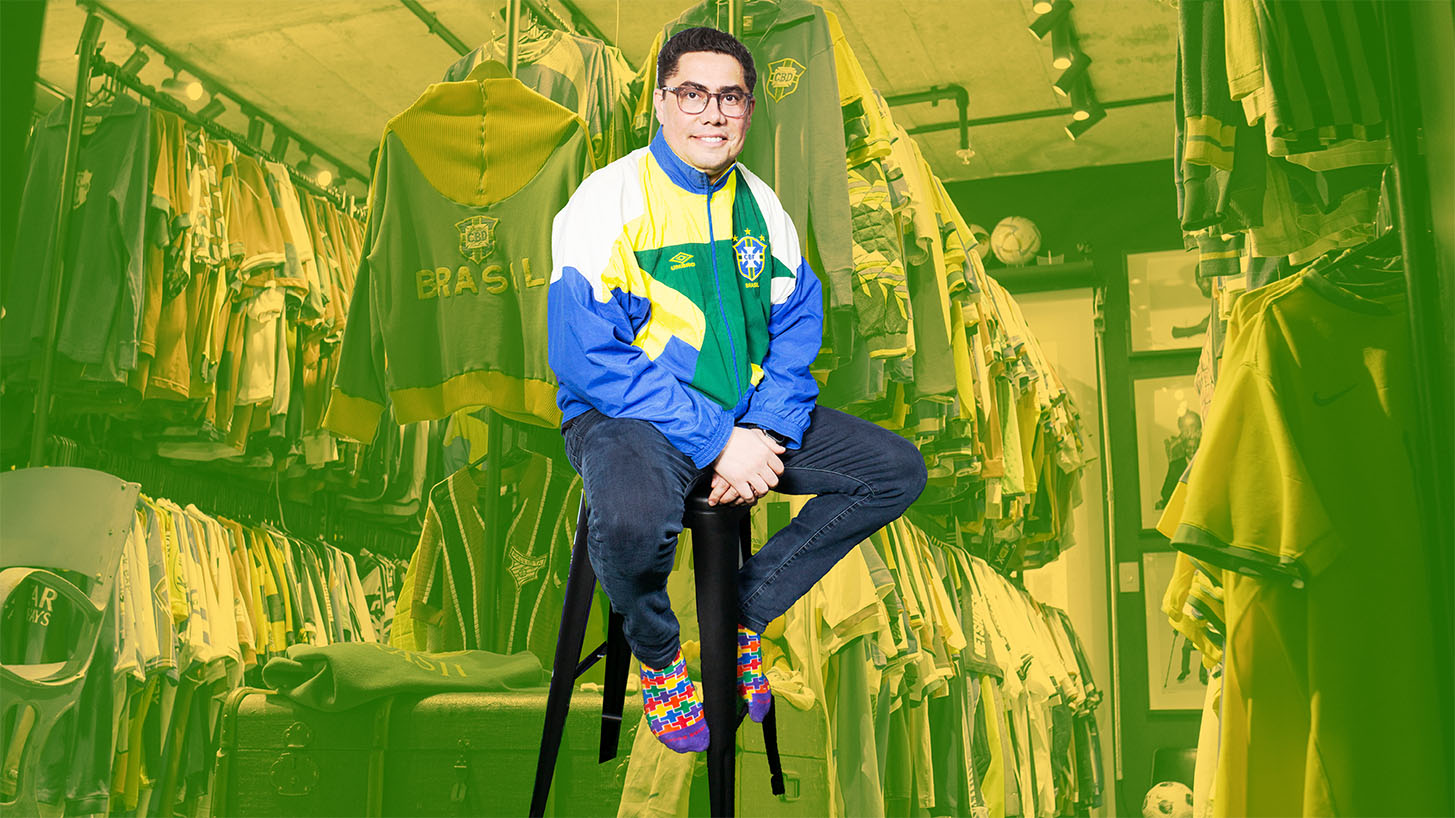
With more than 8,000 match-worn jerseys in the vault, Cássio Brandão is a sensation among football kit collectors. His stash features iconic shirts worn by Pelé, Diego Maradona, Garrincha, and countless other legends. But rather than flexing his incredibly rare pieces, Brandão is more concerned with preserving football history.
Cássio Brandão has transformed the nostalgic world of football memorabilia into an elite discipline of historical preservation. A prominent marketing executive who serves as head of industry at Google Brazil, Brandão channels his analytical precision and lifelong passion for the sport into curating a breathtaking archive that spans decades of football history.
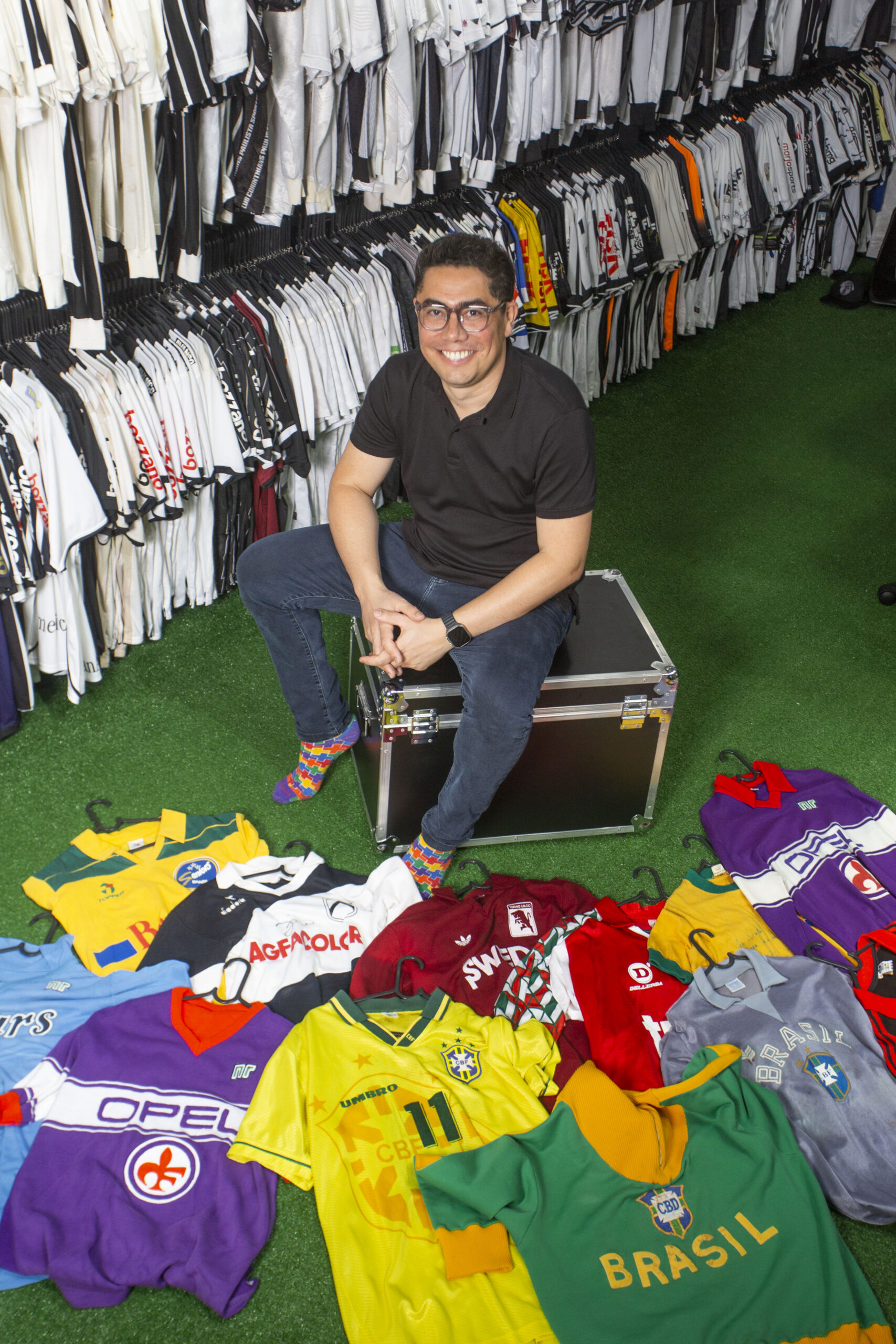
His dedication culminated in an official Guinness World Record, recognizing a monumental collection of more than 8,000 match-worn jerseys, none of them commercial replicas.
From the sacred, sun-faded threads worn by Pelé and Garrincha to iconic shirts donned by Diego Maradona, his meticulously climate-controlled vault in São Paulo serves as a living museum of the beautiful game.
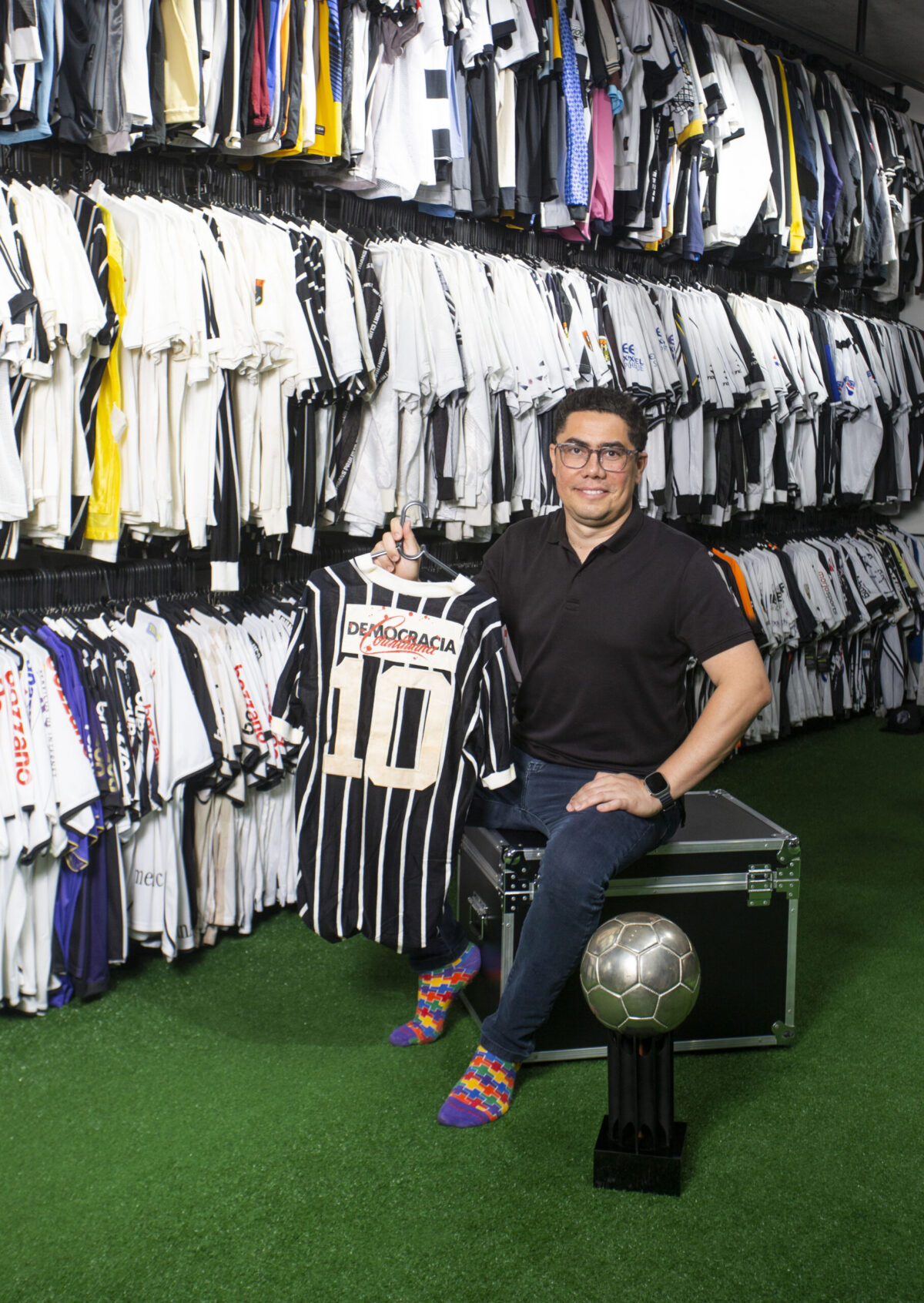
Brandão’s deep connection to football is further reflected in his lifelong devotion to Sport Club Corinthians Paulista, a passion that inspired him to found Alambrado Futebol e Cultura and publish Manto Alvinegro, a highly exclusive, limited-edition book that captures the soul of his beloved club through its most legendary kits.
We caught up with the vaunted kit collector to discuss his vast array of highly coveted shirts and why he sees himself as a protector of football history.
Urban Pitch: What was the first match-worn jersey you acquired, and what initially inspired you to preserve it?
Cássio Brandão: The first jersey in my collection was a 1990 Corinthians Kalunga shirt. What inspired me wasn’t just the fabric or the design, but the fact that the piece carried the sweat, the adrenaline, and the story of the 90 minutes it had lived through on December 6, 1990, the day I attended my first football match. I also vividly remember a Barcelona Kappa jersey that I still treasure. It holds wonderful memories for me, almost like a time capsule.
At what point did this passion stop being a personal hobby and become a large-scale curatorial project?
It stopped being a hobby when I realized I was no longer just someone who owned football shirts. I had a responsibility. I needed to become a guardian of football history.
When brands, museums, and researchers started reaching out to me, I understood that the collection had a cultural significance far greater than my own personal enjoyment.
Which part of the acquisition process do you find most rewarding: the research required to locate a rare piece or the negotiation to acquire it?
Both aspects are fascinating, but negotiation has a special thrill. At the same time, research is present throughout the entire process before and after the acquisition.
Tracking down a jersey feels like archaeology. Negotiating, meanwhile, requires building a relationship of trust with someone who is letting go of a priceless relic.
Which jerseys and memorabilia do you consider the crown jewels of your collection?
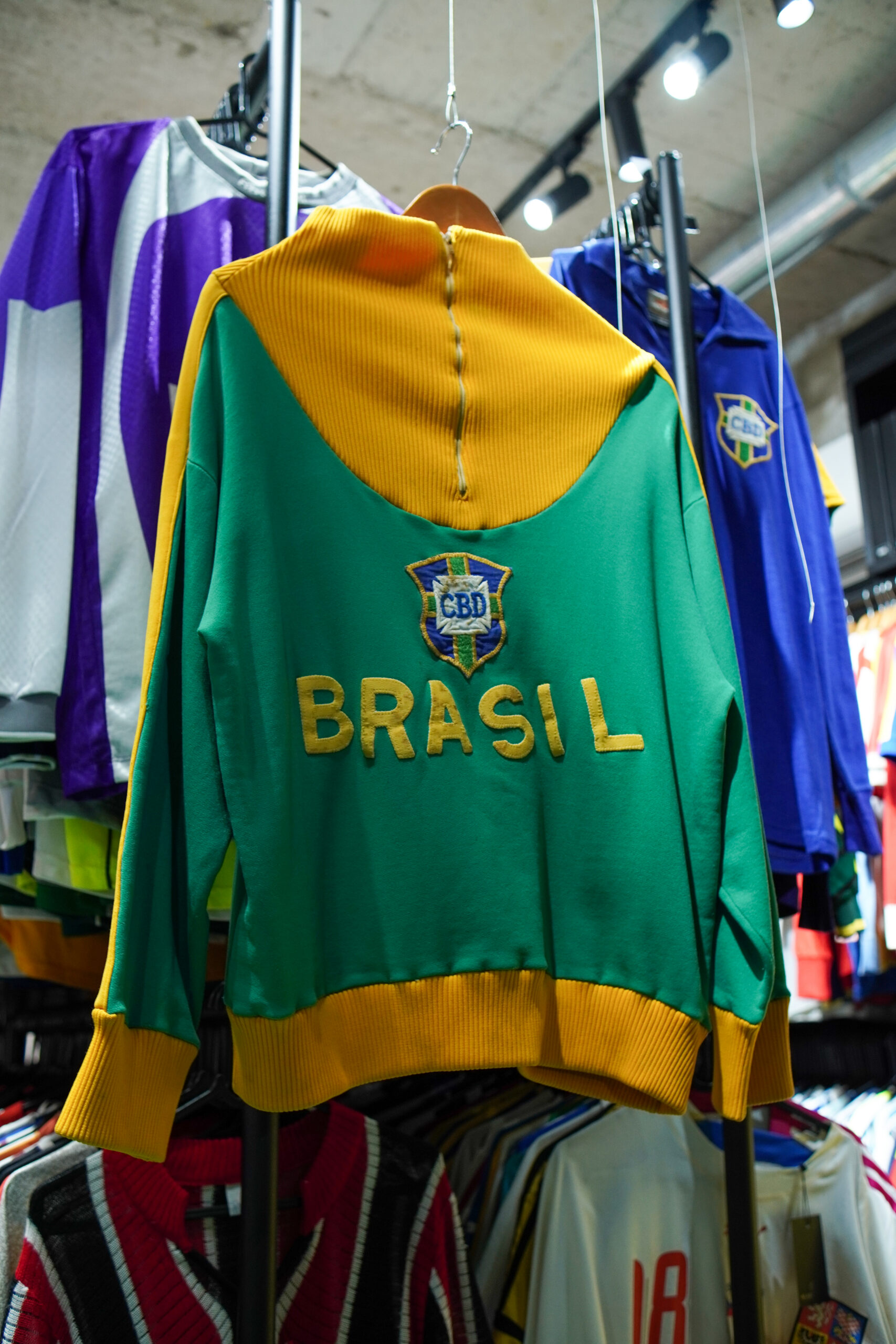
It’s difficult to choose among thousands of items, but the crown jewels certainly include Pelé’s jersey from the match played in honor of the Queen, Maradona’s Napoli shirt, and goalkeeper Ado’s jersey from the magnificent 1970 FIFA World Cup Final.
I also own memorabilia such as boots, medals, and match tickets. As the father of three children, choosing a favorite is difficult. They’re all national and global treasures to me.
Oh, and I also own one of the original seats from the Maracanã dating back to 1950.
What is the strangest or most unusual item you own?
Among so many traditional jerseys, the most unusual item I own is a piece of grass from the 2002 World Cup.
It always makes visitors laugh or look surprised because it shows a different side of the collection. Ronaldo or Rivaldo may have stepped on that very grass.
You preserve historic jerseys from legends like Pelé and Maradona. From a curator’s perspective, which piece do you consider the most significant in your collection?
As a curator, they are both geniuses. But when it comes to Pelé, even with Messi today, or Maradona, Cruyff, or Di Stéfano, there simply isn’t a debate.
Pelé is the greatest of all time.
It’s like trying to debate Jesus Christ inside a Catholic church.
He transformed football. He completely redefined the sport. If we’re all here today, it’s because of Edson Arantes do Nascimento.
Is there a specific historic jersey you’ve spent years searching for but still haven’t been able to acquire?
Absolutely. There are still many pieces missing. The most desired jersey will always be the next one.
The search continues, and that’s what keeps the collector’s flame burning. I want to keep doing this until the very last day of my life.
Setting aside financial or historical value, which jersey has the greatest personal or emotional significance to you?
Emotionally, nothing compares to Neto’s jersey from the 1990 Brazilian Championship semifinal. December 6, 1990.
It’s the actual match-worn shirt that I acquired from the collection of a former football club president where Neto once played. That jersey connects me directly to my childhood and to that day at the stadium. It’s the real reason I fell in love with this wonderful madness called football.
What are your thoughts on the retro jersey movement? Major brands are reissuing classic designs and generating significant revenue from them. Do you believe this diminishes the value of those who own and preserve the original pieces?
Quite the opposite. I believe the retro movement increases the value of the originals.
Reissues introduce these classic designs to new generations and help grow football culture. But the market understands that a modern replica will never have the value, texture, original tags, or history of an authentic piece that has survived the passage of time.
View this post on Instagram
Your collection has attracted international personalities such as Lewis Hamilton and Bad Bunny. How do you manage the logistics and preservation risks when lending these historic artifacts for high-profile appearances?
It’s a tremendous responsibility.
When personalities like Hamilton or Bad Bunny wear these pieces, we try to treat the process as though we’re lending a masterpiece from a museum.
We follow strict transportation procedures, insurance requirements, proper handling protocols, and exposure controls to ensure the fabric doesn’t suffer damage or excessive wear.
Is there always some risk? Absolutely.
But I like to think that after Bad Bunny wore one of the jerseys on stage, and even changed the lyrics of his song to include Pelé, boys and girls all over the world went to YouTube to learn about the man who stopped a war, scored 1,283 goals, and remains the only human being to win three FIFA World Cups.
What were the biggest verification and documentation challenges you faced in proving the authenticity of thousands of jerseys for the Guinness World Records committee?
The Guinness process is incredibly rigorous. They’re extremely serious.
The biggest challenge was auditing every single item. I had to make sure my database was absolutely flawless. It took months of meticulous cataloging and documentation to validate the record.
Has officially becoming a Guinness World Record holder changed your long-term acquisition strategy or the pace at which you continue collecting?
The record was the crowning achievement of a long journey, but it wasn’t the finish line. My strategy remains centered on finding great stories. I’m always in “hyper-curation” mode.
The pace of the hunt hasn’t changed, but today my focus is entirely on extreme rarity and the absolute historical value of every new acquisition, and the power each new piece has to tell one, or many, stories.
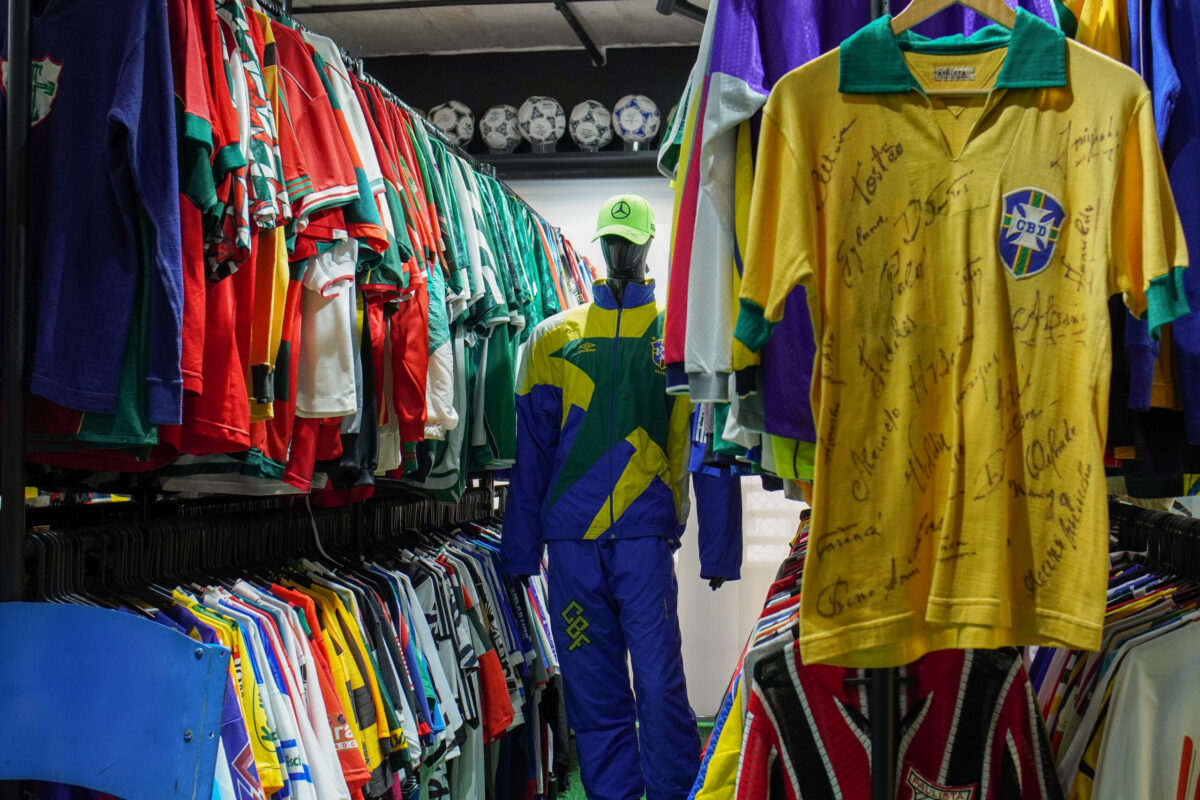
Preserving more than 7,000 vintage textile pieces requires rigorous standards. What specific protocols do you use for climate control, cataloging, and protecting these jerseys from deterioration?
Fabric is alive, and it deteriorates over time.
My collection is kept under strict humidity and temperature controls to prevent mold and drying. We have a dedicated intake room where newly acquired jerseys are cleaned before entering the archive. The collection is protected with solar-filtering screens and museum-grade lighting. The jerseys are stored on specialized hangers away from direct sunlight, and we use technology to catalog every item.
Every jersey has a QR code tag containing its complete history and documentation.
Has anyone ever made an offer to purchase your entire collection? And in your opinion, what do you believe it is worth today?
Yes, I’ve received inquiries and offers from investors.
More important than the money, however, is finding an investor who understands the collection’s purpose. As for its financial value, that’s difficult to estimate. The sports memorabilia market is experiencing an exceptional moment in both Brazil and around the world. We’ve broken sales and revenue records for 18 consecutive months.
To me, the historical and cultural value of keeping this collection in Brazil is priceless. Today, the collection consists of exactly 8,522 items.
It includes the largest Pelé collection on the planet, around 400 Brazil national team jerseys, and shirts representing more than 1,800 clubs and national teams.
Speaking of national teams, we’ve already surpassed 200 countries. Before long, we’ll have pieces representing every FIFA member nation.
What advice would you give someone who is just beginning to collect? What are the most important tips for finding truly rare pieces?
My main advice is simple: study as much as you can.
Before buying anything, learn how to identify authentic labels, fabrics, and period-specific details so you don’t fall victim to counterfeits.
Start by focusing on a niche you’re passionate about, whether it’s your favorite club, a national team, or a particular World Cup, and build an honest network of contacts.
The collector’s greatest asset isn’t money. It’s patience and knowledge.
And above all, it’s building a community, which is exactly what we strive to do every day at Alambrado Futebol e Cultura.