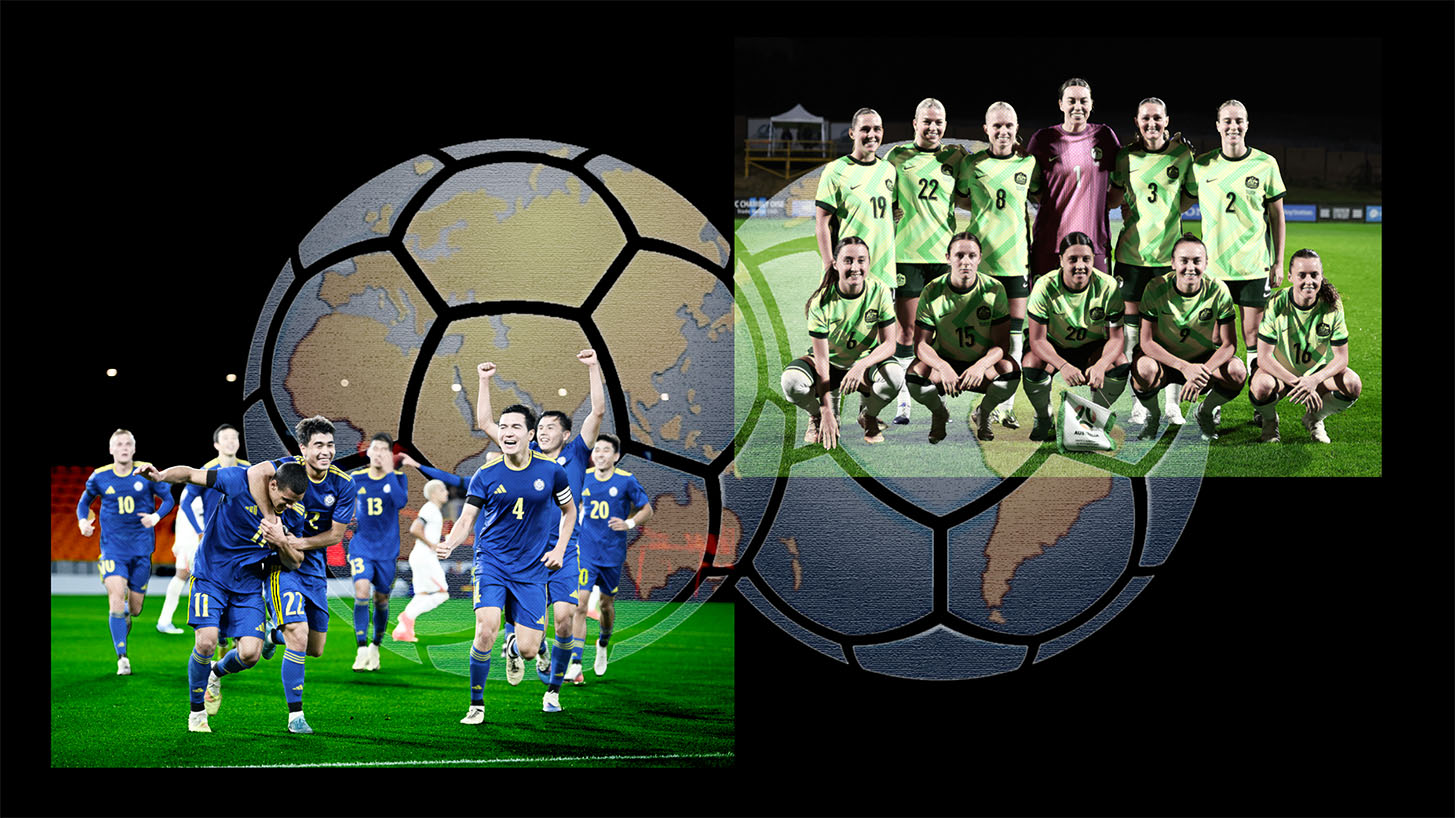
Whether to find more ideal competition or to get a better chance at a World Cup appearance, these nations thought the grass was greener with another confederation. But was it?
Ah, geography! Everyone’s favorite subject in school. I for one always enjoyed the definitive nature of it. Mount Everest is located on the border of Nepal and China. The Nile River flows through 11 African nations. The Azores Islands are part of Portugal. Kazakhstan is in…Asia? So why does the Kazakh national team play in the UEFA Nations League?
Suffice it to say, the world of football confederations does not always gel nicely with our preconceived geographical notions. While it would be supremely convenient for the six FIFA-recognized confederations to match up with the six inhabited continents of the world, you’ll find that there are several strange and barely explainable outliers.
What confederation a nation belongs to matters more than you might realize. From blooding themselves against better competition to getting a shot at a sweet, sweet World Cup berth, football’s history has seen a handful of nations switching, or at least trying to switch, their confederation allegiance in pursuit of glory.
History of Confederations

The first-ever football confederation was CONMEBOL, established in 1916. The national sides of Argentina, Brazil, Chile, and Uruguay all met in the Greater Buenos Aires area to contest the Campeonato Sudamericano de Fútbol, the precursor to the modern Copa America tournament.
Uruguay prevailed in this maiden edition, and having seen the rousing popularity of the event, Uruguay Football Association board member Hector Rivadavia proposed that the four nations make things official and create the first football confederation in history. The accord was signed on July 9, 1916, which happened to be the 100th anniversary of Argentina’s independence. The gang of four nations would choose the (not at all clunky) appellation CONMEBOL, which my brain has come close to understanding is meant to be an acronym of Confederacion Sudamericana de Futbol. I think.
By 1936, all the modern-day CONMEBOL nations had signed up, barring Venezuela. This first-of-its-kind confederation was chiefly concerned with organizing the then-yearly but later biennial(ish) Copa America. It would also serve as model for FIFA’s worldwide control of the beautiful game.
Europe, Africa, Asia, and North America were slow on the tournament-organizing, money-making uptake and didn’t get going until the 1950s and 60s with the establishments of UEFA, CAF, AFC, and CONCACAF, respectively.
With the modernizing of football, the tasks of football confederations swelled far beyond their initial purview. Today, confederations operate a stunning array of international and club-level competitions. Not only do they organize the top-level continental championships we all know and love, they also host tournaments down to the U-12 age groups, decide on formats for World Cup qualifying, and decide on allocation of the myriad funds that have been bequeathed upon them by the smiling titans at FIFA.
The Confederations are A-Changin’
While nations generally participate in the confederation with which they are geographically aligned, there do exist some notable exceptions. This also tends to pop up when considering that there are some countries just kind of out in the middle of nowhere. I mean, where the hell does Bermuda belong, if you really think about it? It’s a UK territory, so should it be in UEFA? It’s close-ish to North America, so that’s why it’s in CONCACAF? Is there an Atlantis Football Confederation?
In another strange twist of geography, the Football Association of Greenland recently applied for membership in North America’s CONCACAF. Although an autonomous territory of Denmark, Greenland is unable to join UEFA due to a recent rule change requiring that all new members be fully-recognized sovereign states. Greenland’s proposal was unanimously rejected by CONCACAF in June of last year, with other North American and Caribbean nations expressing concern about Greenland’s lack of soccer infrastructure, the difficulties of travel to the big, icy island, and the dastardly cold weather that plagues the nation for nine months out of the year. For sickos like me, who desperately wanted to see a Greenland vs. St. Kitts and Nevis World Cup qualifying match, this decision amounted to a disheartening blow.
On a few occasions, however, national FAs have peeped over the fence and decided that the grass is greener in another confederation, and have successfully made the switch. Here are a few of the occasions upon which nations have switched confederations.
Australia
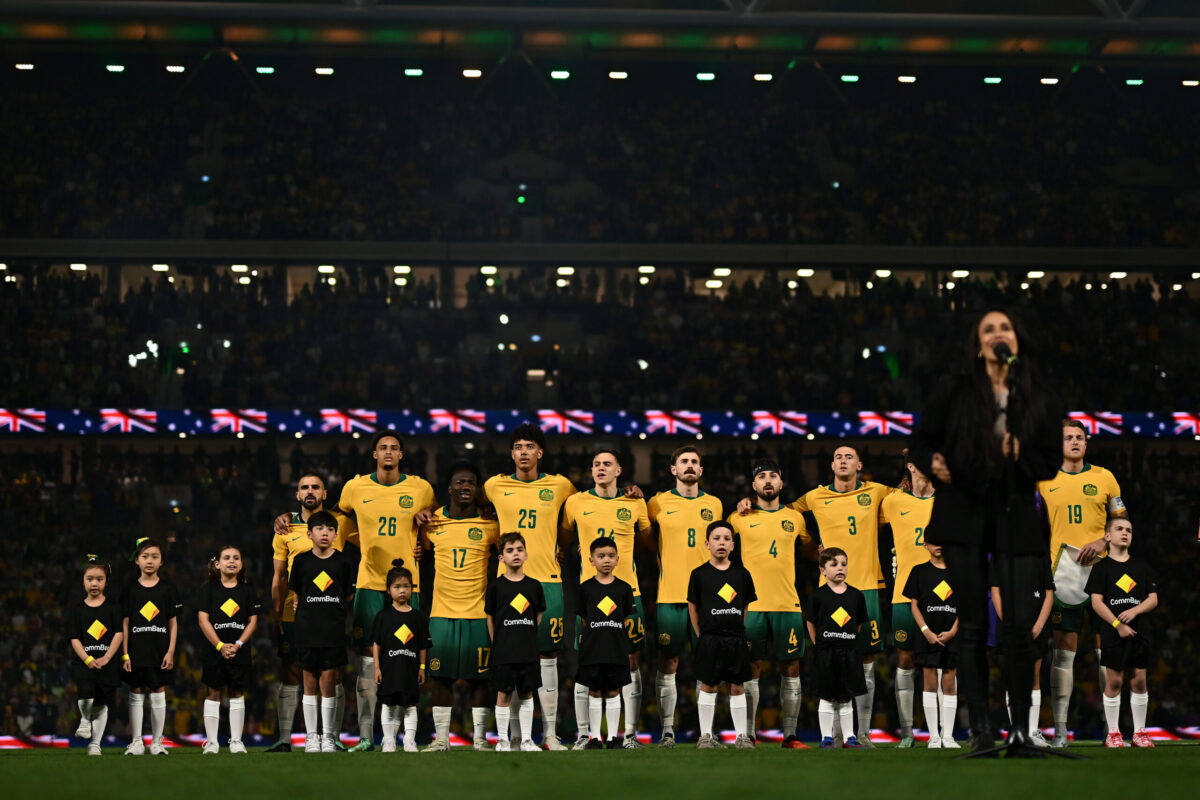
The Socceroos were historically hamstrung by virtue of their geographical location. They were founding members of the Oceania Football Confederation, but the relatively small populations of neighboring countries made regional competitions a little too easy for them. Their famous 31-0 drubbing of American Samoa was immortalized in the excellent documentary Next Goal Wins, a game during which striker Archie Thomson notched an international record 13 goals.
Back when the World Cup consisted of only 32 teams, Oceania was guaranteed a paltry 0.5 places in the final tournament. This meant that the winning team from OFC qualifying would be forced to play a two-legged playoff tie against an opponent from a different confederation (frequently CONMEBOL) to decide which side would make it to the finals. This was a crapshoot at the best of times, and while the Socceroos impressively defeated Uruguay on penalties to qualify for the 2006 edition, the Australian Football Association deemed this an unsustainable path to bettering the national team.

The federation, cheered on by enthusiastic former player Johnny Warren, began to explore the possibility of shifting to the Asian Football Confederation, which at that point consisted of 46 national teams and was allocated four-and-a-half World Cup places by FIFA. The level of competition would be higher, and would challenge the men’s, women’s, and youth national teams in a way that Oceania just couldn’t.
The Asian Football Confederation voted unanimously in March 2006 to admit Australia into its ranks. Since that time, Australia has qualified for the World Cup each cycle in both the men’s and women’s divisions. The women won the 2010 Asian Cup, while the men equaled the feat in 2015. The Socceroos made it out of the group stage at each of the previous two men’s World Cups, while the Matildas rumbled to an impressive fourth-place finish on home soil in 2023. It seems that the nation won’t be regretting their decision to switch confederations any time soon.
The biggest winner in this merry-go-round happens to be New Zealand. With the expansion of the World Cup to 48 teams (and possibly more), OFC is now granted one team at the finals. Without Australia to boss them around anymore, the Kiwis are more or less guaranteed to continue showing up at the Big Dance.
Israel
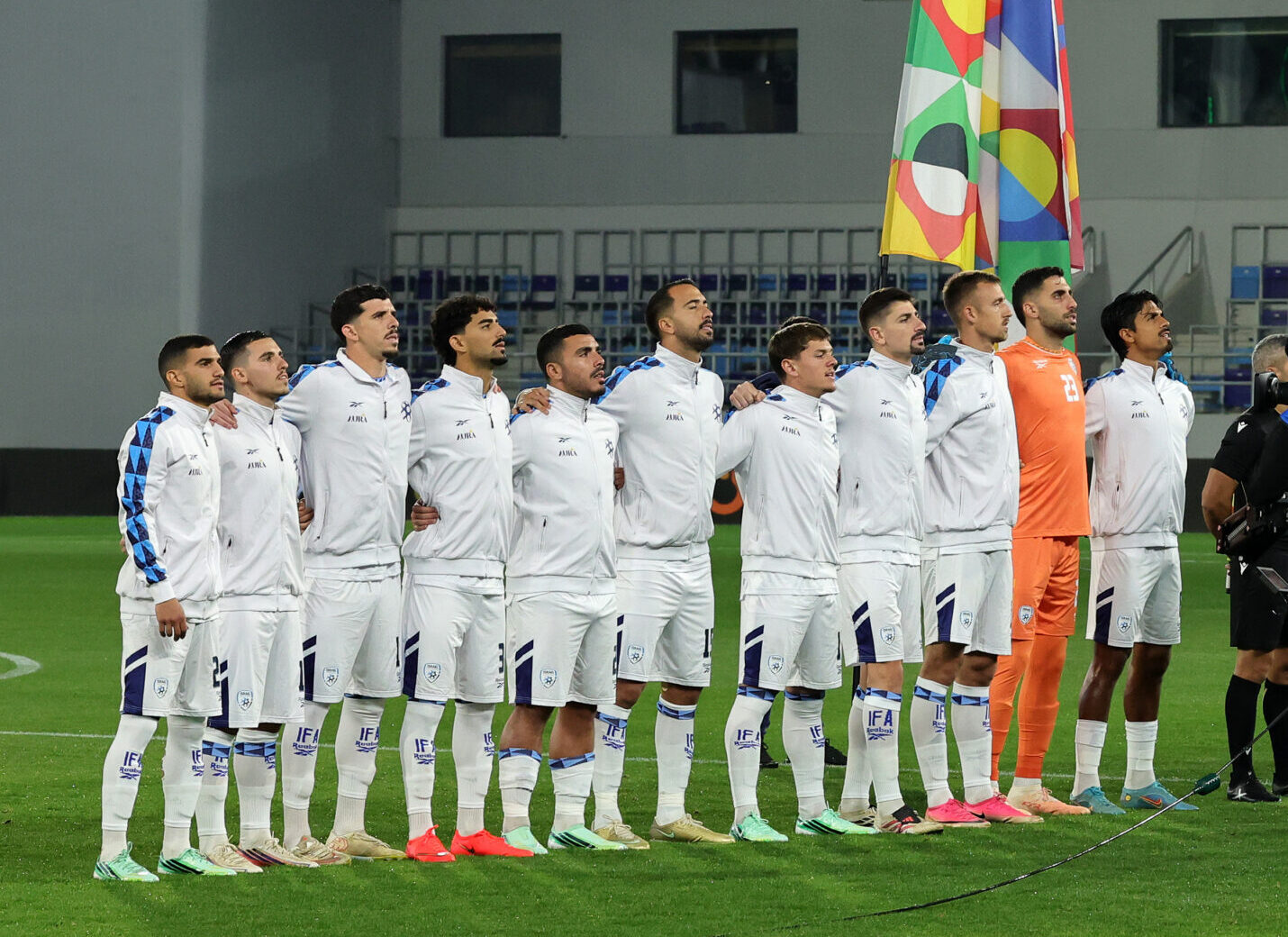
While Australia switched confederations due to sporting considerations, Israel’s switch from the AFC to UEFA was…not that.
In case you didn’t know, Israel is located in the Middle East. That’s technically part of Asia. Israel competed in the Asian Football Confederation beginning in 1956, even winning the Asian Cup in 1964 when it hosted the tournament.
However, regional conflict led several Arab nations to refuse to play against the Israelis. Because of so many opponents refusing to field teams against them, Israel was repeatedly handed 3-0 victories as a matter of forfeit, and strolled to first place in the qualifying tournament for the 1958 World Cup without having played a single match.
FIFA was so appalled by this turn of events (imagine modern FIFA being appalled by anything) that, in the interest of fairness, they organized a home and away playoff match with Wales to ensure that Israel wouldn’t qualify for the World Cup without so much as a kicking a ball. Wales prevailed 4-0 on aggregate.
The fallout from the 1967 Six-Day War and 1973 Yom Kippur War, in which Israel militarily bested a coalition of Arab neighbors, resulted in Kuwait formally petitioning for Israel’s expulsion from the Asian Football Confederation in 1974. The resolution was narrowly passed 17 votes to 13 at that year’s Asian Games held in Tehran, Iran.
For the next two decades, Israel would be a nation without a confederation. It was allowed to compete in the 1982 UEFA World Cup qualifying tournament, and then tried its hand at qualifying via the Oceania Football Confederation for the 1986 and 1990 editions. It even made the intercontinental playoff against Colombia in 1989, but lost by an aggregate scoreline of 1-0 over two legs.
In the first steps toward full UEFA membership, Israeli club teams were permitted to compete in European cup competitions in 1992. In 1994, UEFA voted to allow Israel to join as a full member, ending their long stint in the proverbial wilderness.
Kazakhstan
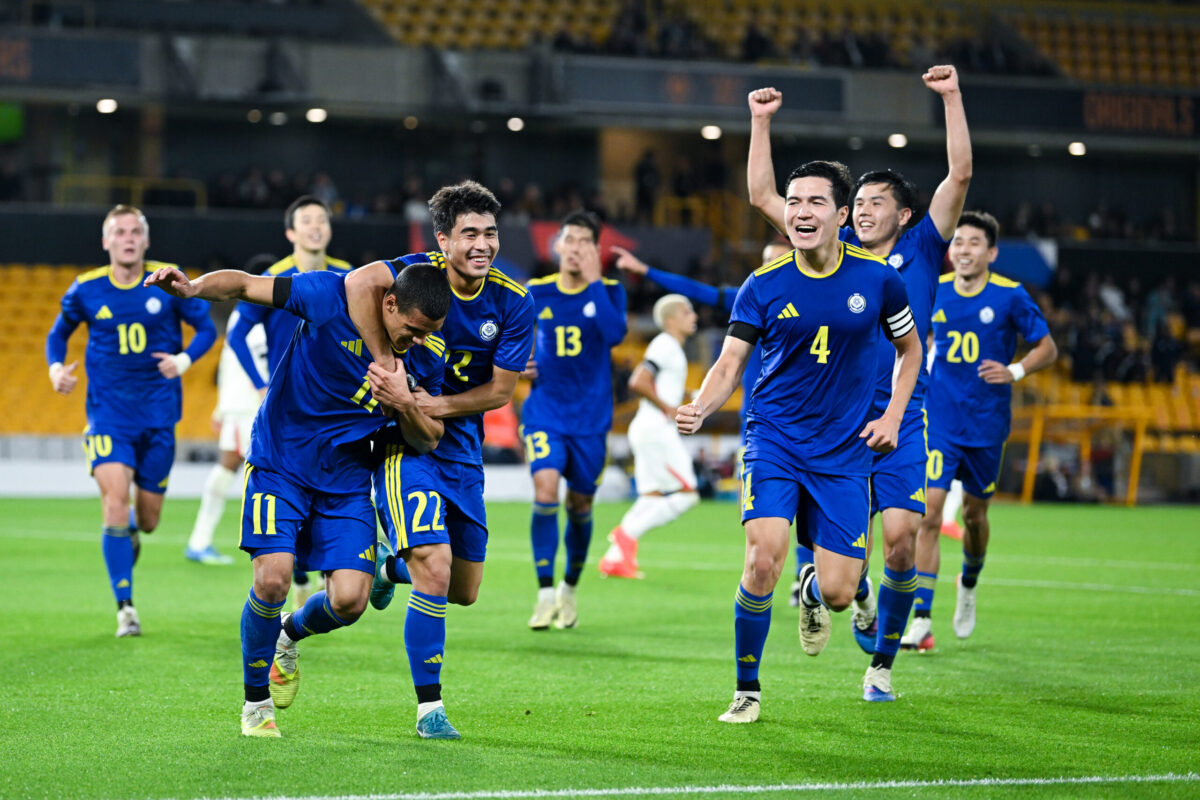
Examine a map of Asia and you’ll find out two things about Kazakhstan: 1. It’s really freaking big. 2. It’s basically smack-dab in the middle of the Asian continent.
That would explain why Kazakhstan competed in the Asian Football Confederation from the dissolution of the Soviet Union in 1991 until 2002.
Currently ranked No. 117 in the World, the Kazakhs have never been a traditional footballing power, but gosh-darn it, they’ve got big dreams! They came sort of close to qualifying for the World Cup in both 1998 and 2002, falling short in the final round of qualifiers on both occasions.
It became clear to the Kazakh football authorities that languishing in Asia would not give Kazakhstan the competitive exposure and financial incentives the nation would need to make the leap to being a success in the world of international football. They devised a plan to break away from the AFC and join UEFA on the basis of a technicality.
A small patch of Kazakhstan is located geographically to the west of the Ural River. This river has traditionally been used to demarcate the European and Asian parts of Russia. Given that part of Kazakhstan is technically in Europe, the Kazakhs had decent standing for being admitted into UEFA. Similar transcontinental countries like Turkey and Azerbaijan are also UEFA members, despite the overwhelming majority of their landmass being located in Asia.
On April 25, 2002, the 26th Ordinary UEFA Congress in Stockholm, Sweden voted to officially admit Kazakhstan as a full member.
The move can hardly be considered a success, however. Kazakhstan has continually faltered in World Cup and European Championship qualifying. The Kazakhs currently languish at the bottom of UEFA Nations League C Group 3 behind Slovakia, the Faroe Islands, and Moldova. The men’s squad did, however, make a surprise appearance in the playoff semifinals for qualification for the 2024 European Championships, but crashed out of the competition to Greece by a score of 5-0.
Kazakh club sides, on the other hand, can be said to have benefitted from the shift. Astana Football Club became the first team from Kazakhstan to qualify for the Champions League group stage in 2015, while Kairat Almaty managed to make the league phase in 2025. While Kairat only managed a single point across eight games, they showed a great deal of character in a 3-2 loss to Arsenal in London.
Which Nations Should Switch Next?
In case FIFA is reading, (hi, Gianni!) I’ve got some pretty great suggestions for which national teams should switch confederations in the near future.
Morocco to UEFA: Hear me out. Morocco is not in Europe. However, Europe is in Morocco! Spain continues to possess two cities located inside the North African nation: Ceuta and Melilla. This, in my flimsy way of thinking, makes at least something of a case for Morocco to join UEFA.
Of course Morocco is culturally North African and enjoys long, antagonistic rivalries with other African nations. However, this team is absolutely stacked lately and I selfishly want to see how they do in both the UEFA Nations League and World Cup qualifying. It’s always a blast to see them square off against high-level European opposition at the World Cup, so imagine how great that would be to see week in and week out.
Most of Southeast Asia to OFC: Asia is just too big, you guys. That is why I propose that some of Malaysia, Vietnam, Cambodia, Laos, the Philippines, and heck, why not Thailand, join the Oceania Football Confederation.
Despite AFC having vastly more financial resources and World Cup places, it’s abundantly clear that New Zealand are in desperate need of some challengers in the region. Is it enough for the likes of Malaysia and Vietnam to overachieve their way to the second qualifying round, or to be eliminated in the group stage of the Asian Championships? Wouldn’t it be vastly more fun for them to have at least an outside shot at establishing themselves as the top dog in a whole region?
With OFC’s now-guaranteed World Cup slot, it’s worth considering where these southeast Asian nations would have a better chance at success.
Venezuela to CONCACAF: Poor, poor Venezuela. It’s the only CONMEBOL team to have never qualified for the World Cup finals. The Vinotinto entered the final match of South American 2026 World Cup qualifying needing either a win against Colombia or a Bolivia loss or draw against Brazil to give them the final playoff spot and a chance to make it all the way. In the most depressing twist of fate, both results went against them, and Venezuela remained in a familiar position: on the outside, looking in.
Geographically, Venezuela has a big ol’ coastline on the Caribbean Sea. Furthermore, fellow South American countries Suriname, Guyana, and French Guiana compete in the CONCACAF region. It must be terrible for Venezuela, ranked a respectable 49th in the world, to be consistently battered around by some of the best soccer nations out there in the confederation with the least number of total teams.
Move Venezuela to CONCACAF! Give them a chance to mix it up with the North and Central American nations. Sure, it won’t have the financial luxury of squaring off repeatedly with Argentina and Brazil, but some success in a new confederation just might inspire a new generation of young Venezuelans to put down their baseball bats and pick up a soccer ball.


