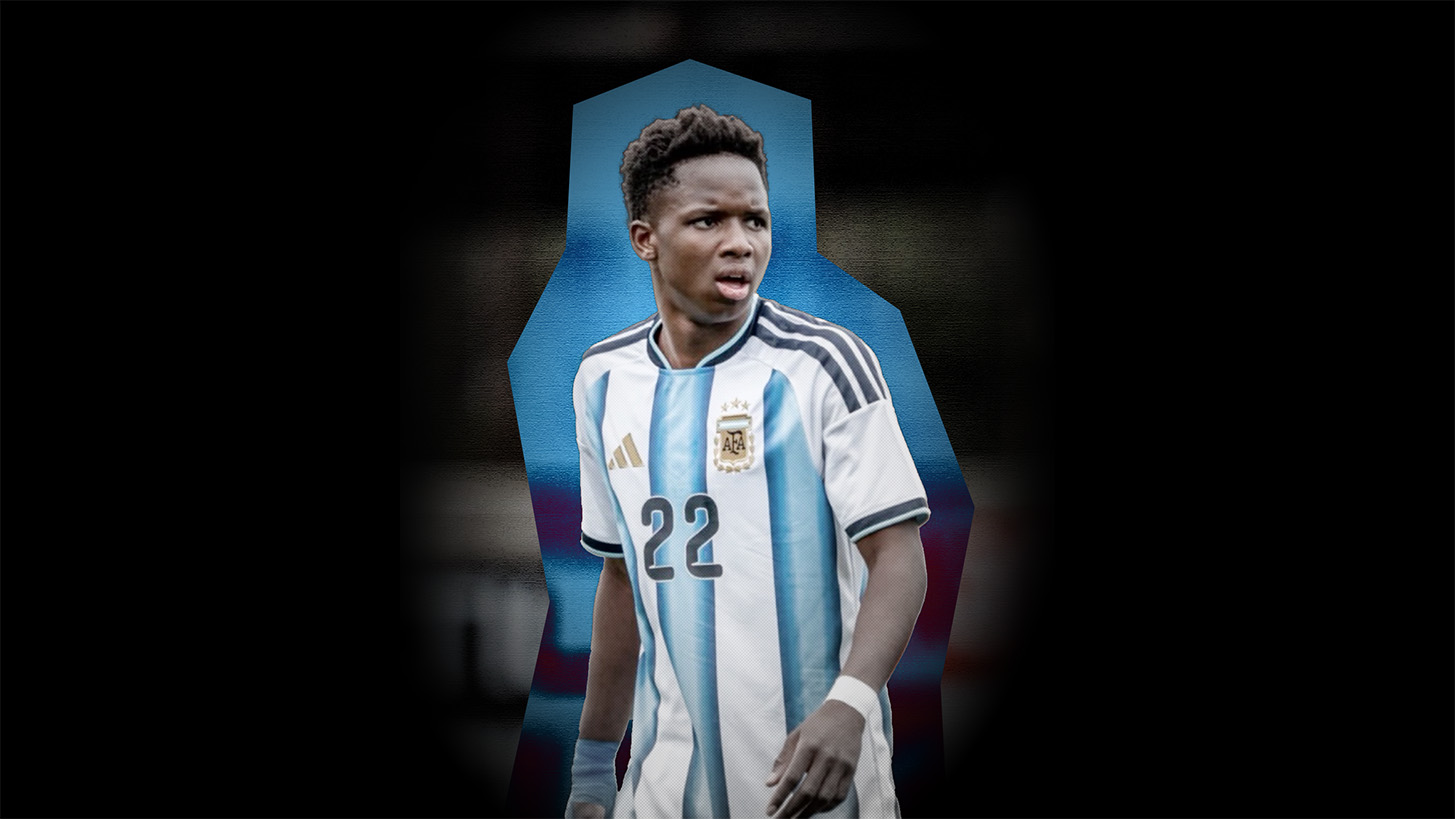
Stephen “Kiki” Ramos is earning rave reviews in Argentina’s youth national team setup and closing in on his Vélez Sarsfield first-team debut. The 17-year-old Haiti-born winger’s journey from surviving the devastating 2010 earthquake to emerging as one of Argentina’s most exciting young prospects is one of the best stories in football today.
Stephen “Kiki” Ramos’ story is one of survival, perseverance, and hope. Born in Port-au-Prince, Haiti, he was adopted by an Argentine family as an infant and arrived in Argentina at 10 months old, just one month after surviving the devastating 2010 Haiti earthquake.
It was in his new home where football became a central part of his journey. Now, Ramos is on the verge of taking his first steps into senior football, with his performances marking him as one of the country’s most promising young talents.
After obtaining Argentine citizenship, Ramos became eligible to represent the country internationally, opening the door to a call-up to the youth national setup.
His performances for Vélez Sarsfield’s youth teams have made it increasingly difficult to ignore his potential. With 17 goals in 23 appearances, Ramos has established himself as a prolific attacking threat, earning a place in Argentina’s under-17 squad while moving closer to a first-team club debut.
He has already made history by becoming the first player of Haitian or Caribbean descent to represent Argentina internationally at any level. Ramos also marked his arrival on the international stage by scoring against Ecuador.
Argentina U-17 coach Diego Placente is expected to view the winger as an important part of his plans ahead of the FIFA U-17 World Cup in Qatar in November 2026. For Ramos, the tournament could provide another opportunity to demonstrate that his rise is about far more than a compelling personal story.
Ramos’ Player Profile
Operating primarily from the left wing, Ramos combines explosive acceleration with the confidence and close control needed to beat defenders in one-on-one situations. His direct approach and ability to attack space have drawn comparisons to Brazilian star Vinícius Júnior.
However, Ramos offers more than pace and flair. He brings physical resilience, a willingness to take on defenders, and a natural instinct for finding scoring opportunities in the final third. After an injury-disrupted 2025, his return to form has been emphatic, with his goal tally underlining his growing influence at the youth level.
A modern, attack-minded wide forward, Ramos is particularly dangerous in transition, where he can exploit open spaces and drive directly toward goal.
Breaking Barriers in Argentine Football
View this post on Instagram
Ramos’ emergence comes amid broader changes in Argentina’s population and sporting landscape. Over the past decade, immigration from countries including Haiti and the Dominican Republic, alongside migration from African nations, has contributed to a more diverse society. In football, young players such as Ramos and River Plate prospect Jonathan Spiff offer a glimpse of how that diversity is increasingly finding expression in the country’s sporting institutions.
Argentina’s 2022 national census recorded 302,936 people who identified as Afro-descendant or reported having Black or African ancestry. The Haitian community in the country has also grown, although estimates of its size vary depending on the source and whether undocumented residents are included.
Ramos’ inclusion in the national setup has also prompted discussion about race and representation in a country whose national football identity has historically been associated with a predominantly white image.
Placente, however, has been unequivocal about the reason for selecting the young winger: his footballing ability, as stated in an interview with Roberto Parrottino and reported by Bolavip.
“He’s in the national team because he plays well, not because he’s Black,” Placente said. “He’s there because he’s good, not because there have been few Black players in the national team.”
Placente also explained how Ramos’ development at Vélez has helped him earn his opportunity.
“In Vélez’s 2009 age group, one of the best, he was a substitute behind Aguirre and Policella, and every time he came on, he played well,” Placente said. “Now that they’ve moved up to the first team, Ramos started playing and scoring goals.”
For his part, Ramos has spoken positively about his experience in Argentina. In an interview with R3 in Rosario, he addressed the subject of discrimination directly: “Since I’ve been in Argentina, I’ve never felt discriminated against.”
A New Chapter for Argentina
View this post on Instagram
Ramos still has a long way to go before he can establish himself at the highest level. A first team debut, sustained performances in senior football, and further opportunities with Argentina’s youth sides will all be important steps in determining how far his talent can take him.
Yet his rise already carries significance beyond his individual achievements. As Argentina becomes more diverse, its footballing institutions have an opportunity to reflect that changing society while continuing to identify and develop the best available talent.
Ramos’ story is ultimately about both opportunity and ability: a young player who survived extraordinary circumstances, built a life in a new country, and earned recognition through his performances.